TL;DR
- Use AI to generate tailored interview questions based on the job description and your role.
- Structure AI prompts with Role, Task, Format (RTF) for clearer, relevant practice.
- Practice answers aloud using the STAR method and record yourself to improve clarity and timing.
- Treat AI feedback as a starting point; always verify facts and personalize answers.
- Prepare for AI video interviews by practicing clear, concise speech and natural responses.
What AI Interview Practice Can—and Can’t—Do
AI-powered tools have revolutionized interview preparation, enabling you to simulate realistic mock interviews anytime. They can:
- Generate role-specific and behavioral questions tailored to your job application.
- Provide instant feedback on your answers, highlighting areas to improve.
- Help you rehearse answers aloud, improving fluency and confidence.
- Offer follow-up questions and unexpected scenarios to mimic real interviews.
However, AI practice has limits:
- AI cannot fully replicate human intuition or emotional cues.
- It may produce generic or outdated advice if prompts aren’t well-crafted.
- AI feedback should never replace real human mock interviews or networking.
- Always fact-check AI-generated content against current employer information.
Use AI as a powerful supplement—not a substitute—for comprehensive interview preparation. (University of Manchester, CCRI)
How to Set Up a Realistic AI Mock Interview
To get the most from AI interview practice, set up your prompts carefully:
- Gather context: Use the job description, person specification, and your application materials.
- Use RTF prompt structure: Clearly define the Role, Task, and Format for the AI.
- Role: Your target job title or function.
- Task: What you want the AI to do (e.g., ask behavioral questions).
- Format: How you want the AI to respond (e.g., one question at a time).
- Request one question at a time: This mimics real interviews and allows focused answers.
- Ask for feedback after your responses: Request suggestions on clarity, relevance, and impact.
- Iterate: Revise your answers based on feedback and repeat for improvement.
Example prompt:
"You are an interview coach for a Software Engineer role. Please ask me one behavioral interview question at a time related to teamwork and problem-solving. After I answer, provide feedback on how to improve my response."
This approach aligns with CCRI’s recommended workflow and helps you practice interactively. (CCRI)
Copy-and-Paste Prompts for Behavioral, Technical, and Role-Specific Practice
Here are ready-to-use AI prompts tailored to common interview question types:
Behavioral Questions
"Act as an interviewer for a [Job Title] position. Ask me a behavioral interview question about a time I faced a challenge at work. Wait for my answer, then provide feedback using the STAR method."
Technical Questions
"You are a technical interviewer for a [Job Title] role. Please ask me one coding or technical problem-solving question at a time. After I answer, give detailed feedback on correctness and clarity."
Role-Specific Scenarios
"Simulate a mock interview for a [Job Title] applying at [Company]. Focus on questions about [specific skill or responsibility]. Provide one question at a time and feedback after each answer."
Salary and Negotiation Role-Play
"Pretend to be a recruiter discussing salary expectations for a [Job Title]. Ask questions about my salary requirements and respond with common recruiter objections for me to practice negotiation."
Follow-Up and Unexpected Questions
"Conduct a mock phone screen for a [Job Title]. Include typical recruiter questions and at least two unexpected or curveball questions. Give feedback on my answers after the session."
These prompts can be adapted to your specific role and interview stage. (AI at Meta)
How to Turn AI Feedback Into Stronger, More Natural Answers
AI feedback is valuable but requires thoughtful application:
- Avoid over-reliance on scripted answers: Use AI suggestions as inspiration, not a script.
- Personalize examples: Adapt AI-generated STAR examples to your real experiences.
- Check for authenticity: Ensure your answers sound like you and reflect your voice.
- Verify facts: Cross-check any company or role-specific information with official sources.
- Iterate: Use feedback to refine your answers, then practice again aloud.
For example, if AI suggests quantifying your impact, add specific numbers or outcomes from your work. If it points out unclear phrasing, reword your answer and test it by recording yourself. (University of Manchester, CCRI)
Practice Out Loud: Timing, Clarity, and STAR Examples
Speaking your answers aloud is critical for interview success:
- Use the STAR method: Structure answers by describing the Situation, Task, Action, and Result.
- Keep answers concise: Aim for 1-2 minutes per answer, fitting typical interview time limits.
- Record yourself: Playback helps identify filler words, unclear phrasing, or rushed speech.
- Check clarity: Use transcription tools to see if your answer is understood as intended.
- Practice natural tone: Avoid sounding robotic or memorized; aim for conversational fluency.
Built In recommends practicing aloud and timing your answers to ensure they sound natural and fit the interview format. This also prepares you for AI video interviews that assess speech clarity. (Built In)
How to Prepare for an Employer’s AI Video Interview
Many employers now use AI-driven video interviews that analyze your speech, expressions, and answers. To prepare:
- Research the company and role: Know key skills and values to tailor your answers.
- Practice speaking clearly and confidently: Use AI mock interviews or record yourself.
- Avoid memorized scripts: AI systems can flag unnatural or rehearsed speech.
- Answer concisely: Stick to time limits, usually 1-2 minutes per question.
- Use natural body language: Maintain eye contact with the camera and smile.
- Test your tech: Ensure your camera, microphone, and internet connection are reliable.
Preparing this way helps you perform well both in AI practice and actual AI video interviews. (Built In)
Common AI Interview Practice Mistakes to Avoid
- Using generic prompts: Without context, AI questions may be irrelevant or too broad.
- Answering without reflection: Don’t just respond; review and improve answers based on feedback.
- Relying solely on AI: Combine AI practice with human mock interviews and networking.
- Ignoring timing: Practice answers aloud and within typical interview time limits.
- Over-scripted responses: Avoid robotic or memorized answers that sound unnatural.
- Skipping fact-checking: Always verify AI-generated company or role details.
Avoiding these pitfalls ensures your AI practice is effective and authentic. (CCRI, University of Manchester)
A 30-Minute Practice Plan Before Your Interview
Use this focused routine to sharpen your interview skills shortly before your real interview:
- 5 minutes: Review the job description and note key skills and responsibilities.
- 10 minutes: Run a one-question-at-a-time AI mock interview using behavioral questions.
- 5 minutes: Review AI feedback and rewrite answers to improve clarity and impact.
- 5 minutes: Practice answers aloud, recording yourself for timing and tone.
- 5 minutes: Do a quick role-play of common recruiter questions or salary negotiation.
This efficient plan balances preparation and rehearsal, boosting confidence and readiness. Repeat as needed for best results.
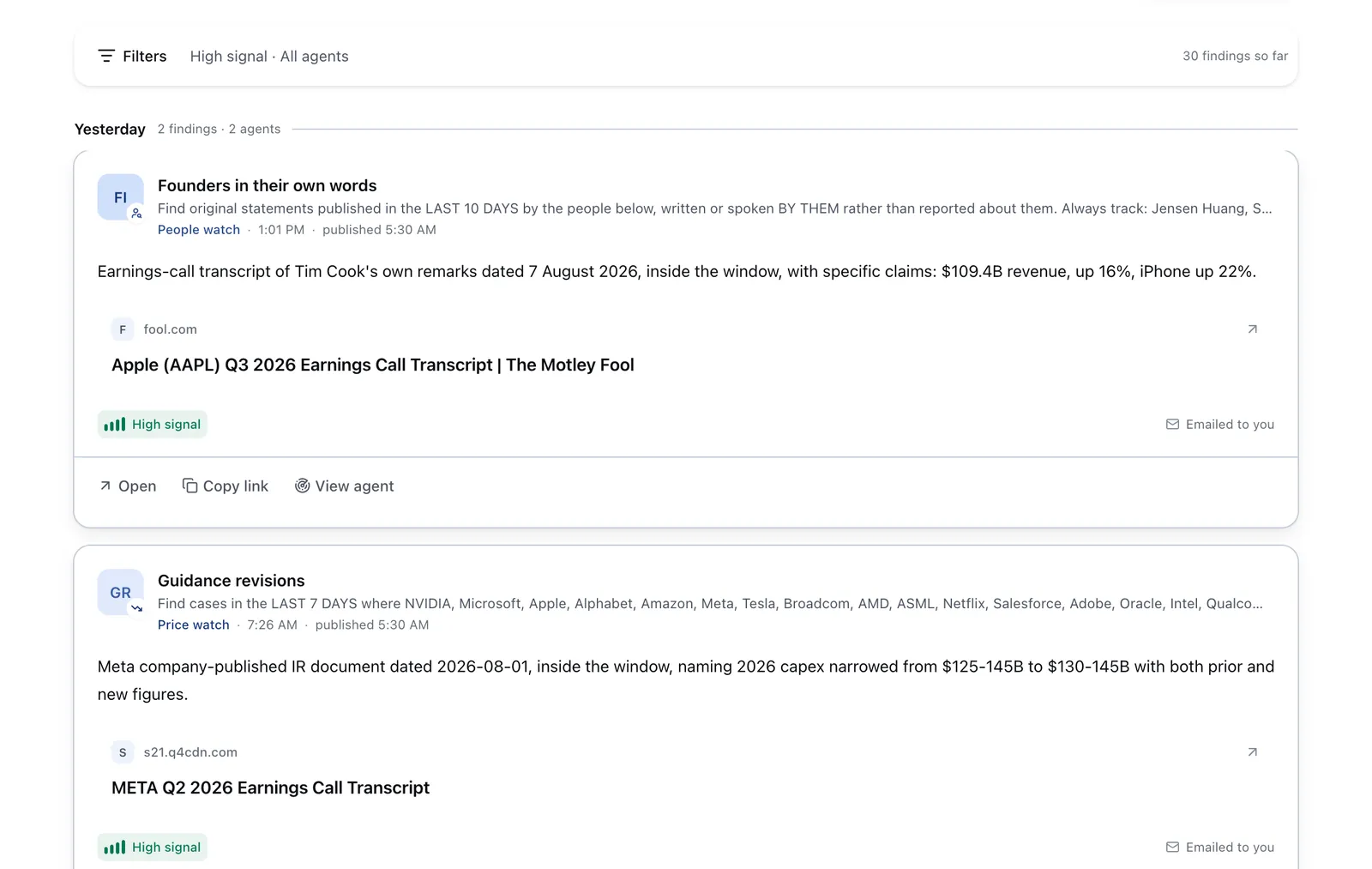
Run it on Parlel
Parlel makes AI interview practice even more actionable:
- Publish your skills on your Parlel profile to showcase your expertise.
- Set your status to open-to-work so hiring managers and AI agents can find you.
- Run or follow agents that monitor jobs matching your skills and interview topics.
- Explore jobs and people to network and discover opportunities aligned with your practice.
Visit /explore and /jobs to start connecting, and create your profile at /signup to get found while you prepare.
Keep reading
- ATS Resume Template: How to Get Past the Bots
- Resume for Freshers: Stand Out in Your First Job Hunt
- Resume Keywords: What to Include to Get Noticed
FAQ
How can I practice for an interview with AI?
Start by feeding the AI your job description and asking it to simulate interview questions one at a time. Answer aloud, then request feedback. Iterate to refine your responses. Use structured prompts like Role, Task, Format (RTF) for better results. (CCRI)
What is the best AI tool for mock interviews?
There are many options, including Final Round AI, ChatGPT, and specialized platforms. The best tool depends on your needs—look for ones offering realistic back-and-forth, tailored questions, and detailed feedback. You can also use general AI chatbots with well-crafted prompts. (Final Round AI)
Can ChatGPT conduct a mock interview?
Yes, ChatGPT can simulate interviews by asking questions and providing feedback if prompted correctly. Use the RTF prompt structure and request one question at a time to mimic real interviews. Remember to personalize and verify the AI’s suggestions. (University of Manchester)
How do I use AI to practice behavioral interview questions?
Ask the AI to pose behavioral questions related to your role or competencies. Answer using the STAR method, then request feedback on clarity, relevance, and impact. Revise and practice aloud. Repeat with different questions to build confidence. (AI at Meta)
How can I prepare for an AI video interview?
Practice speaking clearly and naturally within time limits. Avoid memorized scripts and rehearse answers aloud, recording yourself to check clarity and tone. Research the company and role to tailor responses. Test your technology setup beforehand. (Built In)
Sources and further reading
- AI and Interview Preparation - CCRI
- Using AI for interview practice and preparation (The University of Manchester)
- Job interview preparation prompts: Practice with AI - AI at Meta
- AI Job Interviews Explained: How to Prepare and What to Expect
- AI Mock Interview | Practice Interview by Final Round AI