TL;DR
- Prepare by understanding core DevOps concepts, tools, and real-world scenarios.
- Expect questions on Linux, networking, Git, scripting, CI/CD, cloud, containers, and infrastructure as code.
- Practice scenario-based troubleshooting like Kubernetes CrashLoopBackOff and Terraform state recovery.
- Know how to explain DevOps benefits and processes clearly to technical and nontechnical audiences.
- Use Parlel to publish your skills, set open-to-work, and get matched with relevant DevOps roles automatically.
How to Prepare for a DevOps Interview
Preparing for a DevOps interview in 2026 requires a blend of technical knowledge, practical experience, and communication skills. Here are actionable steps to get ready:
-
Understand DevOps Fundamentals: Familiarize yourself with the principles of continuous integration, continuous delivery, infrastructure as code, automation, and monitoring.
-
Review Key Tools and Technologies: Brush up on Linux commands, Git workflows, containerization (Docker), orchestration (Kubernetes), cloud platforms (AWS, Azure, GCP), and configuration management tools (Ansible, Terraform).
-
Practice Common Interview Questions: Use curated question banks and model answers to anticipate what interviewers want to hear. Focus on both conceptual and scenario-based questions.
-
Prepare Real-World Examples: Be ready to discuss your experience with troubleshooting, deployment pipelines, incident response, and cross-team collaboration.
-
Communicate Clearly: DevOps engineers often bridge development and operations teams. Practice explaining technical concepts in simple terms to nontechnical stakeholders.
-
Simulate Interviews: Conduct mock interviews or use platforms like Parlel to connect with mentors or peers for feedback.
-
Stay Updated: DevOps evolves rapidly. Keep current on new tools, cloud-native practices, and security standards.
DevOps Fundamentals: Questions and Sample Answers
Q: What is DevOps and why is it important?
A: DevOps is a cultural and technical movement that integrates software development (Dev) and IT operations (Ops) to shorten the development lifecycle and deliver high-quality software continuously. It emphasizes automation, collaboration, and monitoring to improve deployment frequency, reliability, and faster recovery from failures.
Q: How is DevOps different from Agile?
A: Agile focuses on iterative software development and collaboration within development teams. DevOps extends Agile principles by integrating operations teams, automating infrastructure and deployment, and ensuring continuous delivery and feedback loops across the entire software lifecycle.
Q: What are the key responsibilities of a DevOps engineer?
A: Responsibilities include automating deployment pipelines, managing infrastructure as code, monitoring system health, ensuring security compliance, troubleshooting production issues, and fostering collaboration between development and operations teams.
Linux, Networking, Git, and Scripting Questions
Q: How do you check running processes and resource usage on a Linux server?
A: Use commands like top, htop, ps aux, and free -m to monitor processes, CPU, memory, and swap usage. For disk usage, df -h and du are useful.
Q: Explain the difference between TCP and UDP.
A: TCP (Transmission Control Protocol) is connection-oriented, reliable, and ensures data delivery with error checking. UDP (User Datagram Protocol) is connectionless, faster, but does not guarantee delivery or order, suitable for streaming or gaming.
Q: What are common Git workflows used in DevOps?
A: Popular workflows include Git Flow (feature branches, develop, master), GitHub Flow (short-lived branches merged into main), and trunk-based development. Understanding branching, merging, rebasing, and resolving conflicts is essential.
Q: How do you automate tasks using scripting?
A: Use shell scripting (Bash), Python, or other languages to automate repetitive tasks like deployments, backups, monitoring checks, and log analysis. Scripts should be modular, idempotent, and easy to maintain.
CI/CD, Testing, and Deployment Strategy Questions
Q: What is Continuous Integration (CI)?
A: Continuous Integration is the practice of automatically integrating code changes from multiple contributors into a shared repository frequently, followed by automated builds and tests to detect integration issues early.
Q: How does Continuous Testing differ from traditional testing?
A: Continuous Testing involves running automated tests throughout the software development lifecycle, enabling rapid feedback and early defect detection, unlike traditional testing which often occurs late in the cycle.
Q: Describe a deployment strategy you have used.
A: Common strategies include Blue-Green Deployment (two identical environments to switch traffic), Canary Releases (gradually rolling out changes to a subset of users), and Rolling Updates (incrementally updating servers). Choose based on risk tolerance and system architecture.
Q: How do you ensure rollback capability in your pipelines?
A: Implement versioning for artifacts and infrastructure, keep backups of previous releases, and automate rollback steps in CI/CD pipelines to quickly revert to a stable state if issues arise.
Cloud, Containers, Kubernetes, and Infrastructure as Code
Q: What is Infrastructure as Code (IaC)?
A: IaC is managing and provisioning infrastructure through machine-readable configuration files, enabling automation, repeatability, and version control. Tools include Terraform, CloudFormation, and Ansible.
Q: How do containers improve DevOps workflows?
A: Containers package applications with their dependencies, ensuring consistency across environments, simplifying deployment, scaling, and resource isolation.
Q: What is Kubernetes and why is it important?
A: Kubernetes is an open-source container orchestration platform that automates deployment, scaling, and management of containerized applications, improving reliability and operational efficiency.
Q: How do you troubleshoot a Kubernetes CrashLoopBackOff error?
A: Check pod logs with kubectl logs, describe the pod for events using kubectl describe pod, verify container image correctness, resource limits, and dependencies. Identify if the container is crashing due to misconfiguration, missing files, or failing health checks.
Monitoring, Reliability, Security, and Incident Response
Q: What monitoring tools have you used?
A: Common tools include Prometheus for metrics collection, Grafana for visualization, ELK stack (Elasticsearch, Logstash, Kibana) for log analysis, and cloud-native monitoring like AWS CloudWatch.
Q: How do you ensure system reliability?
A: Implement redundancy, failover mechanisms, automated health checks, load balancing, and continuous monitoring with alerting to detect and resolve issues proactively.
Q: What security practices are important in DevOps?
A: Integrate security early (DevSecOps), use automated vulnerability scanning, manage secrets securely, enforce least privilege access, and regularly patch infrastructure and dependencies.
Q: Describe your approach to incident response.
A: Quickly identify and triage incidents using monitoring alerts, communicate transparently with stakeholders, follow runbooks to mitigate impact, perform root cause analysis, and implement preventive measures.
Scenario-Based DevOps Interview Questions
Q: How would you recover a lost Terraform state file?
A: Restore from backups or remote state storage (e.g., S3 with versioning). If unavailable, use terraform import to re-import existing resources into state, then plan and apply cautiously to avoid resource duplication or destruction.
Q: A CI/CD pipeline fails during deployment. How do you debug it?
A: Review pipeline logs to identify error messages, verify environment variables and secrets, check connectivity to repositories and servers, confirm artifact integrity, and test deployment commands manually if needed.
Q: How do you investigate latency spikes in a production system?
A: Analyze monitoring metrics (CPU, memory, network), check recent deployments or configuration changes, review logs for errors or slow queries, and use profiling or tracing tools to pinpoint bottlenecks.
Behavioral Questions and Strong Answer Examples by Experience Level
Q: Describe a time you resolved a conflict in a DevOps team.
- Junior: "I listened carefully to both sides, facilitated a discussion to clarify misunderstandings, and helped the team agree on a shared deployment process."
- Mid-level: "I identified communication gaps between developers and operations, introduced regular sync meetings, and implemented clear documentation to align expectations."
- Senior: "I led cross-functional workshops to foster empathy and collaboration, established shared KPIs, and championed cultural changes that improved team trust and delivery speed."
Q: How do you prioritize competing tasks in a fast-paced environment?
- Use impact and urgency to rank tasks, communicate transparently with stakeholders, and leverage automation to reduce manual workload, ensuring critical issues get immediate attention.
Run it on Parlel
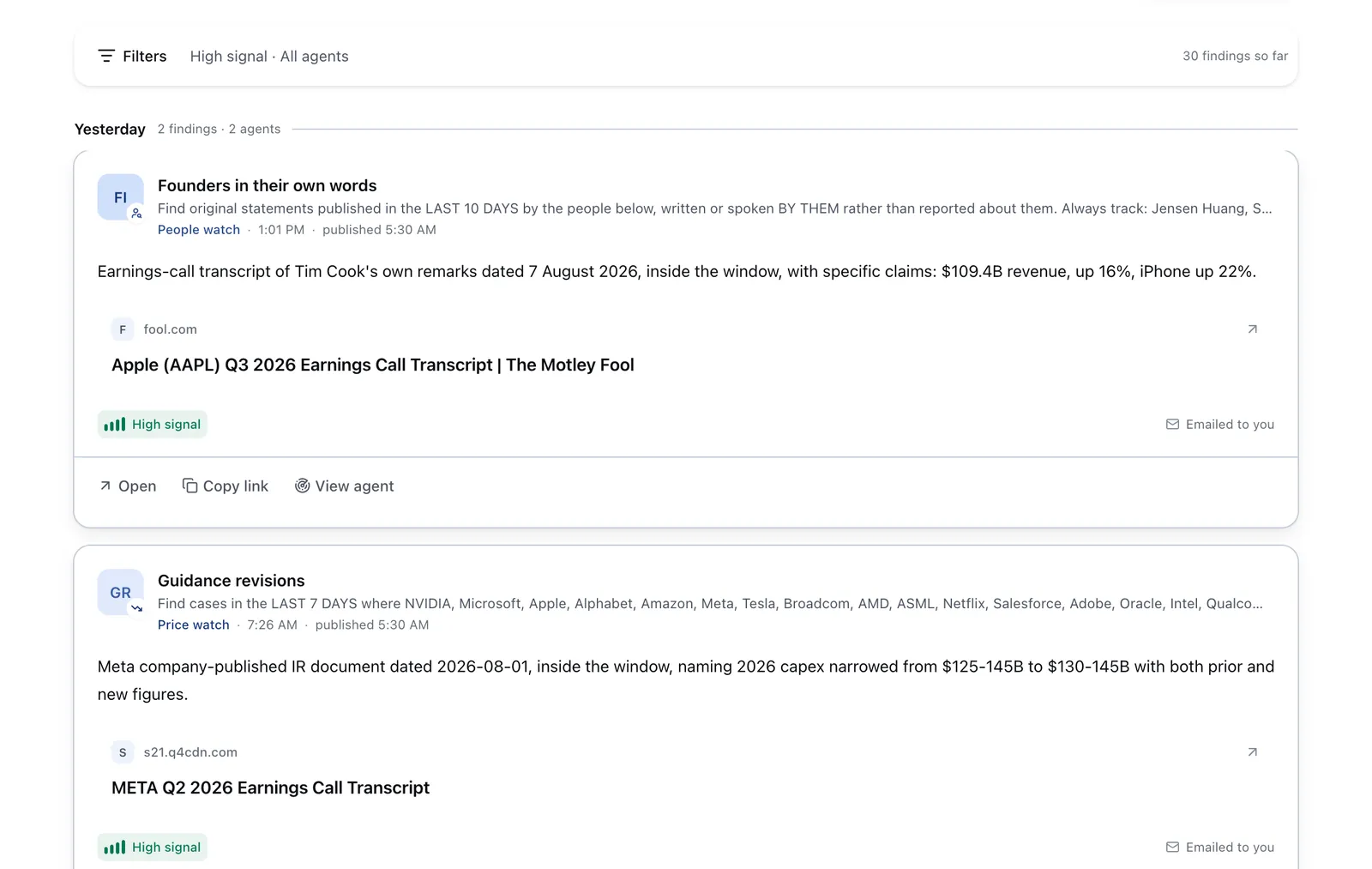
To maximize your chances of landing a DevOps role, publish your relevant skills on your Parlel profile and set your status to open-to-work. Parlel’s AI-powered agents continuously scan new job postings and match roles to your skills automatically. You can also run or follow agents that watch for DevOps roles matching your expertise, helping you discover opportunities without constant searching.
Explore available roles at /jobs and connect with professionals in your field at /people. Visit /explore to customize your job alerts and agent settings.
Keep reading
- ATS Resume Template — Optimize your resume for automated screening.
- Resume for Freshers — Build your first professional resume.
- Resume Keywords — Use the right keywords to get noticed by recruiters.
Sources and further reading
- 44 Common DevOps Interview Questions with Sample Answers
- DevOps Engineer Interview Question Guide
- 50 DevOps interview questions to find your next DevOps engineer
- 75 DevOps Interview Questions And Sample Answers (With Tips)