There is no single “founding engineer salary.” Scope, stage, location, seniority, cash runway, and the candidate’s alternatives all matter. Public 2026 analyses are also secondary sources with different samples. One June 2026 analysis of 197 public postings reported a $195,000 median and a $170,000-$218,000 interquartile range; another analysis of 55 postings reported the same median with a $175,000-$215,000 range. Treat those figures as directional US posting data, not a promise or an official market standard.
Method note: figures in this guide reflect the supplied research brief retrieved on September 26, 2026. The cited samples are public-posting or third-party analyses, not an independently audited compensation survey. Recheck source URLs, role scope, and location before making an offer.
TL;DR
- Founding Engineer Salary is a small-team hiring and candidate experience guide: use it to make one decision, not to collect generic advice.
- Start with the smallest useful version: a clear role, a fair process, and a decision that can be explained; add complexity only when the evidence requires it.
- Treat every claim as either an observation, an estimate, or a hypothesis; do not present a signal as proof.
- Before you publish or act, check the role's evidence, the candidate's consent, and the actual working terms.
- The practical outcome is a dated next step, a clear owner, and a reason to stop or revisit the decision.
A practical benchmark table
| Question | What to collect | Why it matters |
|---|---|---|
| Scope | Engineer #1, #2, or later; product and platform ownership | “Founding” is not a level |
| Market | Country, city, remote posture, currency | Location and employment model change cash |
| Stage | Bootstrapped, pre-seed, seed, Series A | Cash and risk profile differ |
| Candidate alternative | Current cash, offer, stability | The candidate prices opportunity cost |
| Equity | Shares, fully diluted percentage, instrument | Headline percentages hide economics |
The research brief cites one guide with directional bands of $160k-$220k pre-seed, $190k-$270k seed, and $240k-$340k Series A. Because the methodology is not independently verified, use these only as a comparison point. A public posting analysis is not evidence for India, Europe, or another market. Do not reuse the old draft’s unsupported India discount.
Cash versus equity
Ask the candidate what alternative they are comparing, then model the gap honestly. Illustrative example: a candidate has a $210,000 alternative. Your company offers $180,000 plus 1% options. The cash gap is $30,000 per year, or $120,000 over four years before tax. The option may be worth zero. If the company later has a $50 million fully diluted value and the grant is still 1% before additional dilution, the paper value is $500,000 before exercise cost, taxes, liquidation preferences, and dilution. That is not a forecast; it is one scenario.
Show a zero-value case, a diluted case, and an upside case. Explain that the latest preferred financing price is not necessarily the value of employee common stock. The candidate should be able to ask an accountant or lawyer questions without being rushed.
Set the offer
Use this worksheet before opening the role:
scope_and_level:
location_and_employment_model:
cash_range_and_currency:
equity_range_and_instrument:
vesting_and_exercise_terms:
benefits_and_equipment:
candidate_alternative:
runway_effect:
review_date:
source_dates:                 # benchmark URLs and access dates
Publish a good-faith range where required and where it helps candidates self-select. It can prevent a late mismatch and force founders to agree internally, but treat that as a hiring practice rather than a measured outcome. Revisit the range when scope changes, the market sample changes, or repeated candidates decline for cash reasons. Record the date and sources each time.
Salary is not a title
An engineer who owns architecture, hiring, board communication, and technical strategy may be a CTO-level role. An engineer who owns a product surface and advises on architecture may be a founding engineer. Pay and title should describe the work. Promising a future leadership title to compensate for a weak present offer creates confusion.
Build the offer from the role, not the label
Before looking at a benchmark, write what the person will own in the first six and twelve months. Note whether they will hire, carry on-call responsibility, work directly with customers, make architecture decisions, or operate under a technical founder. Then separate market inputs from company constraints.
| Input | Record | Why it changes the offer |
|---|---|---|
| Scope | Product surface, platform, or company-wide | “Founding” covers different work |
| Independence | Supported, autonomous, or hiring leader | Ambiguity changes the risk |
| Market | Country, city, remote arrangement | Cash, benefits, and law vary |
| Cash capacity | Runway and planned review | A lower salary has a personal cost |
| Equity | Instrument and fully diluted denominator | Percentage alone is incomplete |
| Alternatives | Candidate’s current or competing offer | Opportunity cost is real |
Do not use the candidate’s current salary as the only anchor. Ask what they need to make a move, what uncertainty they are accepting, and which parts of the package they value. A candidate may prefer more cash, a larger grant, a shorter exercise window, a specific location arrangement, or a clearer technical mandate.
Model three offers, not one promise
Illustrative scenario, not a benchmark: A candidate has a $210,000 alternative. Your company can offer $180,000 plus a proposed 1% option grant. The annual cash gap is $30,000. Over four years, the pre-tax cash difference is $120,000, but the option may be worth zero. A $50 million fully diluted company value would imply $500,000 of paper value before dilution, exercise cost, taxes, preferences, and the difference between preferred and common stock. It is a scenario for comparison, not a forecast.
Show the candidate:
| Case | Cash question | Equity question |
|---|---|---|
| Downside | Can the candidate sustain the salary? | What if the grant is worth zero? |
| Base | What does the four-year cash tradeoff look like? | What dilution and exercise assumptions apply? |
| Upside | What value would the company need to create? | Who receives proceeds after preferences and taxes? |
Avoid a spreadsheet that presents a single exit value as expected compensation. State every assumption and let the candidate replace it with their own tax and financial advice.
Negotiation and rejection signals
If candidates repeatedly decline because cash is below their alternatives, revisit the range or the scope. If they decline because the title promises leadership but the role has no authority, fix the role. If they ask detailed equity questions, provide the plan documents and explain what is not yet known. Do not respond to uncertainty with a larger headline percentage that the board has not approved.
If a candidate asks for a salary review, write the trigger and decision owner rather than promising an automatic increase. A review date can be useful operationally; it is not a guarantee of a raise. Keep employment terms, equity approval, and performance expectations separate.
Compensation review checklist
- Describe the actual scope and level.
- Collect dated, location-matched sources and label their limitations.
- Set a cash range the company can sustain.
- Explain benefits, equipment, currency, and employment model.
- State equity count, denominator, instrument, vesting, and approval status.
- Model a zero-value and dilution case.
- Ask what alternative and personal constraints the candidate is weighing.
- Give time for independent legal, tax, and financial advice.
- Record declines by reason without turning anecdotes into market law.
- Keep the public role, verbal offer, and written terms aligned.
Questions candidates should be able to answer
Before asking someone to trade cash for risk, prepare plain answers to the questions they are likely to ask:
- How many engineers are already on the team, and what does this person own that they do not?
- Which decisions can the engineer make without founder approval?
- How much runway is planned under the proposed salary?
- What is the company’s current funding or revenue context, and what may be shared?
- Is equity an option, restricted stock, or another instrument?
- What is the fully diluted denominator and when will the grant be approved?
- What happens to vested and unvested equity if the role ends or the company is acquired?
- When will compensation be reviewed, and who makes that decision?
If an answer is confidential, explain that it is confidential rather than substituting a reassuring guess. Candidates can make a risk decision with incomplete information more easily when the unknowns are named.
A defensible comparison process
Use at least two differently constructed sources when they are available, but do not average incompatible data into false precision. A public-posting sample may overrepresent companies willing to disclose cash. A vendor’s guide may reflect its customer base. A live role page may describe a narrow location or level. Record the URL, access date, market, scope, and what the source excludes.
Then compare the draft offer with actual candidates. Repeated declines are useful evidence, but they are not proof of a market median. A candidate may decline for product risk, manager fit, location, or scope even when cash is competitive. Ask respectfully and record the reason without trying to negotiate against every anecdote.
Offer-readiness checklist
- Write the real technical and leadership scope.
- Separate cash capacity from desired market positioning.
- Gather dated sources with sample and geography caveats.
- Model cash, equity, dilution, tax, and zero-value cases.
- Explain runway without promising future salary changes.
- Give candidates the documents needed for independent advice.
- Keep title, authority, role page, and offer consistent.
- Record decline reasons and revisit the offer only after reviewing a pattern.
Legal and equity caveats
Equity terms depend on company structure, jurisdiction, instrument, board approval, and tax status. A percentage must be paired with share count, fully diluted denominator, vesting, strike basis, exercise window, and plan documents. See the founding engineer equity guide and have counsel review the actual grant.
The founding engineer salary operating standard
This guide is written for a reader who needs to use founding engineer salary in a real workflow, not merely understand the definition. The dependable version starts with the decision that must be made, names the evidence available today, and keeps the next step small enough to complete. That is the editorial standard used throughout this guide and across the Parlel library: practical guidance should help a founder, operator, candidate, or freelancer act without hiding uncertainty behind confident language.
Decide what success means before you start
Write the result in one sentence: “After this exercise, I will know whether , and the next action will be .” For founding engineer salary, that sentence prevents the most common failure mode — doing more research after the useful question has already been answered. If the work concerns a person, company, role, client, or vendor, record the source and date as you go. If it concerns a template or message, define the recipient, context, and desired response before polishing the wording.
Use a small fixture rather than an abstract example. Pick three to five real records, situations, or drafts and run the method end to end. Keep one case that should succeed, one ambiguous case, and one case that should be rejected. That mix exposes whether the process can distinguish a useful signal from a convenient story. It also gives you material for a later review without pretending that a tiny sample is a benchmark.
Make the work explainable to another person
A high-quality result should survive a handoff. Another person should be able to see what was known at the time, which assumptions were made, what action was taken, and what would change the decision. For this topic, preserve the original input alongside the conclusion. Keep a short “why now” note, the owner, the due date, and the stop condition. This makes founding engineer salary useful in an agency-style operating system: the work is repeatable without becoming mechanical, and a reviewer can improve it without rewriting the whole process.
Quality-control pass before you ship
- Intent: Does the page answer the query implied by its title in the first screen?
- Evidence: Are current facts linked to a source, date, or clearly labeled assumption?
- Specificity: Could a reader use the checklist, script, table, or example immediately?
- Boundaries: Does the guide say when the method is a poor fit or should stop?
- Next action: Is there one useful action rather than a pile of competing calls to action?
Those checks matter more than adding another paragraph of general advice. They also protect search quality: the page earns attention by resolving the reader's problem, not by repeating founding engineer salary unnaturally. If the evidence is thin, say so and explain how to improve it. If the answer changes by country, role, plan, or company size, make that branch visible instead of burying it in a footnote.
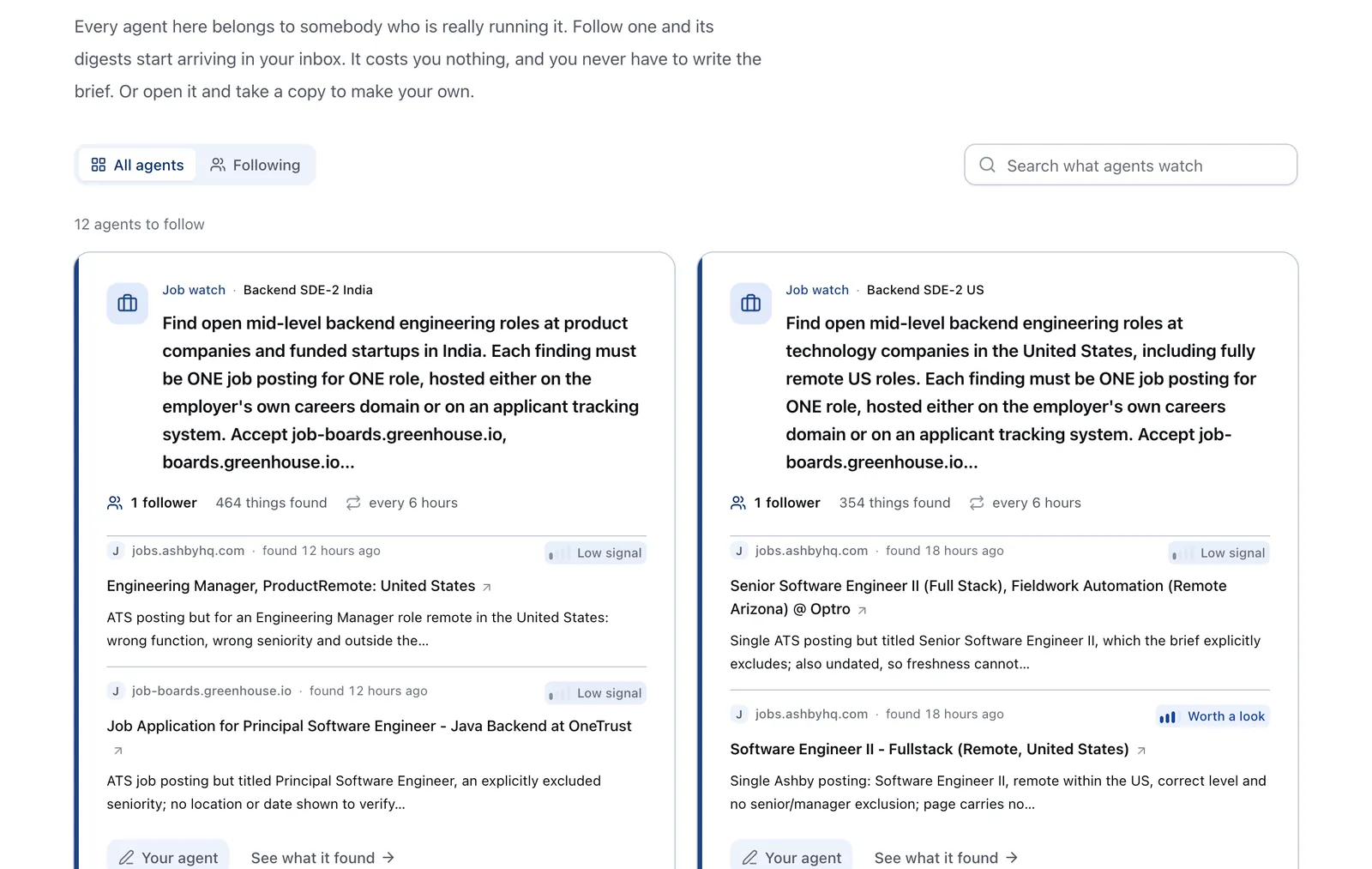
Run it on Parlel
Compare your draft with dated public role pages and publish the assumptions.
COMPENSATION REVIEW
- role: founding-backend-engineer
- source_cutoff: 2026-09-26
- market: US remote | India remote | other = verify separately
- cash: [range and currency]
- equity: [range, instrument, vesting]
- checks: scope stated, sources linked, zero-value case modeled
Use open roles as a live comparison, not a definitive benchmark. Keep the role page and offer letter consistent.
Keep reading
Continue the workflow with three closely related guides: - founding engineer equity - contract to hire - offer letter template