Preparing for a Java interview can be challenging, whether you're a fresher or an experienced developer. This guide covers essential Java interview questions with detailed answers, practical tips, and coding examples to help you succeed in 2026. You'll also learn how to leverage Parlel to get discovered by hiring agents and match with the right roles.
TL;DR
- Prepare differently based on your experience level, focusing on fundamentals for freshers and design/performance topics for seniors.
- Master core Java concepts: types, strings, classes, methods, and object-oriented principles.
- Understand collections, generics, JVM internals, exceptions, and multithreading with practical examples.
- Practice coding problems with clear explanations and complexity analysis.
- Use Parlel to publish your skills, set open-to-work, and connect with agents watching Java roles matching your expertise.
How to Prepare for a Java Interview by Experience Level
Interview preparation varies widely depending on your experience. Tailoring your study approach helps you focus on what matters most.
For Freshers
- Focus on fundamentals: Understand Java syntax, data types, control flow, and basic OOP concepts like classes, objects, inheritance, and interfaces.
- Learn common APIs: Strings, arrays, ArrayLists, and exception handling.
- Practice coding: Simple algorithmic problems and writing clean code.
- Prepare for behavioral questions: Be ready to discuss your projects, internships, and motivation.
For Mid-level Developers
- Deepen core knowledge: Explore Java 8+ features such as streams, lambdas, and functional interfaces.
- Collections and generics: Know when to use ArrayList vs LinkedList, HashMap vs TreeMap.
- Concurrency: Understand threads, synchronization, and concurrent collections.
- JVM internals: Garbage collection, memory model, and class loading.
- Project experience: Be ready to explain your design decisions and challenges.
For Senior Developers
- System design: Architect scalable, maintainable Java applications.
- Performance tuning: Profiling, optimizing memory and CPU usage.
- Advanced concurrency: Locks, thread pools, and asynchronous programming.
- Code reviews and mentoring: Demonstrate leadership and best practices.
- Behavioral depth: Discuss conflict resolution, team dynamics, and project ownership.
Core Java Interview Questions: Types, Strings, Classes, and Methods
What are the main data types in Java?
Java has primitive types: int, byte, short, long, float, double, char, and boolean. These store raw values and have fixed sizes. Java also has reference types like classes, interfaces, and arrays, which store references to objects.
How does Java handle strings?
Strings are objects of the String class and are immutable. The == operator checks reference equality (if two references point to the same object), while .equals() compares the actual content.
Example:
java
String a = new String("hello");
String b = new String("hello");
System.out.println(a == b); // false
System.out.println(a.equals(b)); // true
What is the difference between a class and an object?
- Class: A blueprint defining fields and methods.
- Object: An instance of a class created at runtime.
What are constructors?
Constructors initialize new objects. They have the same name as the class and no return type.
java
public class Person {
    String name;
    public Person(String name) {
        this.name = name;
    }
}
What is method overloading and overriding?
- Overloading: Same method name, different parameters within the same class.
- Overriding: Subclass provides a specific implementation of a superclass method.
Object-Oriented Java Questions: Inheritance, Interfaces, and Polymorphism
What is inheritance?
Inheritance allows a class (subclass) to inherit fields and methods from another class (superclass), promoting code reuse.
java
class Animal {
    void sound() { System.out.println("Animal sound"); }
}
class Dog extends Animal {
    void sound() { System.out.println("Bark"); }
}
What is an interface?
An interface defines a contract with abstract methods that implementing classes must override. It supports multiple inheritance of type.
What is polymorphism?
Polymorphism allows objects to be treated as instances of their parent class rather than their actual class, enabling dynamic method dispatch.
java
Animal a = new Dog();
a.sound(); // Outputs "Bark"
Collections and Generics: Choosing the Right Data Structure
What are the main collection interfaces?
- List: Ordered collection, allows duplicates (
ArrayList,LinkedList). - Set: No duplicates (
HashSet,TreeSet). - Map: Key-value pairs (
HashMap,TreeMap).
When to use ArrayList vs LinkedList?
ArrayList provides constant-time indexed access but slower insertions/removals in the middle (linear time). LinkedList allows faster insertions/removals but slower indexed access.
What are generics?
Generics enable type-safe collections and methods, allowing compile-time type checking.
java
List<String> names = new ArrayList<>();
Exceptions, JVM, Memory, and Garbage Collection
What is the difference between JDK, JRE, and JVM?
- JVM (Java Virtual Machine): Executes Java bytecode.
- JRE (Java Runtime Environment): JVM + libraries to run Java apps.
- JDK (Java Development Kit): JRE + tools to develop Java apps.
Source: Indeed, Java Interview Questions for 5 Years Experience
What are checked and unchecked exceptions?
- Checked exceptions: Must be declared or handled (
IOException). - Unchecked exceptions: Runtime exceptions, no declaration needed (
NullPointerException).
How does garbage collection work?
The JVM automatically frees memory occupied by objects no longer referenced, using algorithms like mark-and-sweep.
Multithreading and Concurrency Questions with Practical Scenarios
How do you create a thread in Java?
- Extend
Threadclass and overriderun(). - Implement
Runnableinterface and pass to aThread.
java
Thread t = new Thread(() -> System.out.println("Running"));
t.start();
What is synchronization?
Synchronization controls access to shared resources to prevent race conditions.
What are common concurrency utilities?
ExecutorService, CountDownLatch, Semaphore, ConcurrentHashMap.
Java Coding Interview Problems with Solutions and Complexity
Example: Reverse a String
public String reverse(String s) {
    return new StringBuilder(s).reverse().toString();
}
- Time complexity: O(n)
- Space complexity: O(n)
Example: Find duplicates in an array
public Set<Integer> findDuplicates(int[] nums) {
    Set<Integer> seen = new HashSet<>();
    Set<Integer> duplicates = new HashSet<>();
    for (int num : nums) {
        if (!seen.add(num)) duplicates.add(num);
    }
    return duplicates;
}
Senior Java Interview Questions: Design, Performance, and Project Experience
How do you design a scalable Java application?
- Use layered architecture (presentation, service, data).
- Apply design patterns (Singleton, Factory, Observer).
- Optimize database access and caching.
- Use asynchronous processing and microservices.
How do you profile and optimize Java performance?
- Use tools like VisualVM, JProfiler.
- Analyze heap dumps and thread dumps.
- Tune JVM flags and garbage collector.
- Optimize algorithms and data structures.
How do you handle legacy code and technical debt?
- Refactor incrementally with tests.
- Document and modularize code.
- Prioritize based on impact and risk.
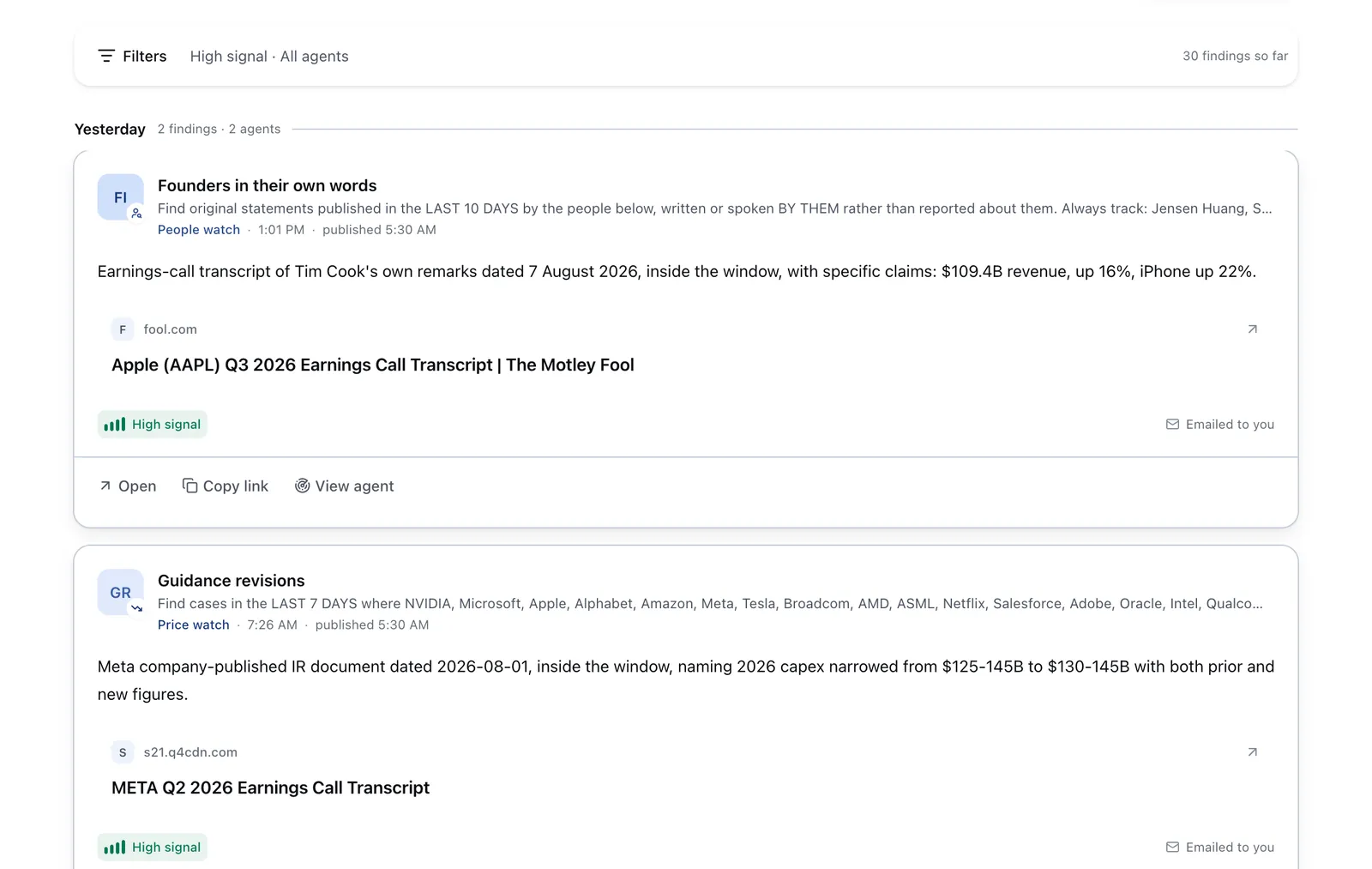
Run it on Parlel
Publishing your Java skills on Parlel is a smart way to get noticed by hiring managers and their AI agents. Here’s how:
- Publish your skills: Add Java and related technologies to your Parlel profile.
- Set open-to-work: Let recruiters know you’re available.
- Run or follow agents: Subscribe to job agents watching for Java roles matching your skills.
- Explore opportunities: Visit /explore and apply to relevant jobs at /jobs.
This proactive approach helps you get found while you focus on preparing and interviewing.
Keep reading
- ATS Resume Template — Optimize your resume for applicant tracking systems.
- Resume for Freshers — Craft a resume that stands out as a new graduate.
- Resume Keywords — Use the right keywords to get past resume filters.
Frequently Asked Questions
What are the most common Java interview questions?
Common questions cover Java basics, OOP concepts, collections, exceptions, JVM internals, and coding problems. Examples include explaining == vs .equals(), differences among JDK/JRE/JVM, and writing code snippets.
How do I prepare for a Java interview?
Prepare by reviewing core concepts, practicing coding problems, understanding your past projects, and simulating interviews. Tailor your preparation by experience level and role requirements.
What are the basic Java interview questions for freshers?
Basic questions include data types, control structures, OOP principles, string manipulation, and simple collections usage. Freshers should also be ready to explain their academic projects and internships.
What is the difference between JDK, JRE, and JVM?
The JVM executes Java bytecode; the JRE includes JVM plus standard libraries to run Java apps; the JDK includes JRE plus development tools like compiler and debugger.
What coding questions are asked in Java interviews?
Typical coding questions involve string manipulation, array algorithms, data structure usage, recursion, and concurrency problems. Interviewers expect clear explanations and efficient solutions.
Sources and further reading
- 46 Java Programming Interview Questions (And Sample Answers)
- Java Developer Interview Questions and Example Answers
- Java Interview Questions with Answers
- 29 Java Interview Questions and Answers to Know
- 22 Java Interview Questions for 5 Years of Experience