TL;DR
- Product manager interviews cover personal, behavioral, technical, product sense, leadership, and company-specific questions.
- Expect questions on feature prioritization, product design, metrics, roadmaps, and stakeholder management.
- Prepare answers using structured frameworks balancing qualitative and quantitative insights.
- Research the company’s products, market, and challenges thoroughly before your interview.
- Use Parlel to publish your skills, set open-to-work, and connect with hiring agents matching product management roles.
What to Expect in a Product Manager Interview
Product manager interviews are multifaceted, often spanning several categories to evaluate your fit comprehensively. According to Indeed, interviews typically include:
- General or personal questions: Your background, motivations, and career goals.
- Behavioral questions: Leadership style, conflict resolution, and handling failures.
- Company-specific questions: Understanding of the company’s products, market, and challenges.
- Technical questions: Your familiarity with relevant tools, data analysis, and technical concepts.
- Product management questions: Feature prioritization, product design, metrics, and roadmaps.
- Leadership questions: Stakeholder management, team collaboration, and decision-making.
Interviewers want to assess not only your experience but also your approach to problem-solving, communication, and strategic thinking.
Common Product Manager Interview Questions and What They Test
Here’s a breakdown of typical questions and the competencies they evaluate:
- Tell me about yourself. (General fit and communication)
- Why do you want to work here? (Company knowledge and motivation)
- How do you decide which features to build? (Prioritization skills, balancing user needs and business goals)
- Describe a product you launched. What was your role? (Execution and ownership)
- How do you measure product success? (Metrics and data-driven mindset)
- Tell me about a time you faced conflict with a stakeholder. (Leadership and conflict resolution)
- How would you improve our product? (Product sense and creativity)
These questions test your ability to think critically about product decisions, demonstrate leadership, and align with company values.
Product Sense and Product Design Questions
Product sense questions evaluate your ability to empathize with users, identify problems, and design solutions. Common prompts include:
- Design a new feature for [product]. How would you approach it?
- What is your process for gathering user feedback?
- How would you improve an existing product or feature?
To answer effectively:
- Understand the user’s problem: Clarify who the user is and what pain points they face.
- Define success metrics: What outcomes would indicate your solution works?
- Ideate and prioritize solutions: Consider feasibility, impact, and alignment with business goals.
- Address trade-offs: Be ready to discuss constraints like time, resources, and technical challenges.
For example, if asked how to improve a mobile app’s onboarding, you might suggest simplifying steps, adding tooltips, and measuring drop-off rates to iterate.
Execution, Metrics, and Prioritization Questions
Interviewers want to see how you manage product development and measure impact. Typical questions include:
- How do you prioritize features when resources are limited?
- Describe a time you used data to make a product decision.
- What metrics do you track for your product?
Effective answers show you can:
- Balance qualitative user insights with quantitative data.
- Use frameworks like RICE (Reach, Impact, Confidence, Effort) or MoSCoW (Must have, Should have, Could have, Won’t have).
- Communicate trade-offs clearly to stakeholders.
- Adjust priorities based on evolving business needs or customer feedback.
For instance, you might explain prioritizing a feature with high user impact but moderate effort over a low-impact, easy-to-build option.
Strategy, Roadmap, and Stakeholder Questions
Product managers must align product strategy with company goals and manage diverse stakeholders. Expect questions such as:
- How do you build and adjust a product roadmap?
- Describe a time you had to convince stakeholders to change the roadmap.
- How do you balance short-term wins with long-term vision?
Interviewers assess your strategic thinking, communication, and leadership. Good answers:
- Show understanding of market trends and company priorities.
- Demonstrate ability to negotiate and build consensus.
- Explain how you incorporate feedback from sales, marketing, engineering, and customers.
- Highlight your decision-making rationale when shifting priorities.
Example: You might describe pivoting a roadmap after new competitor features emerged, explaining how you communicated the change and mitigated risks.
Behavioral Questions: Leadership, Conflict, and Failure
Behavioral questions reveal how you handle real-world challenges. Common prompts include:
- Tell me about a time you led a cross-functional team.
- Describe a conflict you had with a colleague and how you resolved it.
- What is a failure you experienced, and what did you learn?
Use the STAR method to structure answers:
- Situation: Set the context.
- Task: Explain your responsibility.
- Action: Describe what you did.
- Result: Share the outcome and lessons learned.
For example, recount resolving a disagreement over feature scope by facilitating open dialogue and aligning on user impact.
How to Structure Strong Product Manager Interview Answers
Strong answers are clear, concise, and structured. Consider these frameworks:
- For product design and sense questions: Use the Problem-Understanding → Solution Ideation → Prioritization → Metrics framework.
- For prioritization questions: Explain your criteria, trade-offs, and decision-making process.
- For behavioral questions: Use the STAR method.
- For strategy questions: Outline context, strategic goals, stakeholder considerations, and outcomes.
Tailor your responses to the company’s product, industry, and maturity stage. Use specific examples with measurable impact whenever possible.
A Practical Preparation Plan and Questions to Ask the Interviewer
Preparation Plan
- Research the company and product: Understand their market, competitors, and recent news.
- Review common questions: Practice answers aloud, focusing on clarity and structure.
- Prepare your stories: Have examples ready for leadership, conflict, failure, and product launches.
- Study frameworks: Familiarize yourself with prioritization and product design methods.
- Mock interviews: Practice with peers or mentors to get feedback.
Questions to Ask Interviewers
- What are the biggest challenges for this product/team currently?
- How does the company define product success?
- What is the product development process here?
- How do cross-functional teams collaborate?
- What opportunities exist for professional growth?
Asking insightful questions demonstrates your interest and helps you assess if the role fits your goals.
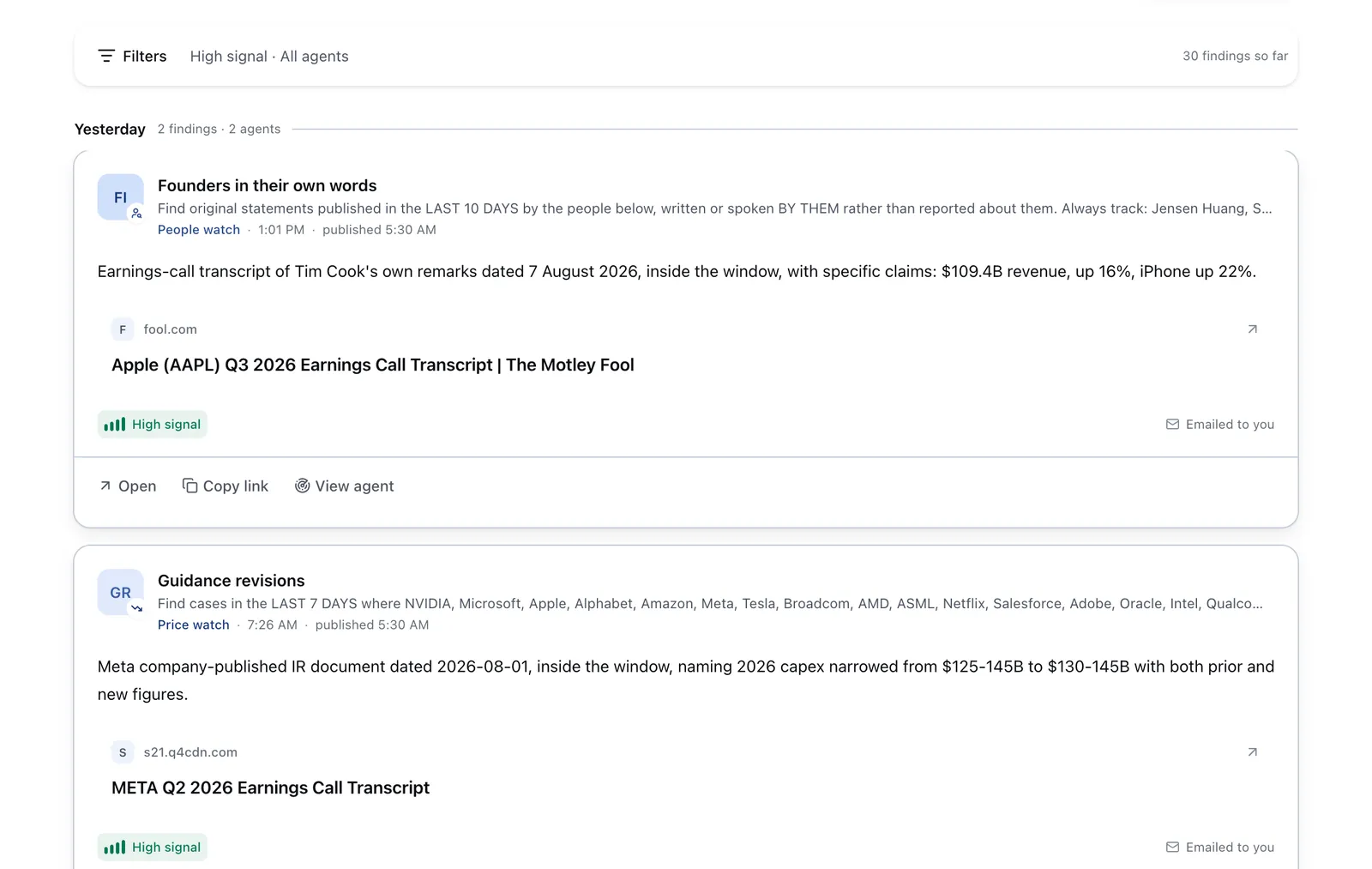
Run it on Parlel
Publish your product management skills on your Parlel profile and set your status to open-to-work. Parlel’s AI-powered hiring agents continuously scan for roles matching your expertise and notify you of opportunities — so you can get found by hiring managers while you focus on preparation.
You can also run or follow agents watching for product management roles and related skills on Parlel’s Explore page. Visit Jobs to browse current openings and connect directly with recruiters.
Keep reading
- ATS Resume Template — Craft resumes that pass automated screening.
- Resume for Freshers — Build your first professional resume.
- Resume Keywords — Use the right keywords to get noticed.
Sources and further reading
- Product Manager Interview Questions [Updated 2026]
- 42 Interview Questions for Product Managers (With Example Answers)
- Product manager interview questions: Master your next interview
- Product Manager Interview Question Guide