TL;DR
- Prepare by reviewing Python fundamentals, data structures, OOP, concurrency, and debugging.
- Understand key concepts like iterators vs iterables, shallow vs deep copy, and Python’s indentation significance.
- Practice coding challenges explaining your approach, trade-offs, and complexity.
- Familiarize yourself with advanced topics such as memory management, the GIL, and system design.
- Use Parlel to showcase your Python skills, set your profile open-to-work, and get matched with relevant roles automatically.
How to Prepare for a Python Interview
Preparing for a Python interview in 2026 means more than memorizing answers; it requires a strategic approach combining theory, practical coding, and role-specific knowledge.
-
Review Python Fundamentals
Start with core concepts: syntax, data types, control flow, functions, and error handling. Python’s indentation is syntactically significant — it defines code blocks rather than just formatting (W3Schools). -
Master Data Structures and Collections
Understand lists, tuples, dictionaries, and sets. Know their differences, use cases, and performance implications. -
Practice Coding Problems
Solve algorithmic challenges on platforms like LeetCode or HackerRank. Focus on explaining your approach, trade-offs, and analyzing time and space complexity (Index). -
Study Object-Oriented Programming (OOP)
Be ready to discuss classes, inheritance, polymorphism, and memory management concepts like garbage collection. -
Learn Concurrency and Debugging
Understand Python’s Global Interpreter Lock (GIL), threading vs multiprocessing, and exception handling. -
Prepare Behavioral and Experience Questions
Reflect on your projects and debugging experiences. Be ready to explain your contributions clearly. -
Use Resources and Mock Interviews
Utilize guides like Indeed’s 49 Python Interview Questions and DataCamp’s 41 Top Questions. Practice with peers or mentors.
Python Fundamentals: Questions and Answers
What is Python indentation and why is it important?
Python uses indentation to define code blocks instead of braces or keywords. This means consistent indentation is mandatory and enforces readable code structure (W3Schools).
What is the difference between a list and a tuple?
- List: Mutable, can be modified after creation (add, remove, change elements).
- Tuple: Immutable, fixed size and content after creation, which can improve performance and data integrity.
Explain the difference between shallow copy and deep copy.
- Shallow copy: Copies the outer object but references nested objects. Changes in nested objects affect both copies.
- Deep copy: Recursively copies all nested objects, creating independent duplicates (Indeed).
What is a Python iterator and how does it differ from an iterable?
- Iterable: An object capable of returning its members one at a time, e.g., lists, tuples.
- Iterator: An object that implements the
__next__()method to traverse through all elements, producing one value at a time (W3Schools).
What are Python’s built-in data types?
Common types include int, float, str, bool, list, tuple, dict, and set.
Lists, Tuples, Dictionaries, Sets, and Copying
When would you use a set instead of a list?
Use a set when you need unique elements and fast membership tests, as sets are unordered collections without duplicates.
How do dictionaries work in Python?
Dictionaries store key-value pairs and provide average O(1) time complexity for lookups, insertions, and deletions using a hash table.
Explain slicing in Python lists and tuples.
Slicing extracts a subset of elements: list[start:stop:step]. It works similarly for tuples but returns a new tuple since tuples are immutable.
How does Python handle copying collections?
- Use
copy.copy()for shallow copies. - Use
copy.deepcopy()for deep copies to avoid shared references in nested objects.
Functions, Iterators, Generators, and Scope
What is the difference between local and global scope?
- Local scope: Variables defined inside a function, accessible only within that function.
- Global scope: Variables defined outside functions, accessible throughout the module.
What are lambda functions?
Anonymous, inline functions defined with the lambda keyword, often used for short, throwaway functions.
How do generators differ from lists?
Generators produce items lazily, one at a time, saving memory for large datasets. Lists store all items in memory.
How do you create an iterator in Python?
Implement the __iter__() and __next__() methods in a class or use generator functions with yield.
Object-Oriented Python and Memory Management
What is inheritance in Python?
Inheritance allows a class (child) to inherit attributes and methods from another class (parent), promoting code reuse.
How does Python manage memory?
Python uses reference counting and a cyclic garbage collector to free unused objects.
What are descriptors?
Objects that customize attribute access (get, set, delete) via special methods like __get__, __set__, and __delete__.
What is the Global Interpreter Lock (GIL)?
A mutex that protects access to Python objects, preventing multiple native threads from executing Python bytecodes simultaneously (Index).
Concurrency, Exceptions, Testing, and Debugging
How do you handle exceptions in Python?
Use try-except blocks to catch and handle exceptions gracefully.
What is the difference between threading and multiprocessing?
- Threading: Multiple threads share the same memory space but are limited by the GIL.
- Multiprocessing: Multiple processes run independently with separate memory, bypassing the GIL.
How do you write unit tests in Python?
Use the unittest module or third-party frameworks like pytest to write test cases verifying code correctness.
What debugging techniques do you recommend?
Use print statements, the built-in pdb debugger, logging, or IDE debugging tools to trace and fix issues.
Python Coding Challenges With Solutions and Complexity
Example: Reverse a string
def reverse_string(s: str) -> str:
    return s[::-1]
- Time complexity: O(n), where n is the length of the string.
- Space complexity: O(n) for the new reversed string.
Example: Check if a number is prime
def is_prime(n: int) -> bool:
    if n <= 1:
        return False
    for i in range(2, int(n**0.5) + 1):
        if n % i == 0:
            return False
    return True
- Time complexity: O(√n)
- Space complexity: O(1)
Example: Merge two sorted lists
def merge_sorted_lists(a: list[int], b: list[int]) -> list[int]:
    i = j = 0
    merged = []
    while i < len(a) and j < len(b):
        if a[i] < b[j]:
            merged.append(a[i])
            i += 1
        else:
            merged.append(b[j])
            j += 1
    merged.extend(a[i:])
    merged.extend(b[j:])
    return merged
- Time complexity: O(m + n), where m and n are the lengths of the lists.
- Space complexity: O(m + n)
Advanced and Role-Specific Python Interview Questions
What is the difference between shallow copy and deep copy?
As covered earlier, shallow copy duplicates the outer object but keeps references to nested objects; deep copy recursively duplicates all nested objects (Indeed).
Explain Python’s memory management and garbage collection.
Python uses reference counting to track object usage and a cyclic garbage collector to detect and clean up reference cycles (Index).
How does the GIL affect concurrency in Python?
The GIL allows only one thread to execute Python bytecode at a time, limiting CPU-bound multithreading but not affecting multiprocessing or I/O-bound concurrency (Index).
What are Python descriptors and how are they used?
Descriptors control attribute access by implementing __get__, __set__, and __delete__ methods, enabling features like properties and method binding.
How do you optimize Python code for performance?
Use built-in functions, avoid unnecessary loops, leverage list comprehensions, use generators for large data, and profile code with tools like cProfile.
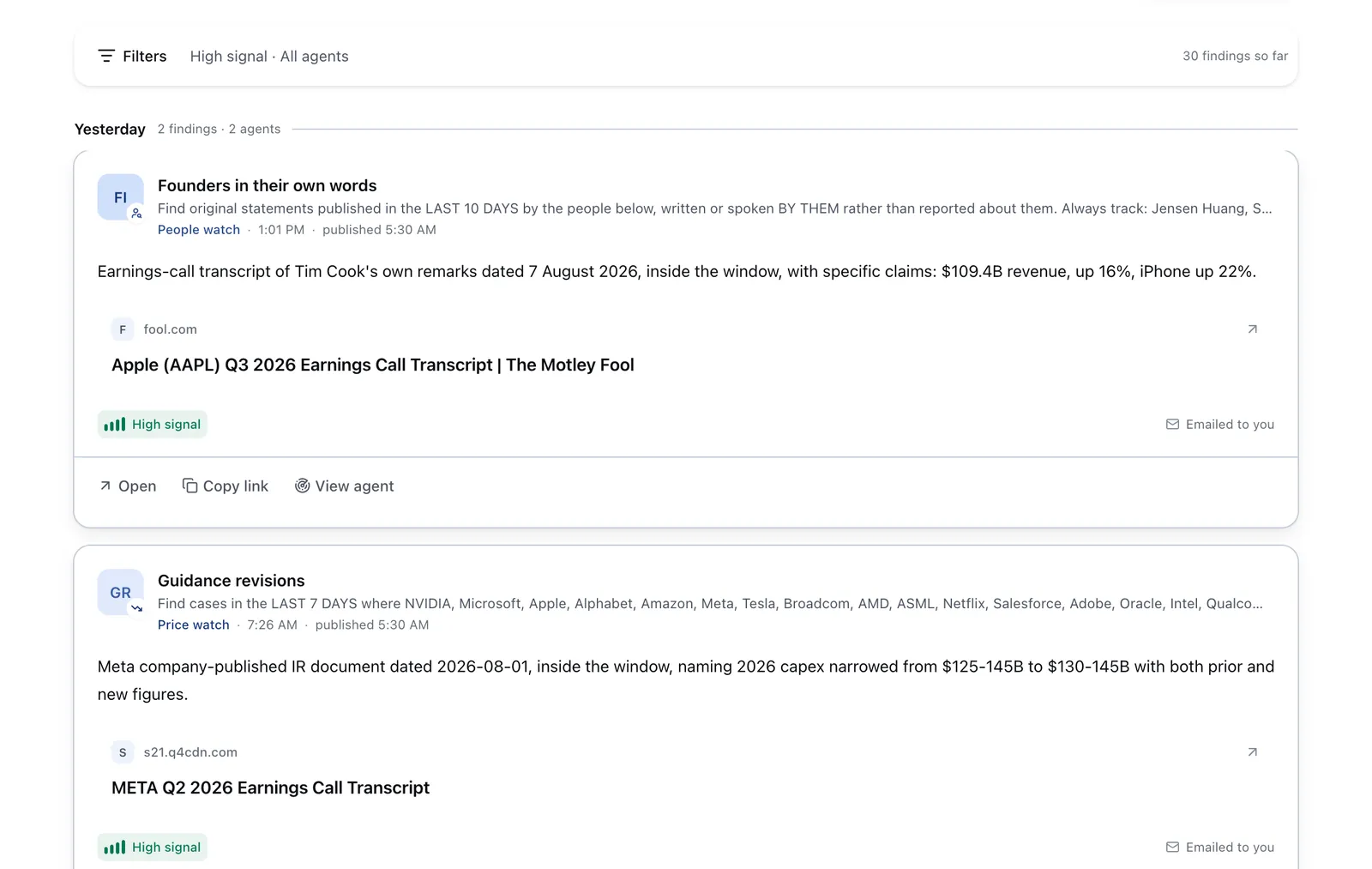
Run it on Parlel
To maximize your chances of landing a Python role, publish your Python skills on your Parlel profile and set your status to open-to-work. Parlel’s AI agents continuously scan for roles matching your skills and notify you of opportunities — so you can watch and follow jobs tailored to your expertise without constant searching.
Explore relevant roles on /jobs, discover peers and mentors on /people, and browse Python-related opportunities on /explore. Ready to get found? Create your profile today and let hiring managers and their AI agents find you while you focus on preparing.
Keep reading
- ats-resume-template — How to create resumes that pass applicant tracking systems.
- resume-for-freshers — Resume tips tailored for entry-level candidates.
- resume-keywords — Using keywords to get your resume noticed by recruiters.
Sources and further reading
- 49 Python Interview Questions To Prepare For
- 8 Python Interview Questions [Updated 2025]
- Python Interview Questions
- The 41 Top Python Interview Questions & Answers For 2026
- Top 50 Python Interview Questions and Answers 2026