Preparing for a React interview in 2026? This comprehensive guide covers essential React interview questions, from fundamentals to advanced topics like Hooks and performance optimization. You’ll find clear explanations, practical examples, and tips on structuring strong answers. Plus, learn how to get discovered by hiring agents on Parlel while you focus on your job search.
TL;DR
- React interview questions range from basics like components and JSX to advanced Hooks and performance patterns.
- Understand core concepts: props vs state, Virtual DOM, reconciliation, and React’s rendering lifecycle.
- Master Hooks usage, including rules, effects, and custom Hooks, with emphasis on current React guidance.
- Prepare for coding exercises on forms, events, state management, and debugging React apps.
- Use Parlel to publish your React skills, set open-to-work status, and get matched with relevant job opportunities automatically.
React Interview Questions by Experience Level
React interview questions often vary by your experience:
- Junior/Entry-level: Focus on React fundamentals such as components, JSX syntax, props, and state.
- Mid-level: Expect questions on lifecycle methods, Hooks, state management patterns, and event handling.
- Senior/Lead: Prepare for architecture discussions, performance optimization, custom Hooks, code splitting, and debugging complex React apps.
Interviewers may also ask scenario-based questions or coding exercises to evaluate practical skills.
React Fundamentals: Components, JSX, Props, and State
What are React Components?
React components are the building blocks of a React application. They can be:
- Function components: JavaScript functions returning JSX.
- Class components: ES6 classes extending
React.Component.
Function components are now preferred, especially with Hooks.
What is JSX?
JSX is a syntax extension for JavaScript that looks similar to HTML. It allows you to write UI elements declaratively inside JavaScript. Under the hood, JSX compiles to React.createElement calls.
Props vs State
- Props (short for properties) are inputs passed to components by their parents. Props are read-only.
- State is internal to a component and can change over time, triggering UI updates.
Understanding the difference is key in React interviews.
Rendering, Reconciliation, Keys, and the Virtual DOM
What is the Virtual DOM?
The Virtual DOM is a lightweight JavaScript representation of the actual DOM. React uses it to efficiently update the UI by diffing the previous and current Virtual DOM trees.
How does Reconciliation work?
Reconciliation is React’s process of comparing the new Virtual DOM with the previous one to determine the minimal set of changes needed to update the real DOM. This improves performance by avoiding unnecessary DOM manipulations.
Why are keys important in lists?
Keys help React identify which items have changed, been added, or removed in lists. They should be unique and stable to optimize reconciliation.
Hooks: Rules, State, Effects, and Custom Hooks
What are React Hooks?
Hooks are functions that let you use React state and lifecycle features inside function components. Built-in Hooks include:
useStateanduseReducerfor state management.useEffectfor side effects.useLayoutEffectfor layout-related effects.- Others like
useContext,useMemo, anduseCallback.
React describes Hooks as a way to use React features from components; built-in Hooks include state Hooks such as useState and useReducer and the Effect Hook useEffect.
Effect Hooks
Rules of Hooks
- Only call Hooks at the top level of your React function (no loops, conditions, or nested functions).
- Only call Hooks from React function components or custom Hooks.
The legacy Hooks overview states that Hooks must be called at the top level, not inside loops, conditions, or nested functions, and only from React function components or custom Hooks.
Using the Effect Hook – React
useEffect vs useLayoutEffect
useEffectruns after the render is committed to the screen. It’s suitable for data fetching, subscriptions, or synchronizing with external systems.useLayoutEffectruns synchronously before the browser repaints, useful for reading layout and synchronously re-rendering.
useLayoutEffect fires before the browser repaints, making it suitable for layout measurement; React identifies it as a less commonly used variation of useEffect.
Effect Hooks
Custom Hooks
Custom Hooks are functions that start with use and encapsulate reusable logic. They allow sharing stateful logic between components without changing component hierarchy.
Forms, Events, Context, and State Management
Controlled vs Uncontrolled Components
- Controlled components have their form data controlled by React state.
- Uncontrolled components store their own state internally using refs.
Event Handling
React uses synthetic events that wrap native browser events for cross-browser compatibility. Understanding event pooling and propagation is important.
Context API
Context provides a way to pass data through the component tree without prop drilling. It’s useful for global state like themes or user authentication.
State Management Libraries
Besides React’s built-in state, libraries like Redux, MobX, or Zustand are common in larger apps. Interviewers may ask about pros and cons or integration strategies.
Performance, Memoization, and Code Splitting
Memoization
React.memooptimizes functional components by memoizing rendered output.useMemocaches expensive calculations.useCallbackmemoizes callback functions to avoid unnecessary re-renders.
Code Splitting and Lazy Loading
React supports dynamic import and React.lazy to split code into chunks, improving initial load times.
Performance Optimization Tips
- Avoid unnecessary re-renders.
- Use keys properly.
- Debounce expensive operations.
- Use profiling tools like React DevTools Profiler.
React Coding and Debugging Interview Exercises
Interviewers often include practical exercises such as:
- Building a small UI component (e.g., a to-do list).
- Implementing controlled forms.
- Debugging issues with state or props.
- Fixing performance bottlenecks.
- Writing custom Hooks.
Practice writing clean, well-structured code and explaining your thought process clearly.
How to Structure Strong React Interview Answers
- Understand the question: Clarify if needed.
- Explain concepts clearly: Use simple language and examples.
- Show practical knowledge: Reference React docs or best practices.
- Demonstrate problem-solving: Walk through your approach.
- Be concise: Avoid rambling; stay on topic.
Use real-world examples where possible and mention current React versions or features if relevant.
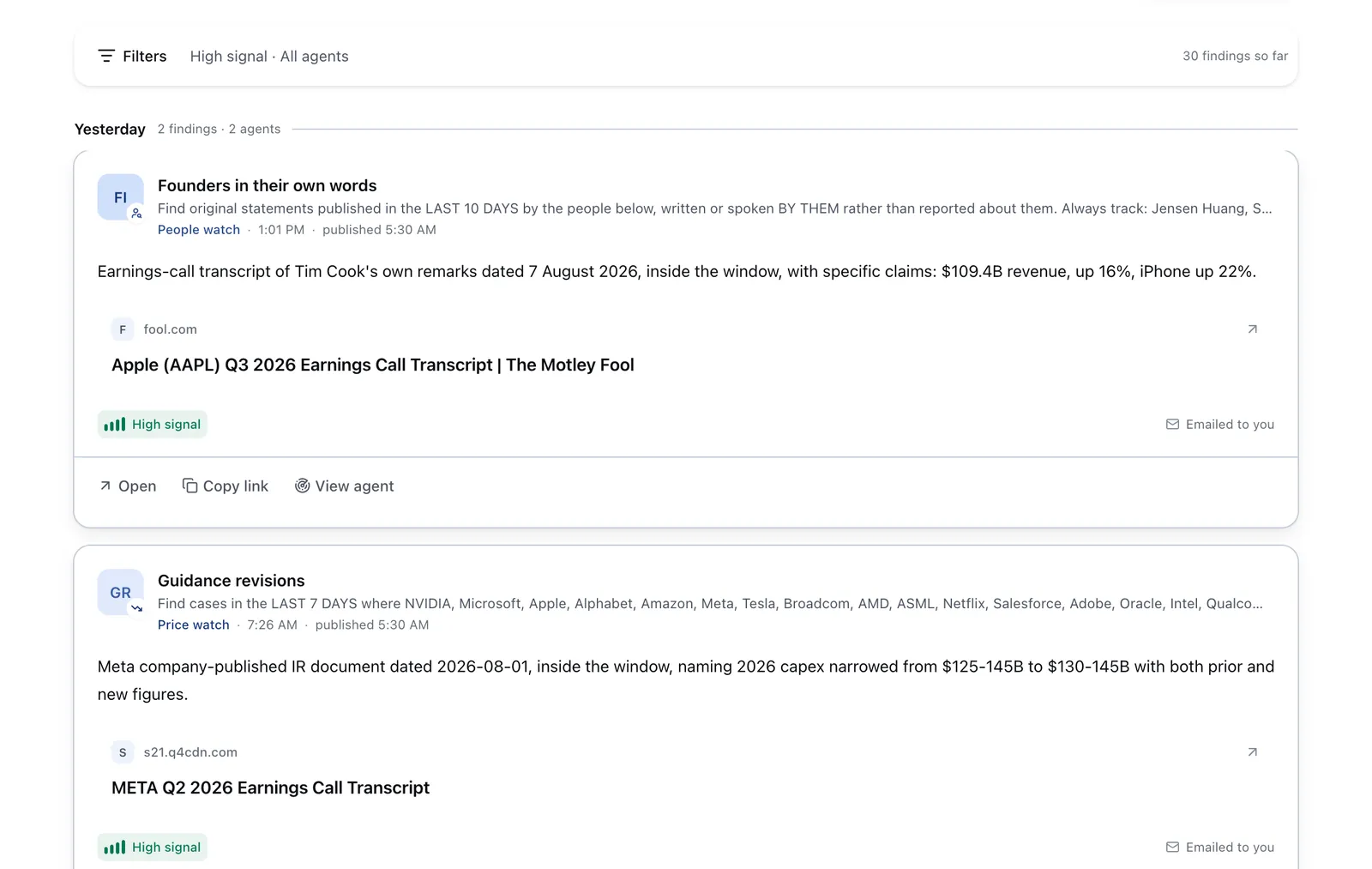
Run it on Parlel
Publish your React skills on your Parlel profile to get discovered by hiring managers and AI agents actively searching for candidates with React expertise. Set your profile to open-to-work and optionally run or follow agents watching for jobs matching React skills and interview readiness.
Check out relevant roles and connect with recruiters on Explore and Jobs pages. Parlel helps you get matched while you focus on preparing and applying.
Keep reading
FAQ
What are the most common React interview questions?
Common questions include React fundamentals (components, props, state), Hooks usage, Virtual DOM and reconciliation, event handling, and performance optimization.
What is the difference between props and state in React?
Props are read-only inputs passed from parent to child components, while state is internal, mutable data managed within a component.
What is the Virtual DOM, and how does reconciliation work?
The Virtual DOM is React’s in-memory representation of the UI. Reconciliation compares Virtual DOM trees to update only the necessary parts of the real DOM efficiently.
What are React Hooks, and what are the Rules of Hooks?
Hooks are functions that let you use React features in function components. Rules include calling Hooks only at the top level and only from React functions or custom Hooks.
What is the difference between useEffect and useLayoutEffect?
useEffect runs after the render is painted and is used for side effects like data fetching. useLayoutEffect runs synchronously before painting and is used for layout measurements.
Sources and further reading
- React Interview Questions
- React Interview Questions and Answers [2026]
- Top 50 React Interview Questions and Answers 2026
- Effect Hooks
- Using the Effect Hook – React