TL;DR
- A relieving letter is an official document from an employer confirming an employee’s resignation acceptance and last working day.
- Key elements include employee details, resignation acceptance, last day of service, appreciation, and authorized signature.
- It differs from an experience letter, which focuses on job performance and skills.
- Employees should request a relieving letter politely and follow up if delayed.
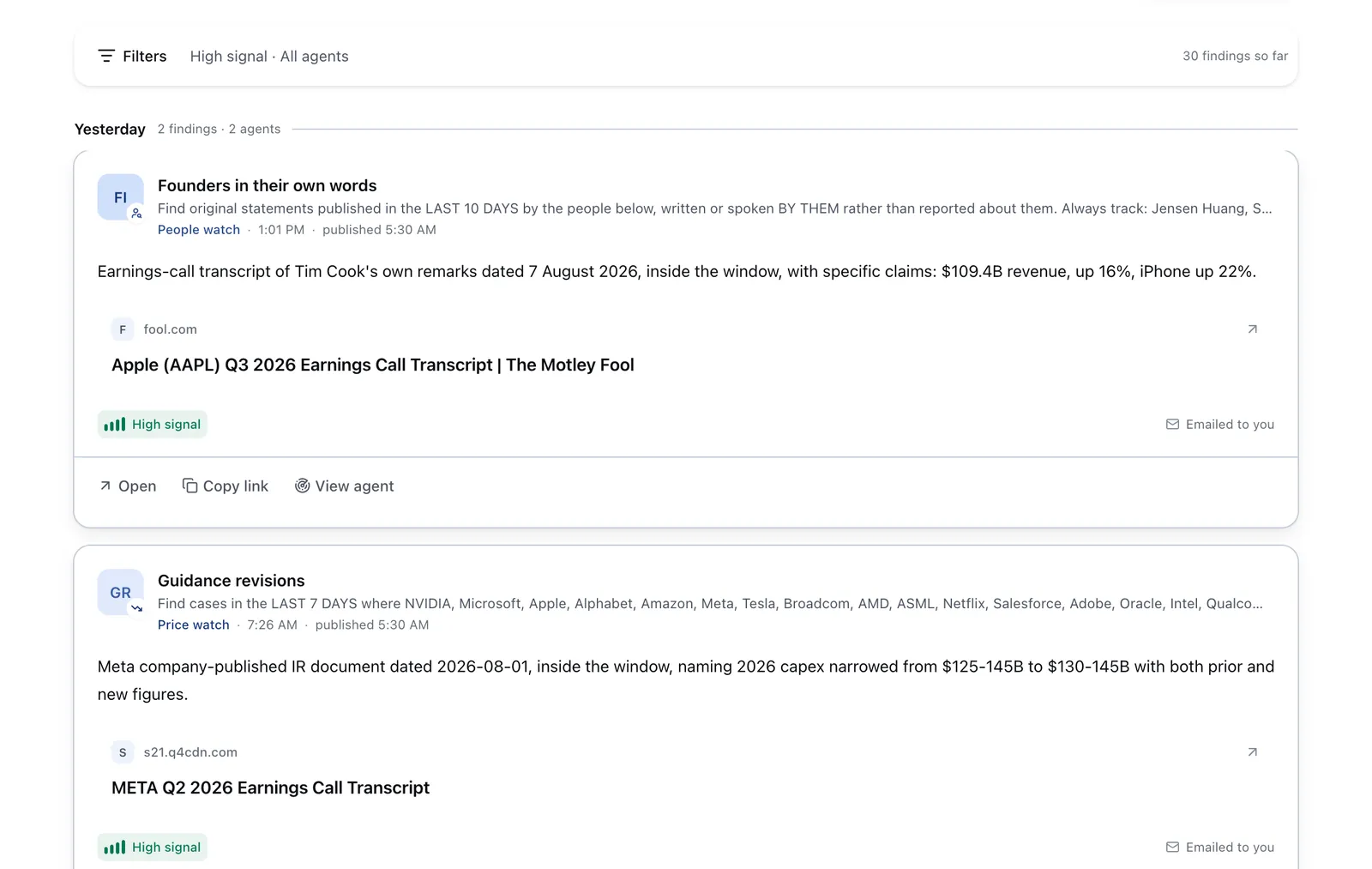
- Use Parlel to publish your skills, set open-to-work, and connect with hiring agents who can find roles matching your profile.
Relieving Letter Format: Copy-and-Paste Employer Template
Here is a straightforward relieving letter template employers can use to formally acknowledge an employee’s resignation and confirm their release from duties:
[Company Letterhead]

Date: [Issue Date]

To,
[Employee Name]
[Employee Designation]
[Department]
[Employee Address]

Subject: Relieving Letter

Dear [Employee Name],

This is to acknowledge the receipt of your resignation letter dated [Resignation Date]. We hereby accept your resignation and confirm your last working day as [Last Working Day].

We appreciate your contributions during your tenure with [Company Name] from [Joining Date] to [Last Working Day]. All your duties and responsibilities have been duly handed over, and your exit formalities are complete.

We wish you all the best in your future endeavors.

Sincerely,
[Authorized Signatory Name]
[Designation]
[Company Name]
[Contact Information]
This format is professional, clear, and covers the essential information as recommended by Indeed.
Filled Relieving Letter Sample with Dates and Employee Details
Below is an example of a completed relieving letter for better understanding:
[ABC Technologies Pvt. Ltd. Letterhead]

Date: 15th September 2026

To,
Mr. Rahul Sharma
Senior Software Engineer
Development Department
123, Green Park, New Delhi

Subject: Relieving Letter

Dear Rahul Sharma,

This is to acknowledge the receipt of your resignation letter dated 1st September 2026. We hereby accept your resignation and confirm your last working day as 14th September 2026.

We appreciate your valuable contributions during your tenure with ABC Technologies Pvt. Ltd. from 1st January 2020 to 14th September 2026. All your duties and responsibilities have been duly handed over, and your exit formalities are complete.

We wish you all the best in your future endeavors.

Sincerely,
Anita Verma
HR Manager
ABC Technologies Pvt. Ltd.
contact@abctech.com | +91-11-23456789
This example includes all critical details and maintains a polite, professional tone.
What to Include in a Relieving Letter
A relieving letter should clearly communicate the employee’s release from the company and include the following elements:
- Issue Date: The date the letter is issued.
- Employee Details: Full name, designation, department, and sometimes employee ID.
- Company Details: Company name and contact information, often on letterhead.
- Subject Line: Typically “Relieving Letter” or similar.
- Acknowledgment of Resignation: Reference to the employee’s resignation letter and its acceptance.
- Last Working Day: The official date the employee leaves the company.
- Employment Period: Duration of employment (joining date to relieving date).
- Appreciation: A brief note thanking the employee for their service.
- Exit Formalities: Confirmation that all handovers and formalities are complete.
- Authorized Signature: Name, designation, and signature of the company representative.
Optionally, the letter may mention:
- Settlement Status: Whether final dues have been paid or are pending, as advised by Helion.
- Confidentiality Clauses: Continuing obligations post-employment, per Startup India’s template.
- Company Property: Confirmation that company assets have been returned.
Including these details ensures clarity and helps the employee use the letter as proof for future employment or visa applications.
Relieving Letter vs. Experience Letter: Key Differences
Understanding the distinction between a relieving letter and an experience letter is important:
| Aspect | Relieving Letter | Experience Letter |
|---|---|---|
| Purpose | Confirms resignation acceptance and last working day | Details job responsibilities, skills, and performance |
| Issued by | Employer | Employer |
| Timing | Issued immediately after resignation acceptance | Issued after employment ends or on request |
| Content Focus | Employment dates, resignation acceptance, clearance | Job role, achievements, conduct, skills |
| Legal/HR Use | Proof of release from company obligations | Reference for future employers |
A relieving letter confirms that the employee is officially free from the company and has completed all exit formalities. An experience letter highlights the employee’s work experience and competencies.
How to Request a Relieving Letter from Your Employer
If you have resigned and need a relieving letter, here is a polite and effective approach to request it:
Initial Request Email Template
Subject: Request for Relieving Letter

Dear [Manager/HR Name],

I hope this message finds you well. As you are aware, I have submitted my resignation on [Resignation Date], and my last working day is scheduled for [Last Working Day].

I kindly request you to issue my relieving letter at your earliest convenience, as it is required for my future employment formalities.

Thank you for your support during my tenure at [Company Name].

Best regards,
[Your Full Name]
[Your Employee ID]
[Your Contact Information]
Follow-up Email Template (If No Response)
Subject: Follow-up on Relieving Letter Request

Dear [Manager/HR Name],

I wanted to follow up on my previous request for the relieving letter. As my last working day was on [Last Working Day], I would appreciate it if you could provide the document at your earliest convenience.

Please let me know if any further information or formalities are required from my side.

Thank you for your assistance.

Best regards,
[Your Full Name]
[Your Employee ID]
[Your Contact Information]
These templates are adapted from Zimyo’s HR email templates and emphasize professionalism and clarity.
What to Do If Your Relieving Letter Is Delayed or Refused
Sometimes, employers delay or refuse to issue a relieving letter. Here are steps you can take:
- Check Employment Agreement: Review your contract for clauses about resignation notice and exit formalities.
- Communicate Clearly: Politely remind HR or your manager about pending formalities and the importance of the letter.
- Complete All Formalities: Ensure you have returned company property, cleared dues, and completed handovers.
- Escalate if Needed: If delays continue, escalate to higher management or the HR head.
- Seek Legal Advice: As a last resort, consult a labor lawyer or local labor authority, especially if the letter is legally required for future employment.
Maintaining a professional tone throughout can help resolve issues amicably.
Checklist Before Issuing or Sending the Letter
For HR professionals or employers preparing a relieving letter, use this checklist to ensure completeness and accuracy:
- [ ] Use official company letterhead and date the letter.
- [ ] Include full employee name, designation, and department.
- [ ] Clearly state acceptance of resignation and last working day.
- [ ] Mention employment period (joining date to relieving date).
- [ ] Confirm completion of handover and exit formalities.
- [ ] Include appreciation for employee’s service.
- [ ] Specify settlement status only if accurate (paid or pending).
- [ ] Add confidentiality or contractual clauses only if applicable.
- [ ] Obtain authorized signatory’s name, designation, and signature.
- [ ] Provide contact details for any future queries.
- [ ] Keep a copy for company records and employee reference.
Following this checklist helps avoid disputes and supports smooth employee transitions.
Frequently Asked Questions About Relieving Letters
What is a relieving letter?
A relieving letter is an official document issued by an employer confirming acceptance of an employee’s resignation and stating their last working day. It serves as proof that the employee has been formally relieved from their duties.
Source: Indeed
What should be included in a relieving letter?
It should include the issue date, employee name and designation, company name, subject, resignation acceptance, last working day, employment period, appreciation, exit formalities confirmation, and authorized signature. Optional details may include settlement status and confidentiality clauses.
Source: Indeed
How do I write a relieving letter for an employee?
Use a professional format stating acceptance of resignation, last working day, employment duration, and completion of exit formalities, along with a note of appreciation and authorized signature. Templates are available from sources like Helion.
How do I request a relieving letter from my employer?
Send a polite email referencing your resignation date and last working day, requesting the letter for your future employment needs. Follow up if necessary. See sample emails from Zimyo.
Is a relieving letter the same as an experience letter?
No. A relieving letter confirms your release from the company and resignation acceptance. An experience letter details your job role, skills, and performance during your tenure. Both are important but serve different purposes.
Run it on Parlel
Publish your skills on your Parlel profile and set your status to open-to-work to let hiring agents find you. Parlel’s AI-driven agents watch for roles matching your expertise, including positions requiring knowledge of HR formalities like relieving letters. You can also follow agents or job alerts on Explore and apply directly via Jobs. This way, you stay visible to recruiters and can get hired faster.
Keep reading
- ATS Resume Template: Get Past the Bots
- Resume for Freshers: How to Start Strong
- Resume Keywords: What to Include in 2026
Sources and further reading
- What Is a Relieving Letter? (With Template and Example) | Indeed
- Startup India Relieving Letter Template
- Meaning of relieving letter (with samples) | Indeed India
- Relieving Letter Format - Template Email | Zimyo HRMS
- Relieving Letter — Free Word Template (India) | Helion