A returnship is a structured, usually paid program for experienced professionals returning after a career break. Large employers pioneered cohort-based returnships; more companies now post returner roles year-round. This guide explains eligibility, timing, how to apply without hiding your gap, and how to run a parallel search outside formal cohorts.
This page was reviewed on September 30, 2026.
TL;DR
- Confirm break-length and prior-experience rules before you invest in an application.
- Cohort windows often open months before the start date; miss the window and wait for the next cycle or rolling postings.
- Address the gap directly on your resume and LinkedIn; do not invent continuous employment.
- Treat returnships as one path beside contract, part-time, and skill-refresh projects.
- Rebuild a searchable profile with current skills so opportunities can find you between cohorts.
What a returnship is (and is not)
| Term | Meaning |
|---|---|
| Returnship / return to work | Time-bounded program with training, mentorship, and a real team placement |
| Direct-hire returner role | Full-time hire aimed at returners without a fixed cohort wrapper |
| Career break | Time out of full-time professional work (caregiving, health, relocation, etc.) |
Goldman Sachs describes its Returnship as a paid, 12-week program for professionals with prior experience who have been out of full-time work for two or more years, with a minimum prior experience threshold stated on its careers page. Morgan Stanley’s Return to Work program has been described as roughly 16 weeks with eligibility for people out of the workforce for two or more years, calculated relative to the program start date. Other employers set different bars (sometimes closer to 18 months or one year). Always read the live eligibility text for the cohort you want.
A returnship is not an unpaid internship for mid-career adults, and it is not a guarantee of a full-time offer. Conversion depends on performance, headcount, and business needs.
Who returnships are for
Returnships fit people who already have professional experience and a meaningful break. They are adjacent to, but not identical with, a late-career switch. If you are changing fields more than returning to one, also read career change at 40.
Common reasons for breaks include caregiving, health, relocation, entrepreneurship pauses, and education. Programs generally care that you can commit full-time for the cohort length and that your prior experience maps to open placements.
How to find returnship programs
| Route | How to use it |
|---|---|
| Employer careers pages | Search “returnship,” “return to work,” “reentry,” “relaunch” |
| LinkedIn Jobs | Keyword + alerts; follow TA pages for cohort announcements |
| Indeed | Same keywords; verify on employer site |
| Professional associations / alumni networks | Often share cohort reminders |
| Returner-focused directories | Use as discovery, then apply on the employer domain |
Illustrative timing pattern from public program descriptions (verify live dates each cycle): some large financial employers open applications in autumn for spring or winter cohorts; others post roles individually with their own closing dates. Government and state programs may run multiple cohorts per year with separate open dates.
Set calendar reminders. Cohort capacity is limited; late applications are often closed, not waitlisted.
Application package for returners
Resume
You do not need to pretend the gap did not happen. Use a clean format:
- Professional summary with target role and years of prior experience.
- Reverse-chronological roles with dated bullets.
- A short “Career break” line with years and a factual reason if you choose to share one.
- Recent projects, coursework, volunteering, or contract work that refreshed skills.
Fresh layout ideas can borrow structure from resume for freshers even though your experience level differs: clarity beats decoration.
Update headline, about, and dates so they match the resume. Tips: LinkedIn profile tips. Turn on open-to-work settings appropriate to your privacy needs.
Narrative
Prepare a 60–90 second return story: what you did before, why you paused (at the altitude you are comfortable sharing), what you did to stay current, and why this program or role is the right re-entry.
Email template: asking about returner opportunities
Subject: Returnship / returner roles: [Your Name], [Function]

Hi [Name],
I am returning to full-time work after a [N]-year break following [prior title/domain].
I previously [one proof of impact]. I have recently [skill refresh: course, project, contract].
If your team is hiring through a returnship or returner-friendly role in [function/city],
I would welcome a brief conversation or the best application link.
Resume attached. Thank you for your time.
[Name] | [phone] | [LinkedIn or Parlel profile]
Parallel paths while you wait for a cohort
| Path | When it helps |
|---|---|
| Rolling returner job posts | Employers without a single annual window |
| Contract or project work | Rebuild recent references quickly |
| Skills refresh with a public artifact | Proof for technical and analytical roles |
| Informational conversations | Map teams that have hired returners before |
| Standard full-time applications | Some managers hire returners without a program label |
Do not pause all job search activity for one firm’s cohort if your finances or timing cannot wait.
Interview and on-the-job tips
- Ask how conversion decisions are made and on what timeline.
- Clarify mentor support, training budget, and performance expectations.
- Treat the placement like a real job: document wins weekly.
- Build relationships beyond your immediate team; conversion often needs a hiring manager advocate.
- Keep compliance and confidentiality standards as high as permanent employees.
Mistakes to avoid
- Hiding the gap with overlapping fake dates.
- Applying when you do not meet the minimum break or experience rule.
- Using only a 2019 resume with no skill refresh.
- Accepting unpaid “returnship” offers that look like free labor without training structure.
- Burning out by treating every coffee chat as a formal interview without a tracking system.
Skill refresh plan for the 8 weeks before applications
Week 1–2: update resume, LinkedIn, and a one-page accomplishment inventory from your pre-break career. Week 3–4: complete one current skills project with a tangible artifact. Week 5–6: hold three informational conversations with people in your target function. Week 7–8: apply to open cohorts and rolling returner roles; practice interview stories aloud.
Technical returners should prioritize a small portfolio over collecting certificates without proof. Non-technical returners should prioritize recent examples of organizing work, stakeholders, or analysis, including volunteer leadership when relevant.
How employers evaluate returners
Returnship interviewers typically look for:
- Prior craft credibility
- Honest gap narrative without oversharing
- Evidence of currency (tools, norms, domain)
- Full-time commitment for the cohort length
- Coachability and communication under ambiguity
They are not looking for a perfect continuous timeline. They are looking for someone who can contribute quickly once ramped.
India and global notes
Some global banks and professional services firms run return-to-work cohorts in India as well as the US and Europe. Local eligibility, office expectations, and application portals differ by country. Always use the careers page for your region. If a program is US-only, do not force an application that cannot clear work authorization.
If no formal returnship exists in your city, search for “returner,” “career relaunch,” and direct mid-career roles while using contract work to rebuild recent references.
Money, benefits, and conversion questions to ask
Before you accept a returnship offer, ask whether the stipend or salary is paid through payroll, what benefits apply during the program, whether conversion is to a specific open headcount, and how feedback is delivered mid-cohort. Clarify intellectual property and confidentiality rules. If conversion is unlikely for budget reasons, you can still use the program for skills and references, but you should know that going in. Get dates, location expectations, and hybrid rules in writing.
Family, caregiving, and logistics planning
Returnships are full-time commitments for a fixed window. Before you apply, plan childcare, eldercare, and commute or hybrid days as if the role were permanent. Surprises in week two hurt performance and conversion odds. If you need schedule flexibility, ask during recruiting rather than after accepting. Many programs are supportive of returners’ realities, but they still need predictable coverage. Write down your non-negotiables and your flex points so you negotiate clearly.
Also plan a financial runway covering the cohort length in case conversion is delayed.
Portfolio and narrative examples (illustrative)
Illustrative only: a marketer returning after caregiving publishes two campaign tear-downs and a short analytics dashboard using public data. An engineer returning after a health break ships a small open-source CI fix and a blog post on a migration pattern. A finance professional returning after relocation completes a modern spreadsheet model and refreshes Excel or BI certifications with a sample file. The pattern is the same: show currency with artifacts, then connect them to the target placement.
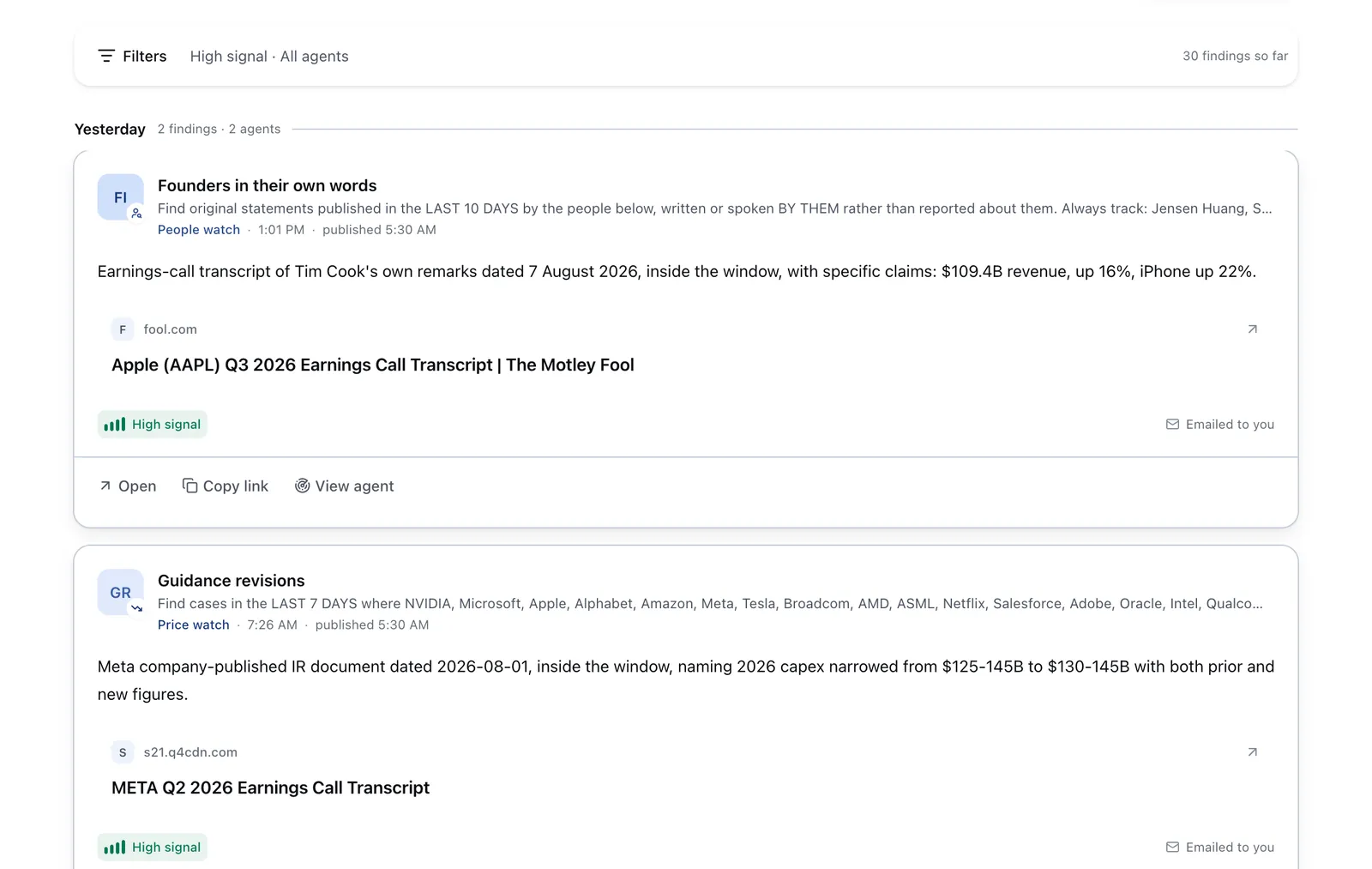
Run it on Parlel
While cohort windows are closed, stay discoverable for returner-friendly and mid-career roles.
agent: returner_watch
profile.headline: returning [function] professional, [N] years prior experience
profile.skills: [skill1], [skill2], [skill3]
keywords: returnship, return to work, relaunch
digest: weekly_monday
fields: company, role, location, program_or_direct_hire
Digest shape: { role, company, location, notes }. Browse /jobs, reconnect on /people, and create your profile.
Keep reading
Frequently asked questions
What is a returnship program?
A structured, typically paid program that helps experienced professionals return after a career break through a real team placement plus support such as mentorship and training.
How long is a typical returnship?
Public examples include roughly 12-week and roughly 16-week cohorts; other employers use six-month placements or direct-hire returner roles. Check the specific program.
Who is eligible for returnships?
Rules vary. Many large programs ask for multiple years out of full-time work plus prior professional experience. Read the live eligibility criteria.
Do returnships guarantee a full-time job?
No. Many participants convert, but conversion depends on performance and headcount. Ask about the decision process during interviews.
How should I explain a career gap?
Be factual and concise. Focus on readiness, skill refresh, and the value of your prior experience. You control how much personal detail you share.
Can I apply if my break is shorter than two years?
Some employers set lower thresholds; others will not. If you are ineligible, pursue direct-hire roles and contract work instead of forcing a mismatched cohort.