Embedded, robotics, and computer vision roles sit where software meets physical systems. Hiring managers look for evidence you can ship under real constraints: latency, power, sensors, safety, and field failure modes. This guide covers all three tracks as distinct job families, shared search tactics, and how they connect to machine learning careers when perception models leave the laptop.
This page was reviewed on September 30, 2026.
TL;DR
- Treat embedded, robotics, and CV as related but separate search lanes with different proof artifacts.
- Hardware-adjacent work is less often fully remote; ask about lab access, travel, and export controls early.
- Strong applications show bring-up stories, real sensors or MCUs, and debugging under constraints.
- Robotics postings often mix ROS 2, controls, and perception; read which slice you actually own.
- Pair specialist boards with startup sources when autonomy and hardware startups are your target.
Embedded engineer jobs
Embedded software and firmware engineers own the layers close to hardware: bring-up, drivers, RTOS or embedded Linux, boot, update mechanisms, and reliability in the field.
| Focus | Common stack signals | Portfolio proof |
|---|---|---|
| MCU firmware | C/C++, RTOS, peripherals (I2C/SPI/UART) | Board bring-up notes, peripheral drivers |
| Embedded Linux | Yocto/Buildroot, device trees, kernel modules | Boot-to-app story, OTA notes |
| Edge AI enablement | NPU/GPU accelerators, TensorRT/ONNX Runtime | Quantized model deployment write-up |
What interviews probe: memory and concurrency discipline, reading datasheets, oscilloscope/logic analyzer literacy (role-dependent), and how you validate under temperature, power, or noisy electrical environments.
Search titles: Embedded Software Engineer, Firmware Engineer, Embedded Linux Engineer, BSP Engineer.
Robotics engineer jobs
Robotics engineering spans mechatronics-aware software: motion, planning, middleware, simulation, and system integration. Many postings are multi-disciplinary; clarify whether you are hired for controls, autonomy software, or platform infrastructure.
| Slice | Typical keywords | Proof that helps |
|---|---|---|
| Autonomy / software | ROS 2, navigation, behavior trees | Simulation demos + real robot logs (redacted) |
| Controls | PID, state estimation, real-time loops | Tuning notes and safety limits |
| Robotics platform | Device OS, drivers, update rail | Field update and diagnostics story |
| Simulation | Gazebo, Isaac Sim, synthetic data | Sim-to-real gap analysis |
Defense, industrial, and warehouse robotics employers may require onsite labs, citizenship, or clearance. Confirm before deep interview investment.
Search titles: Robotics Software Engineer, Autonomy Engineer, Perception Engineer (robotics), Robotics Platform Engineer.
Computer vision engineer jobs
Computer vision (CV) engineers build perception systems: detection, tracking, segmentation, calibration, and sometimes sensor fusion. In robotics and autonomy, CV roles often overlap with embedded deployment.
| CV role flavor | Emphasis | Adjacent guide |
|---|---|---|
| Research-leaning CV | Model quality, datasets, papers | Machine learning engineer jobs |
| Applied / production CV | Pipelines, evaluation, latency | ML jobs + software eng filters |
| Embedded perception | Edge inference, drivers, sync | This page’s embedded section |
| Multimodal perception | Camera + lidar/radar fusion | Robotics autonomy postings |
Proof artifacts: labeled evaluation reports, calibration notes, latency budgets, failure-case galleries, and deployment scripts. Avoid claiming benchmark wins you cannot reproduce.
OpenCV fluency helps but is not a complete CV career. Modern roles expect deep learning frameworks (PyTorch/TensorFlow) plus engineering discipline.
Shared search tactics for specialized engineering jobs
| Source | Best use |
|---|---|
| Title variants + company follows in robotics/autonomy | |
| Wellfound | Hardware and robotics startups |
| Y Combinator Jobs | Early autonomy and robotics companies |
| Indeed / Dice | Broader embedded volume |
| Direct career pages | Anduril-scale and industrial employers’ truth |
Use startup job boards when you want early-stage ownership. For remote-first software filters that sometimes apply to tooling roles, see remote software engineer jobs, but expect more hybrid constraints here than in pure SaaS.
Filter checklist for hardware-adjacent roles
- Lab / hardware access requirements
- Export control or citizenship constraints
- Travel to test sites or customers
- Safety-critical process expectations
- Whether “remote” means software-only days with quarterly labs
Resume bullets that survive scrutiny
Prefer constraint-aware stories:
- Brought up sensor X on platform Y; first light through driver Z; measured glass-to-algorithm latency.
- Shipped firmware update mechanism with rollback; field failure rate context if known and shareable.
- Improved tracker precision on a defined dataset split; state the metric and limitation.
Do not invent FPS, mAP, or uptime numbers. Redact customer and defense-sensitive details.
Interview themes across the three tracks
| Track | Common deep-dive |
|---|---|
| Embedded | Memory map, interrupts, boot, debugging a flaky peripheral |
| Robotics | Coordinate frames, ROS graphs, safety stops, sim vs real |
| CV | Evaluation design, calibration, failure modes, deployment trade-offs |
Bring one end-to-end narrative that crosses at least two layers (for example, model → optimization → embedded runtime) if you are targeting perception-on-edge roles.
Choosing a primary lane without closing doors
Specialized hiring managers prefer a clear primary story. Use this decision table:
| If you enjoy… | Primary lane | Keep secondary literacy in… |
|---|---|---|
| Datasheets, drivers, boot | Embedded / firmware | Basic CV deployment concepts |
| Coordinate frames, planners, robots | Robotics software | Embedded Linux + sensors |
| Models, evaluation, visual failure modes | Computer vision | Edge deployment + robotics context |
| Training platforms and ML systems | ML engineering | See machine learning engineer jobs |
Apply with the primary title in your headline. Mention adjacent skills in bullets so ATS still finds keywords without making your story incoherent.
Lab and safety expectations
Hardware-adjacent employers care about how you work around physical risk: e-stops, lockout procedures, lab access rules, and data from field tests. Even software-heavy robotics roles should sound respectful of safety. If your background is pure cloud software, show one project that dealt with timing, sensors, or real-world uncertainty. Simulation-only portfolios can work for early screening, but interviewers will ask what breaks in reality.
Defense and dual-use employers may add export control, background checks, or citizenship requirements. Ask early through the recruiter so you do not burn weeks. Do not post restricted details on a public portfolio.
Cross-lane project ideas (portfolio)
| Project | Skills demonstrated |
|---|---|
| MCU sensor logger with host visualizer | Embedded + light visualization |
| ROS 2 turtlebot-style nav in sim | Robotics middleware |
| Detector trained on public dataset + ONNX export | CV + deployment mindset |
| Jetson-class latency budget write-up | Embedded perception |
Keep READMEs ruthless: hardware list, how to reproduce, known limitations, and what you would do next. That tone matches how field teams communicate.
Search cadence for specialized roles
Specialized openings are fewer than generic software roles. Compensate with precision:
- Follow 20 target companies and their careers pages.
- Set LinkedIn alerts for exact titles weekly.
- Use startup job boards for autonomy and robotics startups.
- Message alumni or conference contacts with one specific question, not a resume blast.
- Recheck remote claims using the filters in remote software engineer jobs, knowing lab constraints may override.
Patience and artifact quality beat mass Easy Apply for these lanes.
Education signals versus project signals
Advanced degrees help for some CV research roles and robotics controls roles, but shipped systems still win most applied interviews. If you have a thesis, translate it into deployment constraints and evaluation design in one page. If you do not have a degree specialty, compensate with public reproducible projects and clear write-ups. Employers in this space are allergic to unreproducible claims.
When your work overlaps ML training pipelines, read machine learning engineer jobs to decide whether to apply as CV, ML, or applied scientist. Title mismatch wastes cycles for everyone.
Relocation and hybrid negotiation
If the lab is in another city, ask about relocation support, hybrid weeks per month, and whether contractors can access hardware. Some teams ship devices; some require badge access. Get it in writing before you resign elsewhere. Software-only perception tooling roles are the most remote-friendly subset; treat them as a separate search lane.
Talking about failure modes in interviews
Specialized interviewers love failure stories: a sensor that drifted, a model that overfit to lab lighting, a firmware update that bricked a test unit (and how you prevented recurrence). Prepare two failures with detection, mitigation, and what you changed in process. Hiring teams building physical products know that green-path demos are easy and recovery discipline is rare.
Keep customer and safety-sensitive details redacted. The structure of the story matters more than the brand name on the robot.
Finally, keep a private hardware and software inventory of every board, sensor, and dataset you have used. Interviews move faster when you can cite exact parts and toolchains without scrolling through old emails while the panel waits. Update that inventory after every project so your next application season starts from facts, not memory.
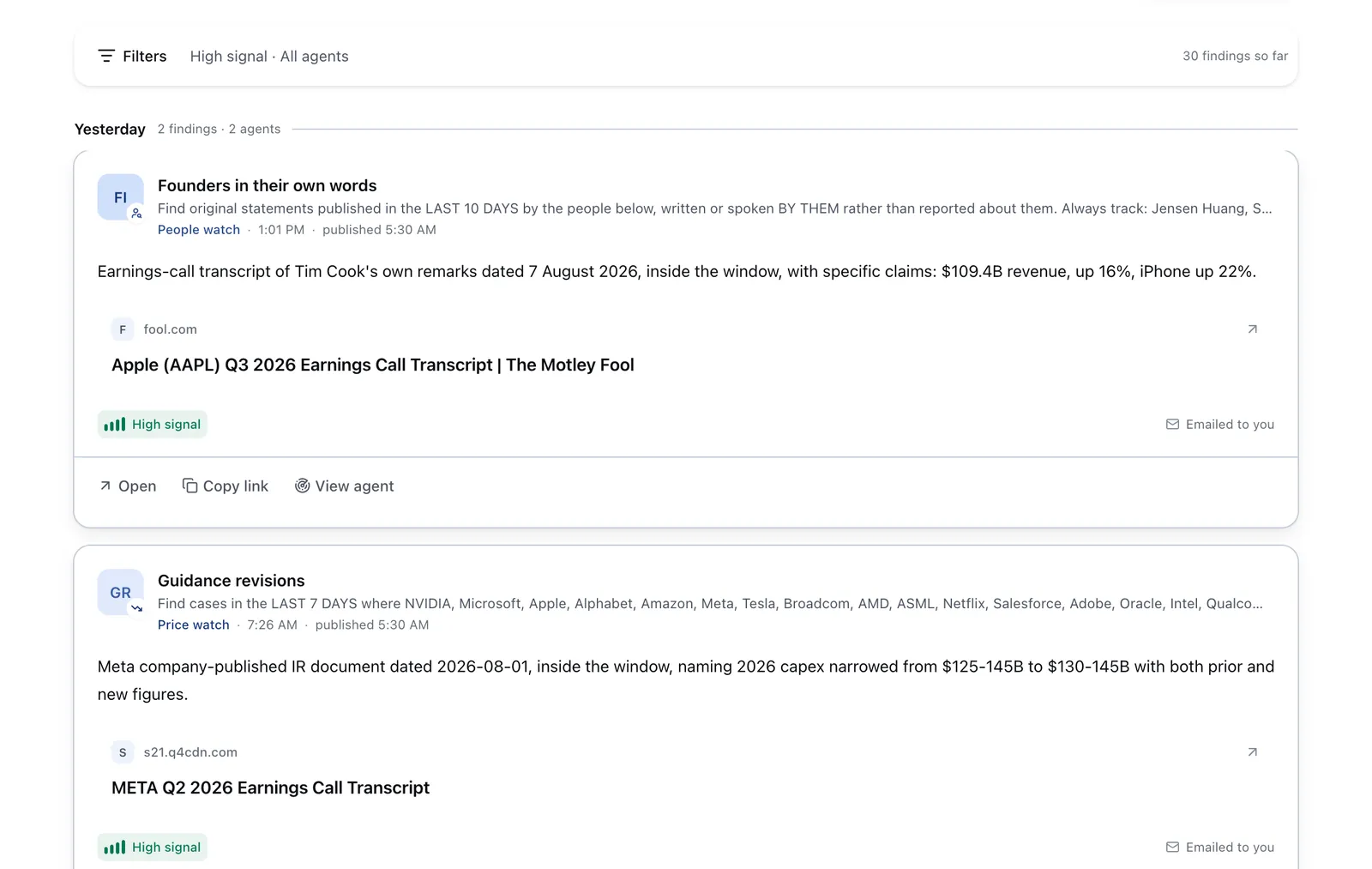
Run it on Parlel
Watch specialized engineering openings with explicit stack keywords.
agent: specialized_eng_watch
keywords: embedded, firmware, robotics, ROS2, computer vision, perception
filters: past_14_days
digest: wednesday_17:00
fields: company, onsite_lab_note, location_rule, stack_keywords
profile.skills: c, embedded_linux, ros2, opencv, pytorch
Digest shape: { company, role, stack_keywords, location_rule, lab_or_clearance_hint }. Track roles on /jobs and keep project links that show physical-world constraints.
Keep reading
Frequently asked questions
Are embedded and robotics jobs remote?
Some software-heavy roles are hybrid or remote-friendly; many still need lab time. Always confirm hardware access and travel.
Do I need a robotics degree?
Helpful but not universal. Strong systems software plus demonstrable robot or embedded projects can compete, especially at startups.
Is computer vision the same as machine learning engineering?
Overlapping but not identical. CV roles emphasize visual perception systems; ML engineer roles may span recommendations, NLP, or platform ML. See machine learning engineer jobs.
What languages matter most?
C and C++ dominate embedded and many robotics runtimes; Python is common for CV experimentation and tooling. Rust appears in some newer edge stacks but is not universal.
How do I show CV work without private datasets?
Use public datasets, clearly licensed imagery, and open benchmarks. Document evaluation protocol and limitations.
Should I specialize early?
Pick a primary lane (embedded, robotics software, or CV) for applications, while keeping adjacent literacy. Scattershot titles confuse ATS and humans.