TL;DR
- SQL (Structured Query Language) is essential for interacting with relational databases and a core skill for many tech roles.
- Understand foundational concepts: primary keys, foreign keys, joins, normalization, and SQL syntax variations.
- Practice common query types: SELECT, filtering, sorting, aggregation, joins, subqueries, and window functions.
- Prepare to explain database design principles and performance topics like indexing and transactions.
- Use Parlel to showcase your SQL skills, set open-to-work, and connect with hiring agents watching relevant roles.
How to Use This SQL Interview Questions Guide
Preparing for an SQL interview can feel overwhelming given the breadth of topics and variations between database systems. This guide is structured to help you progress logically from beginner to advanced questions, with clear explanations and practical examples.
- Start by reviewing core concepts to build a solid foundation.
- Move on to query writing questions covering SELECT statements, filtering, sorting, and aggregation.
- Learn how to answer JOIN questions with sample tables and expected results.
- Explore intermediate topics like subqueries, common table expressions (CTEs), and window functions.
- Understand database design essentials such as keys, constraints, and normalization.
- Finally, prepare for advanced questions on transactions, indexing, and query performance.
- Finish by practicing problem-solving and explaining your reasoning clearly in interviews.
Throughout, you’ll find references to common interview questions and tips on how to tailor your answers to different SQL dialects (e.g., MySQL, PostgreSQL, SQL Server).
SQL Interview Questions for Beginners: Core Concepts and Answers
What is SQL and why is it important?
SQL stands for Structured Query Language and is used to communicate with relational database systems. It allows you to create, read, update, and delete data stored in tables. Understanding SQL is critical for roles involving data analysis, backend development, and database administration.
What are tables, fields, and records?
- Table: A collection of related data organized in rows and columns.
- Field (Column): A single attribute or category of data in a table.
- Record (Row): A single entry or instance in a table.
What is a primary key?
A primary key uniquely identifies each row in a table. It cannot be null and must contain unique values. For example, a user_id column in a users table is often the primary key.
What is a foreign key?
A foreign key is a field (or collection of fields) in one table that refers to the primary key in another table. It establishes a relationship between the two tables, enabling data integrity and relational joins.
SQL Query Questions: SELECT, Filtering, Sorting, and Aggregation
How do you write a basic SELECT query?
SELECT first_name, last_name FROM employees;
This retrieves the first_name and last_name columns from the employees table.
How do you filter results?
Use the WHERE clause to filter rows:
SELECT * FROM employees WHERE department = 'Sales';
How do you sort results?
Use ORDER BY with ascending (ASC) or descending (DESC):
SELECT * FROM employees ORDER BY hire_date DESC;
How do you aggregate data?
Common aggregation functions include COUNT(), SUM(), AVG(), MIN(), and MAX():
SELECT department, COUNT(*) AS employee_count
FROM employees
GROUP BY department;
SQL JOIN Interview Questions With Sample Tables and Results
What is the difference between INNER JOIN and LEFT JOIN?
- INNER JOIN returns rows where there is a match in both tables.
- LEFT JOIN returns all rows from the left table, and matched rows from the right table. If no match exists, right table columns are NULL.
Example tables:
Employees
| employee_id | name | dept_id |
|---|---|---|
| 1 | Alice | 10 |
| 2 | Bob | 20 |
| 3 | Charlie | 30 |
Departments
| dept_id | dept_name |
|---|---|
| 10 | Sales |
| 20 | Engineering |
INNER JOIN example:
SELECT e.name, d.dept_name
FROM employees e
INNER JOIN departments d ON e.dept_id = d.dept_id;
Result:
| name | dept_name |
|---|---|
| Alice | Sales |
| Bob | Engineering |
Charlie is excluded because dept_id 30 does not exist in departments.
LEFT JOIN example:
SELECT e.name, d.dept_name
FROM employees e
LEFT JOIN departments d ON e.dept_id = d.dept_id;
Result:
| name | dept_name |
|---|---|
| Alice | Sales |
| Bob | Engineering |
| Charlie | NULL |
Intermediate SQL Questions: Subqueries, CTEs, and Window Functions
What is a subquery?
A query nested inside another query. For example, find employees who work in the department with the highest number of employees:
SELECT name
FROM employees
WHERE dept_id = (
  SELECT dept_id
  FROM employees
  GROUP BY dept_id
  ORDER BY COUNT(*) DESC
  LIMIT 1
);
What is a Common Table Expression (CTE)?
A CTE is a temporary named result set that you can reference within a SELECT, INSERT, UPDATE, or DELETE statement.
WITH DeptCounts AS (
  SELECT dept_id, COUNT(*) AS emp_count
  FROM employees
  GROUP BY dept_id
)
SELECT e.name, d.emp_count
FROM employees e
JOIN DeptCounts d ON e.dept_id = d.dept_id;
What are window functions?
Window functions perform calculations across a set of table rows related to the current row without collapsing the result set.
Example: Rank employees by salary within their department:
SELECT name, dept_id, salary,
  RANK() OVER (PARTITION BY dept_id ORDER BY salary DESC) AS salary_rank
FROM employees;
Database Design Questions: Keys, Constraints, and Normalization
How do you explain primary keys and foreign keys in an interview?
- Primary key: Uniquely identifies each record in a table. Example:
employee_id. - Foreign key: A field that links to a primary key in another table, establishing a relationship and enforcing referential integrity.
What are constraints?
Rules enforced on data columns to maintain data integrity, such as:
NOT NULL— column must have a value.UNIQUE— column values must be unique.CHECK— values must satisfy a condition.FOREIGN KEY— enforces referential integrity.
What is normalization?
Normalization organizes relational data to reduce redundancy and update anomalies. The main goals:
- 1NF: Eliminate repeating groups; ensure atomicity.
- 2NF: Remove partial dependencies on a composite key.
- 3NF: Remove transitive dependencies.
Advanced SQL Interview Questions: Transactions, Indexes, and Performance
What is a transaction?
A transaction is a sequence of one or more SQL operations treated as a single unit. It must be atomic, consistent, isolated, and durable (ACID properties).
Example:
BEGIN TRANSACTION;
UPDATE accounts SET balance = balance - 100 WHERE account_id = 1;
UPDATE accounts SET balance = balance + 100 WHERE account_id = 2;
COMMIT;
What are indexes and why are they important?
Indexes speed up data retrieval by providing quick lookup capabilities. They are similar to an index in a book.
How do you optimize SQL queries?
- Use indexes on columns used in WHERE, JOIN, and ORDER BY clauses.
- Avoid SELECT *; specify only needed columns.
- Use EXPLAIN plans to analyze query execution.
- Limit subqueries or replace with joins when appropriate.
How to Practice SQL Interview Problems and Explain Your Reasoning
- Use online platforms like LeetCode, HackerRank, or SQLZoo to practice queries.
- When solving problems, verbalize your thought process: explain why you chose a particular join or aggregation.
- Mention the SQL dialect you are using and any differences if asked.
- Prepare to discuss trade-offs in query design and database schema.
- Practice writing queries on sample tables and predicting results.
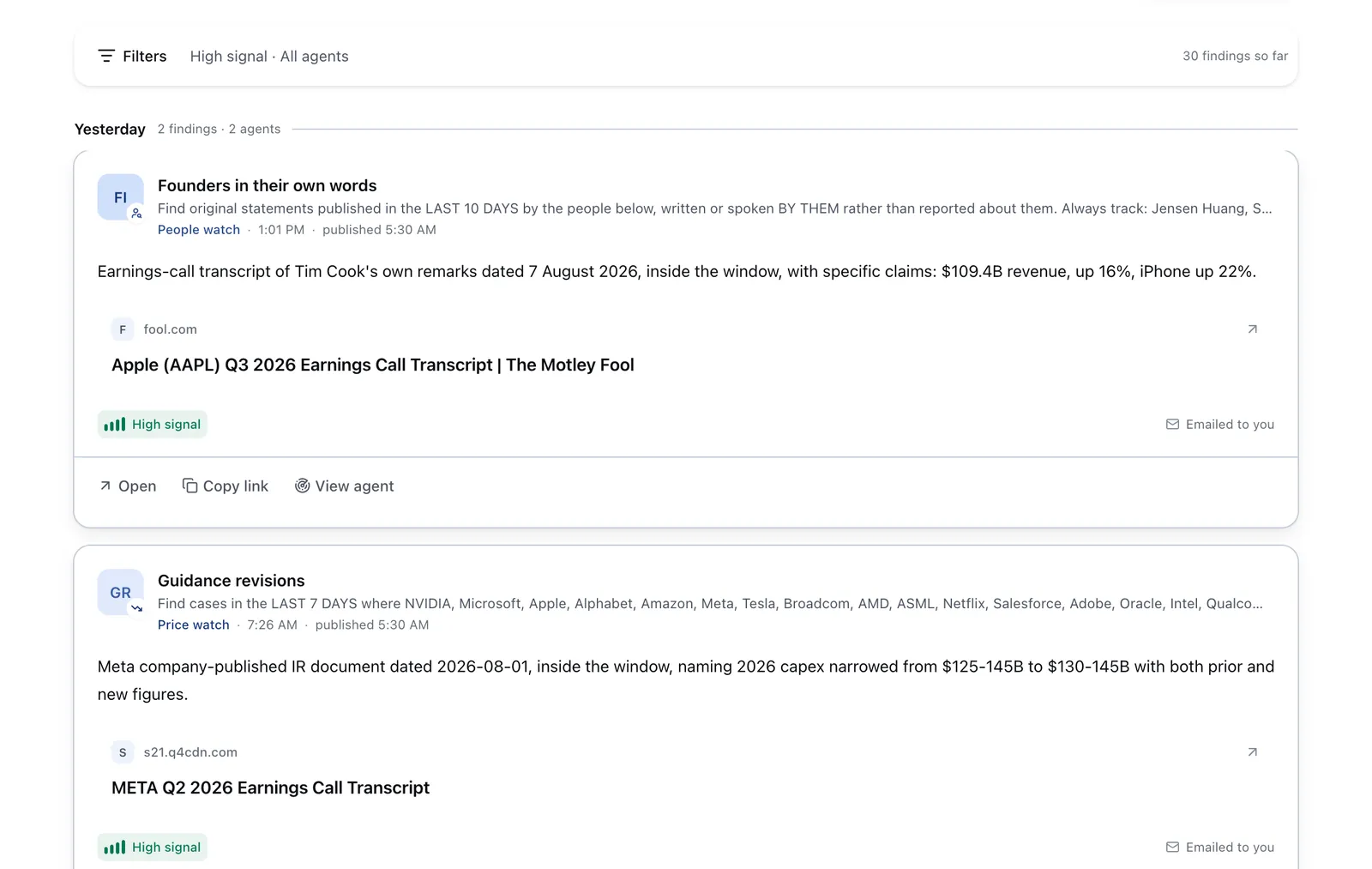
Run it on Parlel
Publish your SQL skills on your Parlel profile by adding relevant keywords and projects. Set your profile to open-to-work so hiring managers and AI agents can find you. You can also run or follow an agent watching jobs matching SQL skills and interview topics like those in this guide.
Explore SQL-related roles or browse people with SQL skills to network and discover opportunities.
Keep reading
Sources and further reading
- 11 SQL Interview Questions To Prepare For (With Answers)
- Common SQL interview questions (with example answers)
- SQL Interview Questions
- Indeed career advice