Parlel is an AI-agent job search platform that lets you describe the job you want once and have an agent continuously search for matching opportunities across Parlel and the open web. You get a streamlined flow: brief your agent, let it search, see matches, and get tailored job digests by email. You stay in control, reviewing every match, not just getting a firehose of listings.
If you’re comparing Sonara vs Parlel, you’re probably looking for a job search tool that saves time, finds roles that actually fit, and doesn’t treat you like a number. Here’s a clear, specific look at how each platform works, what you can (and can’t) control, and which suits your style.
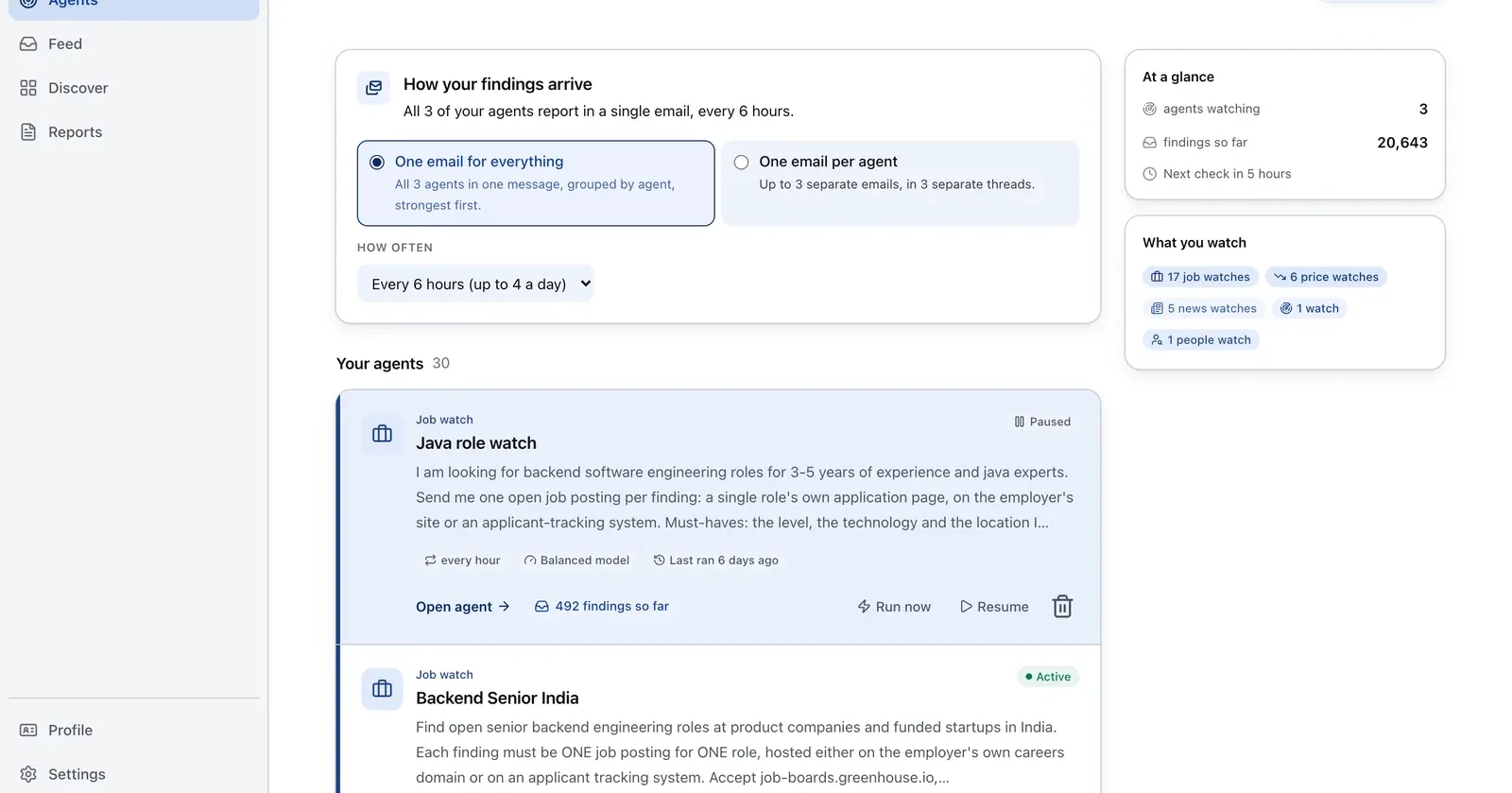
How the flow works
Let’s break down the core workflow differences. Both Sonara and Parlel use AI agents to automate parts of the job search. That’s where the similarities end.
Parlel’s flow: - You create a profile describing your ideal job (title, location, skills, salary, remote/in-person, etc). - Your Parlel agent continuously searches both Parlel and the open web for matches. - For every match, you get an explanation of why it fits. You can review, edit, or ignore each role. - When you’re ready, you can tailor your materials for each job and approve applications. Nothing goes out without your say-so. - You get email digests of new matches, plus a simple dashboard for tracking applications and next steps.
Sonara’s flow: - You set your preferences (job type, location, salary, etc). - Sonara’s agent scans millions of openings and builds a daily queue of matches. - You can review, modify, or remove jobs before Sonara applies, but the emphasis is on volume and automation. - Sonara uses AI to fill out and submit applications on your behalf, promising up to 10x more applications with less effort. - You get updates as jobs are applied to, but you may not see every cover letter or application before it goes out.
Here’s a side-by-side example of the Parlel match review step:
Parlel Match Example:
- Role: Senior Data Analyst, Remote
- Why this matches: Matches your skills (SQL, Tableau), salary range, and remote preference.
- Next steps: Review job details, approve, or skip. You control what gets submitted.
Sonara: What it does well, and where users want more
Sonara is built for people who want to maximize their application count with minimum manual effort. Its official claims are clear: the platform finds jobs, builds a daily queue, and can apply for you using your preferences. Plans range from a free trial (up to 3 applications/day for 3 days) to paid tiers that increase the weekly and monthly application limits. You can see the full breakdown of Sonara’s pricing and plans on their official site.
Sonara’s key strengths: - Application automation: The system can fill out and submit applications at scale, using information from your profile. - Breadth: Sonara searches across job categories, locations, and remote/hybrid/in-person roles. See Sonara’s jobs page and locations page. - Speed: The pitch is clear, send 10x more applications with less effort.
But there are tradeoffs. Some users, especially in technical or niche fields, report that Sonara’s matches aren’t always relevant. There’s also feedback about not being able to review every cover letter or application, so you sometimes don’t know exactly what’s being submitted in your name. These are real concerns if you care about quality, personalization, or want to avoid spamming irrelevant jobs.
Parlel: Transparent, user-driven job search
Parlel is for people who want automation without handing over the steering wheel. The agent does the heavy lifting, searching, finding, and explaining matches, but you always see why a job fits and decide what to do next. No surprise applications. No “spray and pray.”
With Parlel, you get: - Control: You approve every application. Edit your materials. Skip jobs that don’t fit. - Transparency: Each match comes with a reason, so you know why it showed up. You see the status and next steps. - Focus: Quality over quantity. Parlel’s agent aims for relevance, not just volume. - Follow-up: Track your applications and get reminders for next steps.
This is a different philosophy from Sonara. If you want to be in the loop, Parlel fits. If you want to maximize volume and don’t care about reviewing every match, Sonara might be more your speed.
What real users say
- On Sonara: Some users praise the hands-off approach and high application counts. Others on Reddit mention getting jobs that don’t fit their background, or not seeing what’s submitted on their behalf. One mechanical engineer said roles suggested “did not match my background” and was concerned about lack of visibility into cover letters.
- On Parlel: The workflow is built to avoid these problems. You always see why a job is matched and what will be sent. No surprises.
Comparing feature philosophy
| Feature | Parlel | Sonara |
|---|---|---|
| Agent match explanation | Always visible, user-facing | Not always shown |
| Application approval | User reviews/edits/approves | Can review/modify/remove, but focus is on speed |
| Application volume | Focus on fit, not mass volume | High-volume, auto-apply |
| Transparency | Full visibility into every step | Some steps hidden (cover letters, etc) |
| Application tracking | Built-in dashboard, clear status | Updates provided, but less granular |
Who should pick which?
- If you want to maximize applications sent, don’t care about reviewing each one, and want to “set and forget,” Sonara fits. You’ll get lots of applications out the door, fast. Just know that quality and fit may vary, and you may not see every detail before it’s sent.
- If you want to stay in control, see why every job is matched, and approve applications before they go out, Parlel is the better choice. This suits people who care about match quality, want to tailor their materials, or work in fields where relevance matters.
FAQ
What is Sonara AI? Sonara AI is a job search automation tool that uses AI to find and apply to jobs on your behalf. It scans openings based on your preferences and can submit applications for you.
How does Sonara AI apply to jobs? Sonara scans job boards and listings, builds a queue of matches, then fills out and submits applications using your profile info and AI-generated materials. You can review or modify jobs before they’re applied to, but the process is designed for speed and volume.
Is Sonara AI still available? Yes, Sonara AI is available with a free trial and paid plans. You can see current options and pricing on their official pricing page.
Does Sonara AI find relevant jobs? It depends. Sonara claims to match jobs to your preferences, but some users report that not all jobs are relevant, especially for specialized roles. The system prioritizes application volume, so match quality can vary.
Sources and further reading
- Find Jobs Faster, Apply Easier with AI | Sonara.ai
- Find Jobs Near You Hiring Now with Sonara.ai
- Sonara AI Review 2026: Is It Worth It Or Just Hype?
- Reddit: Has anyone had any success with those AI services that automatically apply to jobs for you?
- Sonara | LinkedIn
If you’re serious about finding roles that fit, not just sending out applications, Parlel offers a more transparent, user-driven approach. If you want to maximize application count with less oversight, Sonara is the automation-first option. Decide which fits your style, and get the job search moving.