I have sat on the hiring side of the startup table — reading hundreds of applications, running interviews between investor calls, deciding in days what big companies take months to decide. Here is how to get a job at a startup from the founder's view: what we screen for, the questions we really ask, and how career changers, gap-holders, and corporate escapees actually get hired.
TL;DR
- "Founders hire slope over intercept: show trajectory, ownership, and speed of learning — pedigree is a tiebreaker, not a ticket."
- "Startup vs corporate is a trade-off, not a hierarchy: ownership and volatility against structure and predictability — choose with eyes open."
- "The best reason for job change at a startup interview is running toward building, never running away from boredom or a boss."
- "Employment gaps need one honest sentence plus proof of motion — founders respect builders who kept building through anything."
- "Your application is a work sample: specific product observations beat credentials, and three sharp lines beat three pages."
Why work at a startup: the honest pitch
Why work at a startup? The real answer, stripped of poster slogans: scope. In your first year you will likely own systems, talk to customers, and watch your work move revenue — experiences that take five years to accumulate inside large hierarchies. You will learn faster because feedback loops are shorter: ship Monday, customer reaction Tuesday, iteration Wednesday. And you will build a network of fellow builders who hire each other for decades.
The price is equally real: lower cash compensation (often offset partly by equity that may be worth zero), thinner mentorship structures, job descriptions that mutate quarterly, and genuine failure risk — most startups die, and yours might. Join with a two-year learning thesis ("I will learn 0→1 growth"), keep an emergency fund, and evaluate the team harder than the idea, because teams pivot and cultures persist. Hiring-market commentary consistently frames this as a life-stage and temperament decision rather than a prestige one (Forbes on startup careers).
Benefits of working at a startup beyond the clichés
Benefits of working at a startup compound in ways salary comparisons miss. Title velocity: responsibility arrives years ahead of corporate schedules, and "led X" lines rewrite your resume permanently. Customer proximity: founders forward user rants to the whole team, so you learn markets viscerally instead of through research decks. Generalist range: engineers do support rotations, marketers run analytics, everyone recruits — the resulting versatility is itself a career asset. And the alumni network: ex-colleagues from intense early stages become founders, hiring managers, and investors who answer your messages for life.
There is also an underrated benefit — interview optionality. Startup operators who shipped under constraints interview well everywhere afterwards, because every future employer wants evidence of ownership. Even a failed startup tenure reads as battle-tested if you can narrate decisions and lessons crisply. Workplace reporting notes this resilience premium showing up in hiring preferences (Guardian on startup experience).
Startup vs corporate job: choosing your arena
Startup vs corporate job is a temperament match, not a quality ranking. Choose startups if you optimise for learning speed, ownership, ambiguity tolerance, and upside variance — and if you can self-direct without scaffolding. Choose corporate if you optimise for mentorship depth, compensation predictability, specialised craft mastery, and work-life boundaries. Neither choice is permanent; the most common successful pattern is alternating — corporate craft foundations, startup ownership chapters, then choosing deliberately.
Interviewers probe this explicitly ("why a startup now?"), watching for romanticised answers. Strong answers name the trade: "I want customer-proximate building and accept the volatility — my corporate years taught me the craft; now I want the scope." Weak answers reveal push factors ("my current job is boring") or fantasy ("I want to be employee #5 at a unicorn"). Career-stage framing help sits in our job seeker guide, and sourcing startup openings in startup job boards.
Startup interview questions founders actually ask
Startup interview questions look casual and test ruthlessly. "Tell me about something you built" tests ownership — answer with a thing you drove end-to-end, naming decisions you made and what broke. "What would you do in your first 30 days?" tests customer-and-code curiosity — anchor your answer in their actual product (cite something specific) and propose learning before changing. "Tell me about a disagreement" tests low-ego candour — pick a real conflict, own your part, show the resolution. "Why us?" tests research depth — one product observation plus one market thesis beats all mission-statement recitation.
Two meta-rules from the founder side of the table. First, questions flow both ways: candidates who ask about runway, churn, and the hardest problem on the roadmap signal adult seriousness; candidates with no questions signal tourists. Second, process speed is information — startups that move in days are healthy; ones that stall for weeks are telling you about their decision culture. Deep question-bank preparation lives in our interview questions and answers, and AI-assisted rehearsal in the AI job search playbook.
How to change careers into startups: the bridge strategy
How to change careers into startups is easier than into corporates, because founders weight proof over pedigree. The bridge strategy: pick the intersection of your old domain and the startup's need (support lead → customer success, teacher → edtech ops, finance → fintech analyst), build one artefact proving the new skill (a dashboard, a teardown, a shipped side project), and narrate the move as convergence rather than escape. Side doors beat front doors — freelance a project, contribute to their open source, publish a teardown of their funnel, then apply with the artefact attached.
Expect a compensation haircut conversation; prepare a walk-away number and a learning thesis that justifies the gap years financially. Contract-to-hire is common and rational here — distributed-work hiring data shows trial arrangements converting at healthy rates when both sides invest (Golance on contract hiring). And study the customer side of startup life in our first 10 customers guide — understanding how startups win revenue makes every commercial interview answer sharper.
Best reason for job change and employment gap explanation
The best reason for job change in a founder's ears is attraction, never repulsion: "I want to build onboarding systems at startup speed" hires; "my manager was terrible" alarms. Frame every move as a thesis upgrade — each role taught you something, and this startup is where that arc points. Even layoffs frame forward: "the team shut down; I'm choosing 0→1 building next because my best work was the launch quarter."
Employment gap explanation needs exactly one honest sentence plus proof of motion: "Took eighteen months for caregiving; kept shipping — here are two freelance projects and a certification." Founders respect builders who kept building through anything; what triggers doubt is not the gap but vagueness about it. Name it plainly, show the artefact trail, redirect to the future. Early-career gap-holders should also read our resume-for-freshers playbook for project-led positioning that makes gaps structurally irrelevant.
The founder's application screen: what actually gets read
Here is the literal triage from our side: inbox of 200, one hiring manager, twenty minutes. Surviving applications share four traits — a subject or first line naming the role and one fit proof, a resume whose top third matches our problem, one specific product observation proving research, and zero friction (links work, notice period stated, no 4MB attachments). Cover notes of three sharp lines outperform three-page letters; portfolios that open instantly outperform credentials listed densely. Our cover-letter-format guide encodes this brevity.
Then the interview loop tests slope: can this person learn fast, own outcomes, and argue well? Demonstrate with stories of decisions under uncertainty, not lists of duties. And close loops professionally — thank-you notes and crisp follow-ups count double at startups where every hire is high-trust (Wellfound founder advice echoes this relentlessly). Salary-stage preparation is in how to negotiate a job offer.
The how to get a job at a startup operating standard
This guide is written for a reader who needs to use how to get a job at a startup in a real workflow, not merely understand the definition. The dependable version starts with the decision that must be made, names the evidence available today, and keeps the next step small enough to complete. That is the editorial standard used throughout this guide and across the Parlel library: practical guidance should help a founder, operator, candidate, or freelancer act without hiding uncertainty behind confident language.
Decide what success means before you start
Write the result in one sentence: “After this exercise, I will know whether , and the next action will be .” For how to get a job at a startup, that sentence prevents the most common failure mode — doing more research after the useful question has already been answered. If the work concerns a person, company, role, client, or vendor, record the source and date as you go. If it concerns a template or message, define the recipient, context, and desired response before polishing the wording.
Use a small fixture rather than an abstract example. Pick three to five real records, situations, or drafts and run the method end to end. Keep one case that should succeed, one ambiguous case, and one case that should be rejected. That mix exposes whether the process can distinguish a useful signal from a convenient story. It also gives you material for a later review without pretending that a tiny sample is a benchmark.
Make the work explainable to another person
A high-quality result should survive a handoff. Another person should be able to see what was known at the time, which assumptions were made, what action was taken, and what would change the decision. For this topic, preserve the original input alongside the conclusion. Keep a short “why now” note, the owner, the due date, and the stop condition. This makes how to get a job at a startup useful in an agency-style operating system: the work is repeatable without becoming mechanical, and a reviewer can improve it without rewriting the whole process.
Quality-control pass before you ship
- Intent: Does the page answer the query implied by its title in the first screen?
- Evidence: Are current facts linked to a source, date, or clearly labeled assumption?
- Specificity: Could a reader use the checklist, script, table, or example immediately?
- Boundaries: Does the guide say when the method is a poor fit or should stop?
- Next action: Is there one useful action rather than a pile of competing calls to action?
Those checks matter more than adding another paragraph of general advice. They also protect search quality: the page earns attention by resolving the reader's problem, not by repeating how to get a job at a startup unnaturally. If the evidence is thin, say so and explain how to improve it. If the answer changes by country, role, plan, or company size, make that branch visible instead of burying it in a footnote.
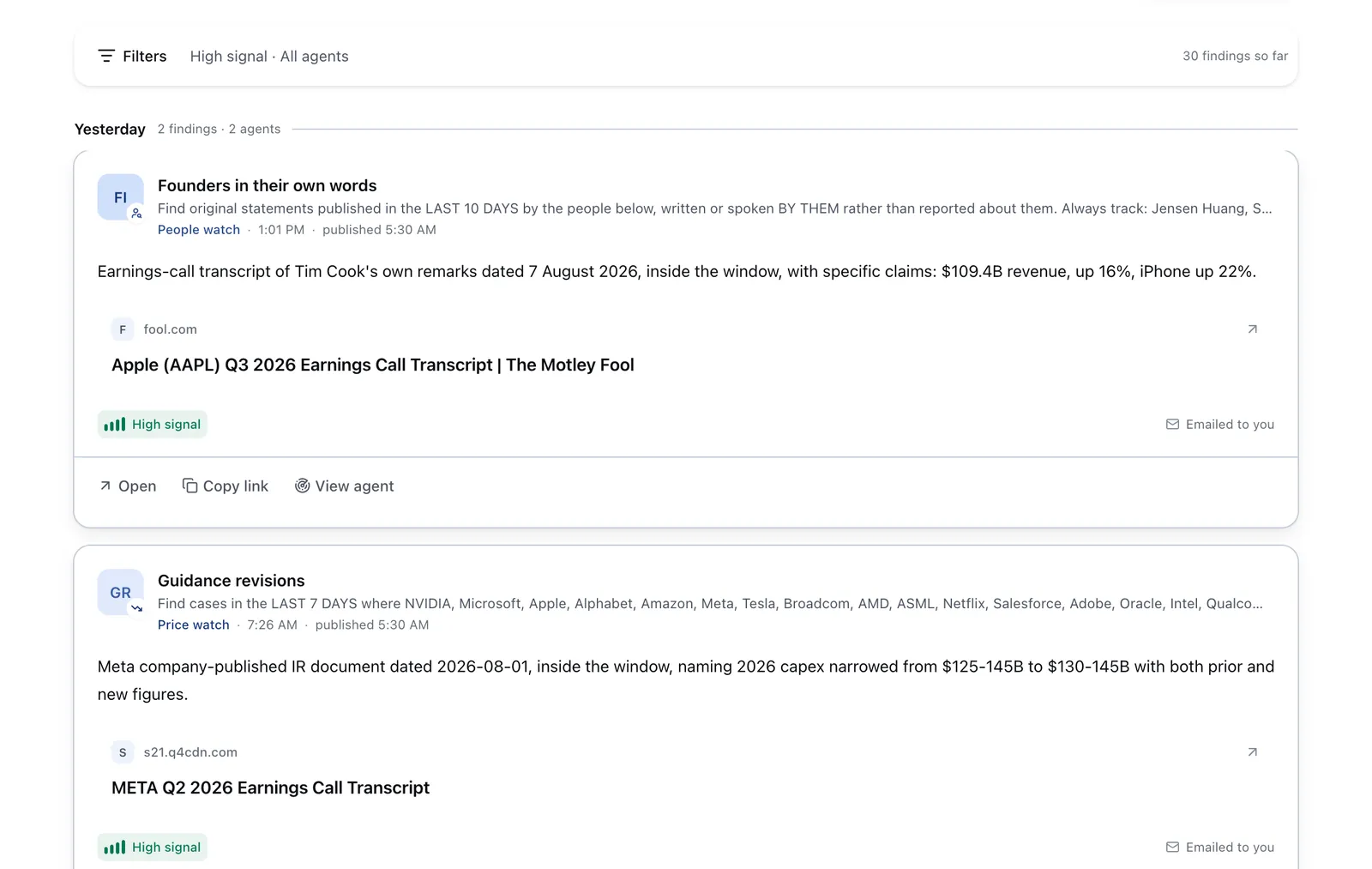
Run it on Parlel
Startups search for slope constantly — make your trajectory findable instead of begging inbox attention:
agent: startup-talent-watch
signals: ["shipped", "0-to-1", "side-project"]
stage: ["pre-seed", "seed", "series-a"]
digest: monday 09:00 IST
Digest shape: matching early-stage roles plus profile views from founders whose searches hit your skills — standing applications to every startup that looks. Founders browse people and post on the job board; your public profile works both directions at once.
Keep reading
Continue the workflow with three closely related guides: - how to use ai to find a job - startup job boards - how to get first 10 customers
Frequently asked questions
Do startups hire people without experience?
Yes — more readily than corporates, when candidates show slope: projects, artefacts, and learning speed. Generalist hunger plus proof beats credentials at seed stage.
How much pay cut should I expect joining an early startup?
Typically 10–30% cash below corporate equivalents, partly offset by equity with real risk. Set a walk-away number, value equity at zero in planning, and weigh the learning thesis.
Is it risky to join a pre-seed startup?
Genuinely risky — most fail. Mitigate by evaluating founders (would you follow them through a pivot?), runway (12+ months preferred), and your own financial buffer before signing.
Should I join as a generalist or specialist?
Early stage rewards generalists who cover gaps; growth stage hires specialists to deepen functions. Match your pitch to the company's stage, not just your preference.
How fast are startup hiring processes?
Healthy ones move in days to two weeks from application to offer. Stalling processes signal decision dysfunction — treat speed as data about the culture you'd join.
How to get job in startup with no experience?
Show slope, not pedigree: one shipped artefact (a side project, a teardown of their funnel, a freelance build), a three-line application naming their specific problem, and a learning thesis for the interview. Seed-stage founders hire proof of building over credentials almost every time.