Ghost jobs are postings that look open but are not being actively filled. Dice career advice and hiring-validation guides describe the same pattern: long-lived ads, vague process details, and board copies that outlive the employer’s own careers page. Some listings are honest evergreen pipelines. Others are frozen headcount, recruiter placeholders, or scraped clutter. This guide shows how to spot ghost jobs, verify a role before you invest hours, and separate ghosts from outright scams.
This page was reviewed on September 30, 2026.
TL;DR
- Treat aggregator cards as leads; the employer ATS or careers page is the source of truth.
- Red flags include multi-month unchanged posts, impossible salary bands, and recruiters who cannot name a start target.
- Verify requisition ID, apply path, location rules, and last update before deep prep.
- Ghosts waste time; scams try to take money or identity. Handle both differently.
- Keep a tracker so you stop re-applying into the same frozen req.
What ghost jobs are (and are not)
| Category | What is going on | Your move |
|---|---|---|
| Frozen headcount | Role posted, budget paused | Verify, then deprioritize |
| Evergreen pipeline | Always-open talent pool | Apply only if you accept low urgency |
| Filled but left up | Hiring finished, board not updated | Confirm on employer site |
| Duplicate / scrape | Aggregator copy out of sync | Follow back to original |
| Competitive research | Rare; hard to prove | Do not overfit conspiracy |
| Scam impersonation | Fake employer or payment ask | Stop; report patterns |
A ghost job is about weak hiring intent or stale distribution. A scam is about fraud. The FTC’s consumer guidance on job scams covers payment requests, fake checks, and impersonation. Use both lenses.
How to spot ghost jobs: signal checklist
Listing-level signals
- Posted or “reposted” for 45–60+ days with identical text and no process updates (a clue, not proof).
- No salary band in markets where peers publish ranges, combined with vague responsibilities.
- Apply button dead, loops to a generic careers home, or requires the same form twice with no confirmation.
- Role missing from the employer’s own ATS while alive on LinkedIn/Indeed copies.
- Extreme ranges that read like placeholders (for example a span wider than any real leveling system you can explain).
Dice’s guidance also calls out hundreds of applicants with no movement and unclear hiring steps as surface warnings. None of these alone convicts a company; clusters of signals should change your prioritization.
Recruiter and process signals
- Recruiter cannot explain why the team is hiring, who the manager is, or a target start window.
- “I’ll check if this is still open” as the first response to a basic status question.
- Repeated reschedules with no scorecard or loop plan.
- Interviews that never include anyone who would work with you.
Stronger positive signals
- Employer ATS accepts applications for a stable requisition ID.
- Hiring manager or recruiter posts a timely, specific note about the search.
- You receive screening questions, an assessment, or a calendar invite with named interviewers.
- Company news that plausibly explains hiring (new product line, funding, expansion) plus an active process.
Verification workflow before you apply
- Open the board URL and save it.
- Find the same role on the employer careers site or ATS (Greenhouse, Lever, Ashby, Workday, and similar).
- Compare title, location, requisition ID, and employment type.
- Confirm the apply path works and records a confirmation.
- Note first-seen and checked-at dates in your tracker.
- If the employer page is gone but the board card remains, treat the board copy as stale.
UnifyGTM’s hiring-signal guidance makes the same point for go-to-market teams: an open vacancy is evidence of recruiting activity, not proof of budget permanence. Candidates can use the same discipline.
Tracker columns that prevent repeat pain
board_url, employer_url, req_id, first_seen, last_checked, status, signals, next_action
Statuses you can use: active, likely_evergreen, likely_ghost, closed, scam_suspect.
Ghost jobs on startup and remote boards
Startup boards and remote aggregators can still host stale or duplicated posts. Use the hygiene in startup job boards and remote job boards: prefer employer pages, check country eligibility, and skip boards that only mirror scrapes.
Remote ghosts are common when “worldwide remote” on a board becomes “US payroll only” on the ATS. That mismatch is not always malicious, but it is a reason to stop polishing a five-page take-home until eligibility is clear.
What to do when you suspect a ghost
| Situation | Action |
|---|---|
| Employer page missing | Do not apply via aggregator alone |
| Recruiter vague on status | Ask for start target and interview plan; walk if unanswered |
| Evergreen role you still want | Apply once, set a follow-up bound, then move on |
| Multiple ghosts at one company | Deprioritize that employer for a month |
| Payment or identity demand | Stop; treat as scam |
For follow-ups after a real application, use job application follow-up with a short, dated note rather than weekly pings into silence.
Copy-ready status question
Hi [Name], I applied for [Role] ([Req ID or link]) on [date].
Is this requisition actively interviewing, and what is the target
start timing? Happy to share a brief relevant project if useful.
If they cannot answer the first sentence, protect your calendar.
Ghost jobs vs job scams
| Ghost job | Job scam |
|---|---|
| May be a real company with weak intent | Often impersonates a real company |
| Wastes time | Targets money, bank details, or identity docs early |
| Fix: verify and deprioritize | Fix: stop, document, report |
FTC consumer guidance warns about unexpected texts, equipment payment requests, and fake checks. Never pay to apply, to unlock a “training portal,” or to receive a paycheck.
Why companies leave ghost posts up
Reported reasons include pipeline building, uncertain budgets, slow internal approvals, replacing a failed search, and simple process neglect when board integrations are not turned off. You rarely get a public confession. Optimize for evidence of active process, not for decoding motives.
Illustrative pass (not a study)
A candidate finds the same “Senior Backend, Remote” card on three boards, all aged roughly two months. The employer ATS has no matching req. A recruiter replies, “We’re always looking for great people.” The candidate logs likely_evergreen, skips the take-home, and spends the evening on two ATS-verified openings instead. Time saved is the win.
Building a personal anti-ghost system
Spend the first 15 minutes of each job-search day on verification, not applications. Cap deep-tailored applications to roles that pass employer-page checks. When a company repeatedly shows likely ghosts, mute their alerts for 30 days. Your scarce resource is focused writing time, not the number of Easy Apply clicks.
Talking about ghosts with peers without spreading rumors
Share process: “I verify ATS pages before take-homes,” not accusations: “Company X is faking jobs.” Patterns help communities; unverifiable claims do not. If you are a hiring manager reading this, the fix is operational: close reqs when paused and stop syndicating stale posts.
Metrics to track so ghosts stop owning your calendar
Weekly review:
- Applications submitted
- Percent with employer-ATS verification
- Responses within 14 days
- Interviews started
- Roles marked likely_ghost
If verified applications convert better than unverified Easy Apply volume, keep the stricter process. The goal is interviews with real hiring intent, not application count vanity.
What hiring teams can do (if you are on the employer side)
Close paused reqs in the ATS, stop auto-reposting without review, publish a target start window, and train recruiters to answer status questions. Ghost-like behavior damages employer brand even when legal. Candidates compare notes.
Special case: government and large-enterprise postings
Long posting durations can be normal in slow procurement environments. Look for active contact persons, clear series/grade info, and whether applications are still accepted. A long open window alone is a weaker ghost signal in those contexts than in startup SaaS hiring.
Finally, protect emotional energy. A week of silence after a polished application is common even for real roles. Use your tracker status field so silence does not automatically mean self-blame. Reinvest time into verified openings and skill proof instead of refreshing the same frozen card.
When in doubt, spend five minutes on the employer ATS before spending fifty on a cover letter. That single habit removes most ghost-job damage from an otherwise serious search. If a listing fails verification twice across a week, archive it and do not let it consume another evening.
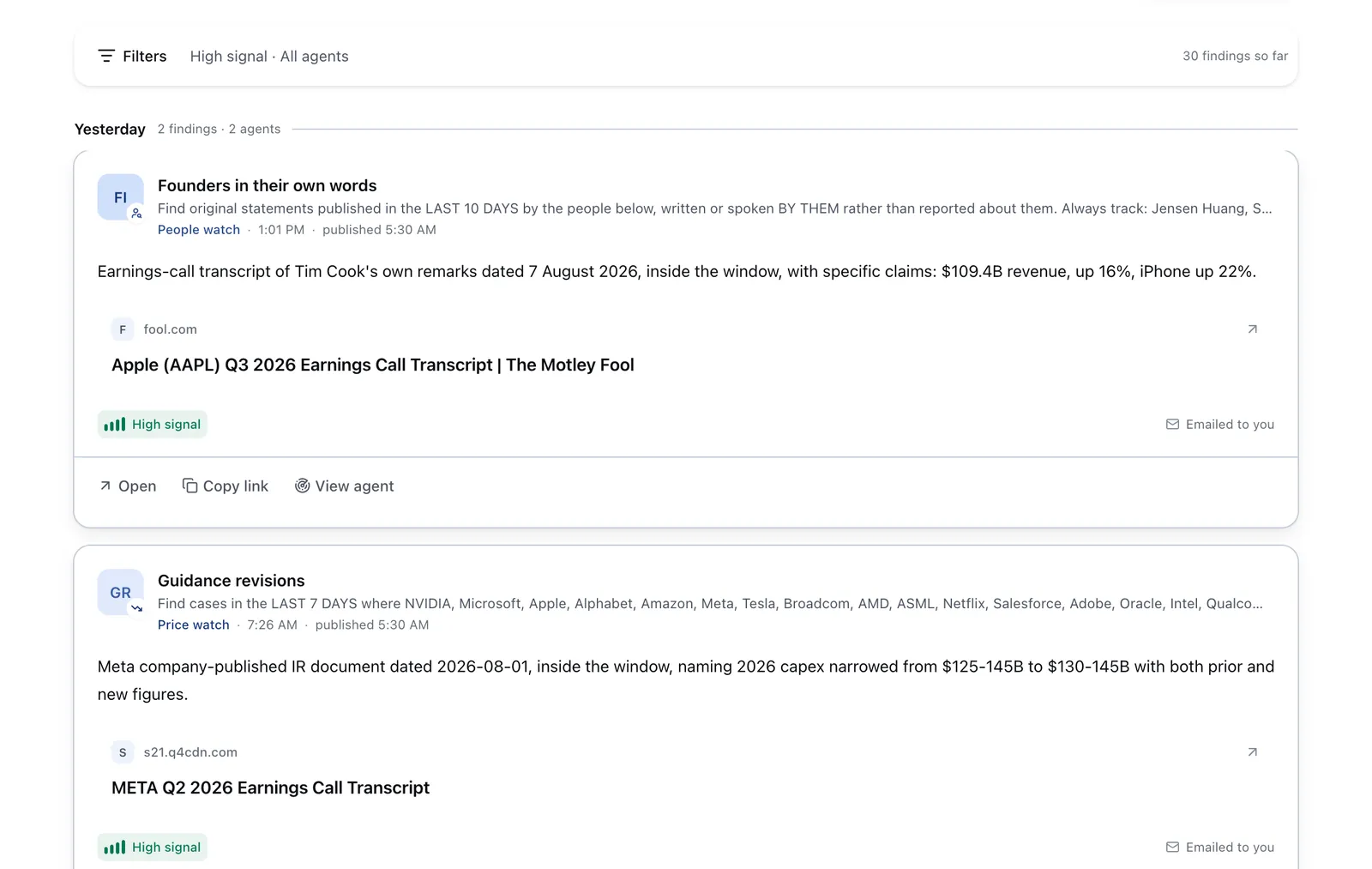
Run it on Parlel
Use Parlel to discover roles, then enforce verification before deep prep.
agent: role_verify
inputs: board_url
checks: employer_ats_match, location_rule, req_id, apply_path
digest: daily_suspects
fields: company, title, board_age_days, employer_status, next_action
Digest shape: { company, title, employer_status, board_age_days, next_action }. Browse /jobs, open the employer page, and only then invest in tailored materials.
Keep reading
Frequently asked questions
How common are ghost jobs?
Estimates circulate widely and vary by method. Treat any percentage you see online as a claim unless the methodology is clear. Focus on verification habits you control.
How can I tell if a job posting is real?
Find it on the employer’s careers site or ATS, confirm the apply path, and look for process signals such as screens or interviews. Board presence alone is not enough.
Are evergreen roles always bad?
No. Some teams honestly keep always-on pipelines. Enter with eyes open: slower feedback and lower urgency are normal.
Should I call out a company publicly for ghost jobs?
Usually no. Update your tracker, deprioritize, and move on. Public accusations without evidence can backfire.
What is the fastest ghost-job check?
Open the employer ATS link. If the role is gone or the apply path is dead while boards still show it, stop.
Do ghost jobs include unpaid “trials”?
Unpaid work presented as a mandatory application step is a different abuse pattern. Decline and keep searching for employers with clear processes.