Behavioral interview questions ask what you did in real situations, not what you imagine you might do. Indeed, Coursera, Workable, and university career centers keep ranking because candidates need two things at once: a list of likely prompts and a way to answer without rambling. This guide gives you a competency-tagged question bank, a tight STAR method, reusable story templates, and the mistakes that quietly sink otherwise strong candidates.
TL;DR
- Behavioral questions probe past actions to predict on-the-job behavior.
- Answer with STAR: Situation, Task, Action, Result (keep Action longest).
- Prepare 6–8 flexible stories you can remap across prompts.
- Quantify results when honest; name soft outcomes when numbers do not exist.
- Practice aloud to 60–120 seconds; stop blaming teammates.
What behavioral interview questions are
They usually start with “Tell me about a time…,” “Give an example…,” or “Describe a situation…” Indeed’s career guidance frames them as assessments of actions in specific professional settings. They differ from situational questions (“What would you do if…?”), which are hypothetical. Many loops mix both. If you only prepared theory, behavioral rounds feel unfair. If you prepared stories, they feel like a playlist request.
For broader interview prep beyond behavioral prompts, use interview questions and answers.
The STAR method (use this every time)
Washington State University’s career resources and many university handouts teach STAR as:
| Letter | Meaning | What to include | Time share |
|---|---|---|---|
| S | Situation | Context, team, stakes, when | ~15% |
| T | Task | Your responsibility or goal | ~10% |
| A | Action | What you did, decisions, tools | ~60% |
| R | Result | Outcome, learning, proof | ~15% |
Copy-ready STAR skeleton
Situation: In [timeframe] on [team/project], we faced [problem].
Task: I owned [specific responsibility].
Action: I [step 1], then [step 2], and coordinated with [roles] by [method].
Result: We [outcome]. I learned [lesson], which I now apply by [habit].
Keep “we” for context and “I” for actions. Panels hire individuals.
How interviewers score you (quietly)
Across themes used by Coursera, Big Interview, and employer question banks, interviewers listen for:
- Ownership vs victim narrative
- Judgment under constraints
- Collaboration without gossip
- Learning speed after mistakes
- Communication clarity
- Alignment with the role’s real pain (shipping, customers, ambiguity, compliance)
Read the job description’s verbs. If it says “stakeholder management,” bring a stakeholder story first.
Build a personal story inventory (6–8 stories)
Write bullets, not scripts you will recite robotically.
| Story ID | Theme | One-line seed |
|---|---|---|
| A | Conflict | Disagreement on approach |
| B | Failure / mistake | Something you owned and fixed |
| C | Deadline pressure | Re-prioritized under a hard date |
| D | Teamwork | Cross-functional delivery |
| E | Leadership / influence | Led without formal authority |
| F | Customer / stakeholder | Difficult conversation |
| G | Ambiguity | Unclear brief, you created clarity |
| H | Initiative | Saw a gap and shipped a fix |
Map each to at least two possible questions. That is how a small bank covers a long interview.
STAR bank by competency
Teamwork and collaboration
Questions
- Tell me about a time you worked with a difficult teammate.
- Describe a team goal you helped hit.
- Give an example of adapting to someone else’s working style.
What they want: maturity, specificity, no character assassination.
Answer frame
S: Two teammates disagreed on [approach] before a [deadline].
T: I needed to keep delivery moving without freezing the relationship.
A: I separately confirmed each person’s constraints, proposed [compromise/experiment],
   and documented the decision in [doc/PR].
R: We shipped [result]. The working agreement we wrote cut repeat debates.
Conflict and difficult conversations
Questions
- Tell me about a conflict at work and how you handled it.
- Describe a time you disagreed with your manager.
- Give an example of delivering bad news.
Answer frame
S: [Stakeholder] expected [X] while data showed [Y].
T: I had to communicate the gap without destroying trust.
A: I led with facts, offered options [A/B], and agreed on a check-in date.
R: They chose [option]; we avoided [failure mode]. Relationship stayed intact.
Leadership and ownership
Questions
- Tell me about a time you led a project.
- Describe leading without authority.
- Give an example of going beyond expectations.
Answer frame
S: [Project] lacked an owner after [change].
T: I stepped in to define scope and milestones.
A: I wrote a one-page plan, assigned [roles], unblocked [issue], and reported weekly.
R: We delivered [outcome] by [date]. Manager later formalized the ownership model.
Prioritization and time management
Questions
- How do you handle competing deadlines?
- Tell me about a time you had too much on your plate.
- Describe dropping or delaying work deliberately.
Answer frame
S: In one week I had [A], [B], and [C] due.
T: I needed to protect the business-critical path.
A: I ranked by [impact/urgency], confirmed with [manager/customer], and deferred [C]
   with a written revised date.
R: [A] and [B] landed; [C] shipped without surprise. I now keep a visible priority list.
Problem-solving and ambiguity
Questions
- Tell me about a tough problem you solved.
- Describe a time you had unclear requirements.
- Give an example of debugging under pressure.
Answer frame
S: We saw [symptom] affecting [users/process].
T: I owned finding root cause within [timebox].
A: I reproduced the issue, isolated [variables], checked [logs/data], and tested [fix].
R: Issue rate dropped / process recovered. I added [monitor/checklist] to prevent repeats.
Failure, feedback, and learning
Questions
- Tell me about a mistake.
- Describe the hardest feedback you received.
- Give an example of a project that did not go as planned.
Answer frame
S: I [mistake] because I assumed [wrong assumption].
T: I needed to repair impact and prevent recurrence.
A: I disclosed early to [people], fixed [damage], and changed [process/checklist].
R: [Repair outcome]. The new habit is [specific behavior].
Honesty beats heroic fiction. Panels have heard the “I care too much” fake weakness already.
Communication and stakeholders
Questions
- Tell me about explaining a complex topic simply.
- Describe a miscommunication and how you fixed it.
- Give an example of influencing a decision with data.
Answer frame
S: Engineering and sales used different meanings for [metric/term].
T: I needed a shared definition before [decision].
A: I wrote a one-pager, workshopped it for 20 minutes, and added it to [wiki].
R: Decisions sped up; escalations about that term fell.
Customer or client handling
Questions
- Tell me about a difficult customer.
- Describe recovering from a service failure.
Answer frame
S: A customer hit [failure] before [deadline].
T: I owned recovery and communication.
A: I acknowledged impact, gave a timestamped plan, and updated at [interval].
R: We restored [service/outcome]; customer renewed / continued / thanked the clarity.
Sample compact answer (illustrative)
Prompt: Tell me about a time you faced a tight deadline.
Illustrative STAR (replace with your facts): “Two days before a campus product demo, our payment sandbox broke. I owned getting a working path for the demo. I reproduced the failure, switched the demo to a pre-seeded mode we already had in staging, wrote a three-step runbook for the presenter, and messaged the team the risk in Slack. The demo ran on time; afterward I filed the sandbox bug with logs so it was fixed the next sprint. I now keep a demo fallback checklist.”
Notice the actions are concrete and the result is checkable without fake precision.
Common mistakes
- Starting in the middle with no stakes
- Team autobiography where your actions never appear
- Blaming tools, managers, or “bad teammates” as the whole story
- Results with no learning (“and then it was fine”)
- Three-minute openings before the first action
- Memorized speeches that ignore the question asked
- Confidential details you should not share (anonymize)
Practice plan (one week)
| Day | Drill |
|---|---|
| 1 | Draft 8 story seeds in a doc |
| 2 | Expand three into STAR bullets |
| 3 | Record yourself answering two prompts |
| 4 | Cut filler; aim for 90 seconds |
| 5 | Remap stories to new prompts |
| 6 | Mock with a friend who interrupts |
| 7 | Rest; skim notes only |
After interviews, send a specific thank-you (thank you email after interview) and keep pipeline hygiene with job application follow-up.
Tailor stories to the role
| Role type | Bias your bank toward |
|---|---|
| Software engineer | Debugging, tradeoffs, code review conflict |
| Analyst | Ambiguous metrics, stakeholder education |
| Support / success | Angry customers, prioritization, macros vs judgment |
| Manager | Coaching, hiring judgment, conflicting priorities |
| Intern | Course projects, clubs, part-time work ownership |
Freshers can pull from academics, sports, volunteering, and freelancing. The structure is identical.
Quick reference: 20 prompts to rehearse
- Tell me about a time you failed.
- Describe a conflict with a coworker.
- Give an example of leadership.
- Tell me about a goal you achieved.
- Describe a time you disagreed with feedback.
- Tell me about competing priorities.
- Describe a difficult customer or stakeholder.
- Give an example of learning something quickly.
- Tell me about a time you improved a process.
- Describe missing a deadline (or nearly missing).
- Tell me about persuading someone.
- Describe working with a tight-lipped teammate.
- Give an example of an ethical gray area.
- Tell me about taking initiative.
- Describe adapting to change.
- Tell me about a proud professional moment.
- Describe asking for help.
- Tell me about handling ambiguity.
- Describe mentoring or helping someone.
- Tell me about receiving tough feedback.
If you can answer these with remapped stories, most behavioral rounds feel familiar.
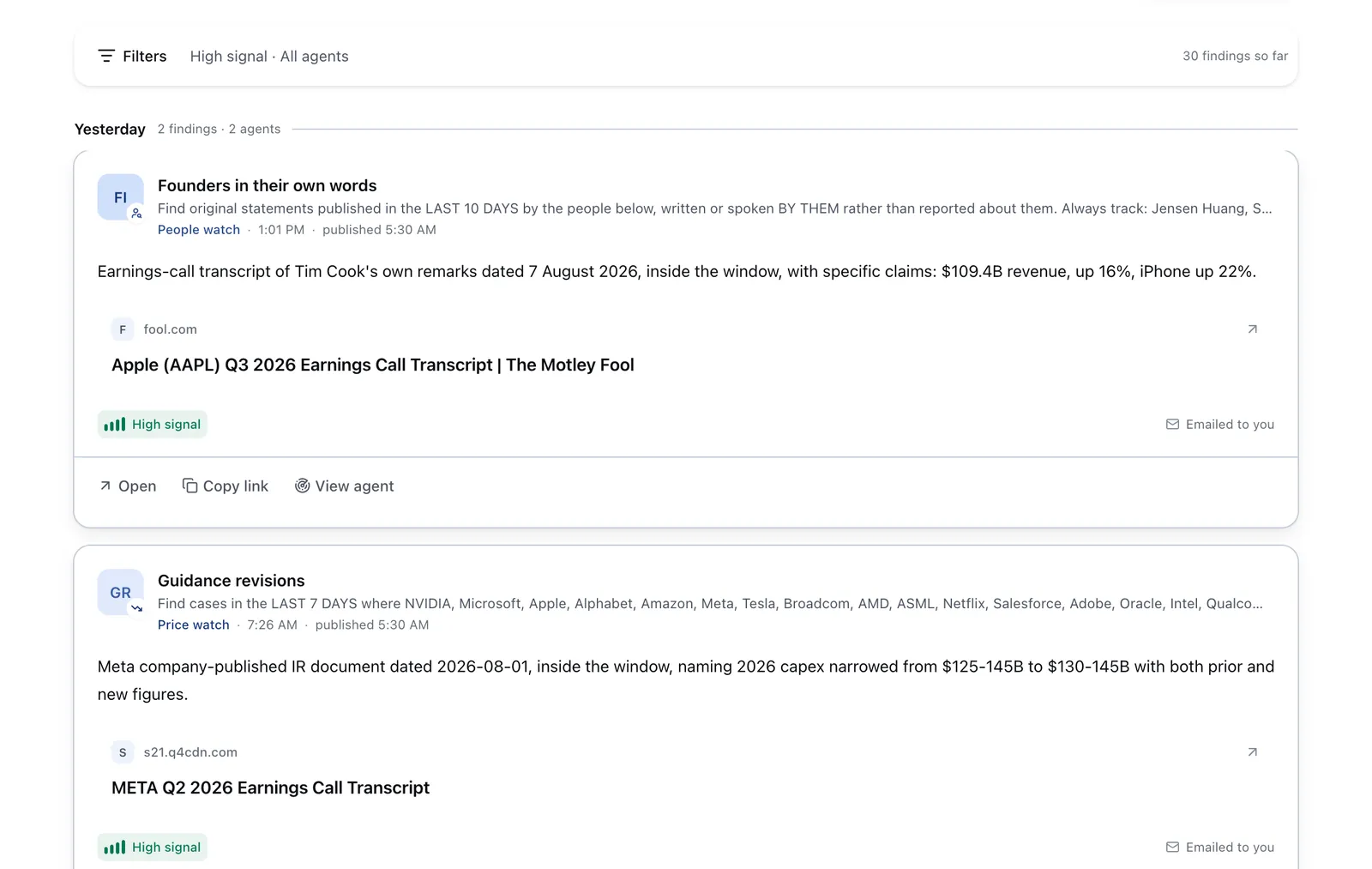
Run it on Parlel
Turn interview prep into a loop against real openings so each STAR story maps to a posting’s requirements.
target_roles: 8 live postings matching your skills
prep: 2 STAR stories tagged per posting’s top competencies
practice: timed answers, 90 seconds each
digest: new matching roles weekly
Digest shape: { role, company, top_competencies, interview_stage }. Line up targets on /explore or /jobs and walk into panels with stories built for that team’s language.
Keep reading
Frequently asked questions
What are behavioral interview questions?
Questions that ask you to describe how you handled real past situations, often starting with “Tell me about a time when…”
How do you answer behavioral interview questions?
Use STAR: Situation, Task, Action, Result. Spend most of your time on actions you personally took.
What is the STAR method in an interview?
A structure for clear answers: context, your responsibility, what you did, and what happened because of it.
What topics do behavioral interview questions usually cover?
Teamwork, conflict, leadership, communication, problem-solving, prioritization, adaptability, and customer handling are common.
Why do employers ask behavioral interview questions?
They use past behavior as evidence for how you may perform in similar situations on the job.
What is the difference between behavioral and situational questions?
Behavioral questions ask about real past examples. Situational questions ask what you would do in a hypothetical scenario.