Most cover letters fail in the first sentence — generic greetings, begging tones, autobiography. The ones that work do three things: name the role, prove fit in four tight paragraphs, and ask for the interview. This guide gives you that cover letter format, three annotated cover letter examples, and a copy-paste template. Use it alongside the ATS resume template and follow up with job application follow-up.
TL;DR
- "Four paragraphs: hook, proof, company-specific fit, and a confident ask — nothing else earns space."
- "One page, under 250 words; hiring managers decide in the first three lines."
- "Mirror the posting's nouns exactly — role title, stack, and one stated requirement answered with evidence."
- "Company-specific sentences (their product, their post, their problem) separate letters from templates."
- "Every claim must also exist on your resume; the letter argues, the resume proves (Indian hiring listings, Sept 2026)."
How long should a cover letter be?
How long should a cover letter be has a settled answer: one page, 150–250 words, four short paragraphs. Recruiters open it after the resume, spend under a minute, and look for one reason to advance you — length beyond a page reads as inability to prioritise. Email applications can be even tighter: a 120-word body with the resume attached often outperforms a formal attachment nobody opens.
Format rules: your contact header, date, hiring manager name if known ("Dear Ms. Rao" beats "Dear Sir/Madam"; LinkedIn finds most names in a minute), role title and requisition ID in the opening line, and a professional sign-off with phone number. PDF for attachments, plain text for email bodies — never images or fancy templates. Career-advice coverage on Forbes converges on the same limits: brevity plus specificity wins.
The format: four paragraphs that argue your case
Paragraph one, the hook (2 lines): role, source, and your one-line pitch. "I'm applying for the Frontend Developer role (REQ-214) — a React developer with two production apps and 400+ DSA problems solved." Paragraph two, the proof (3–4 lines): your two strongest evidence points mapped to stated requirements. Paragraph three, the fit (2–3 lines): one company-specific sentence — their product, a recent launch, their stack — plus why you want this team, not any team. Paragraph four, the ask (2 lines): confident close with availability. "I'd welcome a conversation about [requirement]. I'm available this week at [phone]."
Cut list: life stories, salary mentions, apologies for inexperience, "I think I might be a good fit" hedging, and anything already obvious from the resume header. Every sentence must either cite evidence or cite the company — decoration gets deleted.
One more discipline that separates callbacks from silence: mirror the posting's language without parroting it. If the posting says "own the dispatch pipeline," your proof paragraph says "owned dispatch for a 40-vehicle fleet" — same nouns, your facts. Parsers and humans both match on nouns, and candidates who invent synonyms for stated requirements ("logistics coordination" for "dispatch") get filtered by both. Read the posting twice, underline its five load-bearing nouns, and make sure four of them appear in your letter attached to evidence.
Example 1: fresher software role (annotated)
Dear Ms. Rao, I'm applying for the Associate Software Engineer role — a 2026 CS graduate with a MERN placement-portal used by 200+ students and a TCS NQT qualifier score. [Hook: role + two proofs in one breath.]
Your posting asks for React and REST APIs: my portal runs React + Node with JWT auth and handles 500 concurrent users on Render, and my internship automated 200+ Selenium cases, cutting regression time 40%. [Proof: mirrors posting nouns, numbers on everything.]
I want [Company] specifically because your logistics SaaS serves the tier-2 warehouses I grew up around — I demoed a Hindi-language UI for the same users in college. [Fit: company-specific, personal, impossible to mass-send.]
I'd welcome a discussion of your frontend roadmap. I'm available this week at +91-98XXX-XXXXX. Thank you for your time. [Ask: confident, concrete, short.]
Why it works: 150 words, every requirement answered with a metric, and the fit paragraph could only have been written for this company. Startup hiring managers — see expectations on Wellfound — consistently rank this specificity as the top junior signal.
Example 2: experienced operations role (annotated)
Dear Hiring Manager, I'm applying for the Operations Executive role (REQ-88): three years running dispatch for a 40-vehicle fleet at 98.6% on-time performance. [Hook: experience + headline metric immediately.]
Your posting emphasises vendor management and night-shift ownership: I onboarded 12 vendors, renegotiated three contracts saving ₹18 lakh annually, and owned the 10pm–6am shift for fourteen months with zero escalations. [Proof: requirement-by-requirement evidence.]
[Company]'s same-day expansion to 30 cities is exactly the scaling problem I've solved — I'd bring the vendor scorecards and shift handover system with me. [Fit: their stated plan + portable assets.]
Can we discuss your Q4 capacity targets this week? I'm reachable at +91-97XXX-XXXXX. [Ask: business language, not begging.]
Why it works: quantified operations history, night-shift willingness stated upfront (a real filter for these roles), and assets offered rather than duties listed. Application-form advice in The Guardian work section stresses the same requirement-mapping discipline.
Cover letter for internship: example 3 (annotated)
Dear Mr. Iyer, I'm a second-year design student applying for the UI Design Intern role — myZomato-redesign case study (Figma, 40 screens) won our department showcase. [Hook: student status stated proudly + one strong proof.]
Your posting asks for Figma and user research basics: I've shipped 3 prototype sprints, run 8 usability interviews, and document everything in Notion handoffs developers actually thanked me for. [Proof: honest scope, real artefacts.]
I use [Company]'s app daily and noticed the checkout drop-off your blog mentioned — my case study proposes exactly that fix, linked below. [Fit: product familiarity + homework visible.]
I'd love feedback on the case study over a 15-minute call. Portfolio: [link]. Phone: +91-96XXX-XXXXX. [Ask: low-friction, asset-first.]
Why it works: interns get hired on trajectory and homework, not history — this letter shows both. After sending, prepare for the intern interview loop and the note that follows it in thank-you email after interview.
Job application letter sample: the inline template
Copy this application letter format, fill the brackets, delete the bracket lines, ship:
Your Name | City | Phone | Email | LinkedIn/Portfolio

Date

Hiring Manager Name (or "Hiring Manager")
Company, City

Subject: Application for <Exact Role Title> (<REQ ID if any>)

Dear <Name>,

PARA 1 — HOOK: I'm applying for <role> via <source>. I'm a
<identity: degree/experience> with <proof 1> and <proof 2>.

PARA 2 — PROOF: Your posting asks for <requirement A> and
<requirement B>: <evidence A with metric>; <evidence B with metric>.

PARA 3 — FIT: I want <Company> specifically because <product/
mission/launch + your connection>. <One line on what you bring
to their stated plan.>

PARA 4 — ASK: I'd welcome a conversation about <their need>.
I'm available <timeframe> at <phone>. Thank you for your time.

Sincerely,
<Name>
Before sending: role title copied exactly from the posting, one company-specific sentence minimum, under 250 words, phone number present, resume attached as text-based PDF.
The cover letter format operating standard
This guide is written for a reader who needs to use cover letter format in a real workflow, not merely understand the definition. The dependable version starts with the decision that must be made, names the evidence available today, and keeps the next step small enough to complete. That is the editorial standard used throughout this guide and across the Parlel library: practical guidance should help a founder, operator, candidate, or freelancer act without hiding uncertainty behind confident language.
Decide what success means before you start
Write the result in one sentence: “After this exercise, I will know whether , and the next action will be .” For cover letter format, that sentence prevents the most common failure mode — doing more research after the useful question has already been answered. If the work concerns a person, company, role, client, or vendor, record the source and date as you go. If it concerns a template or message, define the recipient, context, and desired response before polishing the wording.
Use a small fixture rather than an abstract example. Pick three to five real records, situations, or drafts and run the method end to end. Keep one case that should succeed, one ambiguous case, and one case that should be rejected. That mix exposes whether the process can distinguish a useful signal from a convenient story. It also gives you material for a later review without pretending that a tiny sample is a benchmark.
Make the work explainable to another person
A high-quality result should survive a handoff. Another person should be able to see what was known at the time, which assumptions were made, what action was taken, and what would change the decision. For this topic, preserve the original input alongside the conclusion. Keep a short “why now” note, the owner, the due date, and the stop condition. This makes cover letter format useful in an agency-style operating system: the work is repeatable without becoming mechanical, and a reviewer can improve it without rewriting the whole process.
Quality-control pass before you ship
- Intent: Does the page answer the query implied by its title in the first screen?
- Evidence: Are current facts linked to a source, date, or clearly labeled assumption?
- Specificity: Could a reader use the checklist, script, table, or example immediately?
- Boundaries: Does the guide say when the method is a poor fit or should stop?
- Next action: Is there one useful action rather than a pile of competing calls to action?
Those checks matter more than adding another paragraph of general advice. They also protect search quality: the page earns attention by resolving the reader's problem, not by repeating cover letter format unnaturally. If the evidence is thin, say so and explain how to improve it. If the answer changes by country, role, plan, or company size, make that branch visible instead of burying it in a footnote.
Field notes for cover letter format
The shortest useful version of this work is a reviewable artifact: a brief, a shortlist, a message, a draft, a record, or a decision note. Keep that artifact close to the evidence that produced it. For cover letter format, a reader should be able to answer three questions without asking the author for context: what changed, why it matters, and what happens next. That standard is especially valuable in a focused job search, where a polished output can otherwise hide an unsupported assumption.
Use the guide's examples as fixtures, not promises. Replace the names, numbers, dates, and circumstances with your own. Then ask a second person to review one successful case and one edge case. The review should test whether the method still works when the source is stale, the role is ambiguous, the budget is unknown, the recipient is busy, or the record contains a conflict. If it fails, narrow the claim before adding more automation. A smaller, honest workflow is easier to maintain than a large workflow that creates false confidence.
Before publishing, also check the page itself: the main query should appear naturally in the title, opening, and one useful subheading; examples should show the decision rather than repeat the definition; and links should take the reader to a source or the next relevant guide. Do not inflate a page with synonyms. Explain the actual distinction between adjacent concepts, state when the recommendation changes, and label what the employer actually said, what you can prove, and what remains unknown.
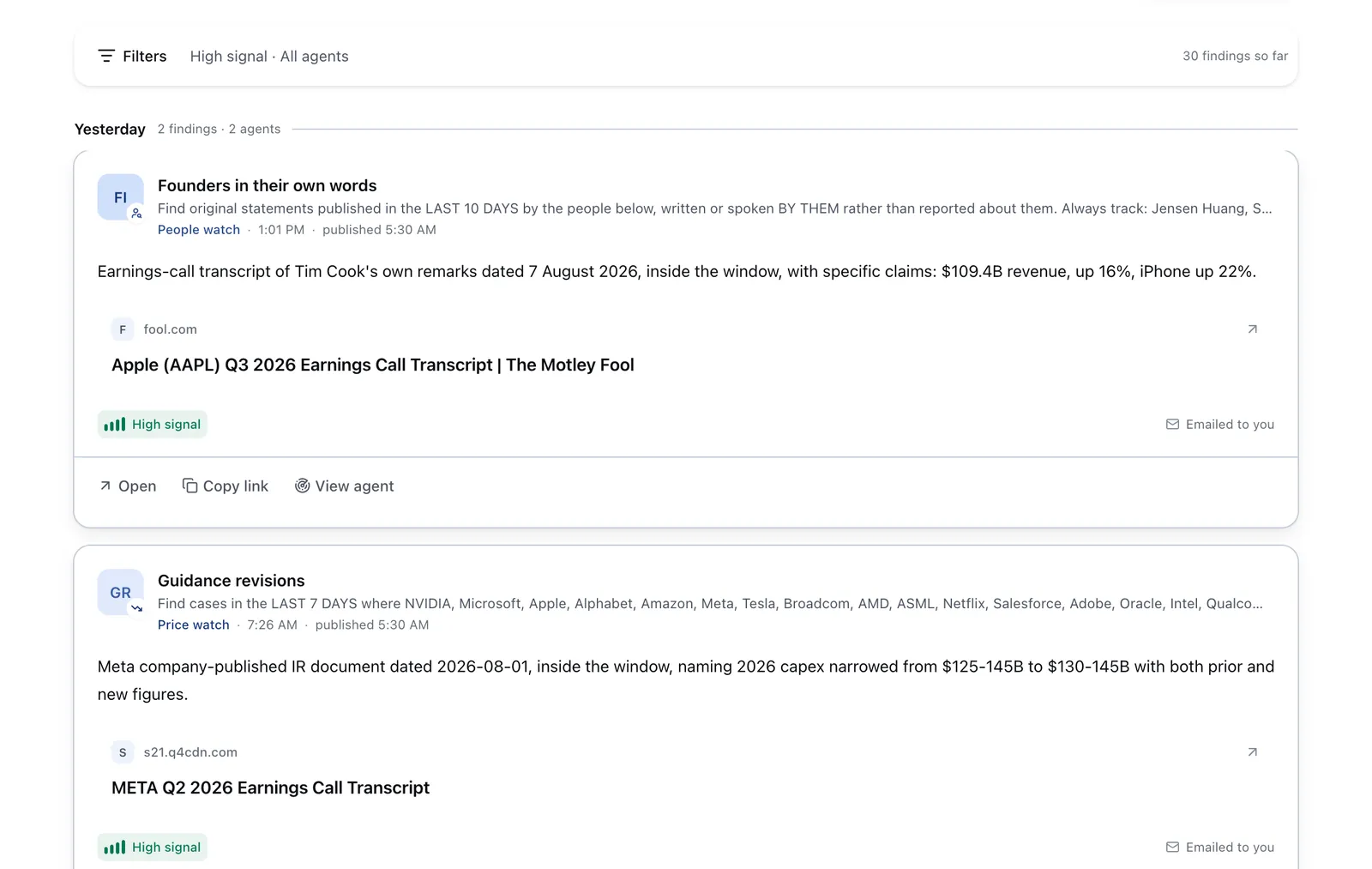
Run it on Parlel
Aim each letter at a researched company, not a keyword:
target: "<role>" at companies with <50 open roles context
research: company page → product, size, hiring signals
attach: resume (ATS-safe) + letter (role-specific)
Digest shape: { company, open_roles, hiring_signal, apply_url } — signal first (why them), roles second, spray-and-pray never.
Research targets on explore so paragraph three writes itself.
Keep reading
Continue the workflow with three closely related guides: - how to follow up on a job application - ats resume template - thank you email after interview
Frequently asked questions
Do I need a cover letter in 2026?
For startups, internships and career switches: yes, it measurably lifts callbacks. For bulk IT-services fresher drives: usually optional — spend the time on aptitude instead (Indian hiring listings, Sept 2026).
How long should a cover letter be?
One page, 150–250 words, four paragraphs. Email bodies can run shorter at ~120 words with the resume attached. Anything longer signals you can't prioritise.
Should freshers write cover letters differently?
Yes: lead with projects and homework (case studies, redesigns, demos) instead of employment history, and ask for feedback calls rather than interviews. Trajectory plus effort is the intern hiring formula.
Can I use the same letter for every application?
No — paragraphs one and three must change per role (exact title, company-specific fit). Reused letters are detectable in seconds and read as disinterest.
What kills a cover letter fastest?
Salary demands, life stories, apologising for inexperience, "Dear Sir/Madam" when the name is findable, and claims missing from the resume. Any one of these bins an otherwise fine letter.