Good LinkedIn outreach has three parts: a real reason for contacting someone, a useful or credible offer, and one small question. It is not a miniature landing page. The templates here separate sales, recruiting, partnerships, founder networking, and job seeking because the recipient should not have to guess your intent.
TL;DR
- Linkedin Outreach Message is a founder-led growth and customer conversations guide: use it to make one decision, not to collect generic advice.
- Start with the smallest useful version: a signal, a specific next action, and a respectful exit; add complexity only when the evidence requires it.
- Treat every claim as either an observation, an estimate, or a hypothesis; do not present a signal as proof.
- Before you publish or act, check the buyer's words, a dated owner, and evidence that can be checked.
- The practical outcome is a dated next step, a clear owner, and a reason to stop or revisit the decision.
Safety and length first
LinkedIn’s help guidance says personalized invitation messages can be up to 200 characters. It also says invitation limits and the ability to add notes vary by account type and can change. Treat 200 characters as a ceiling for the cited guidance, not a reason to cram a pitch into every request. LinkedIn warns that excessive invitations, many ignored or pending requests, and prohibited automation can lead to restrictions. Use the platform’s current rules for your account and market before sending.
Do not present “15 messages a day” or a 20% reply rate as a safe universal benchmark. Start with a small, manually reviewed batch and track acceptance per request, replies per accepted connection, positive replies, meetings, opt-outs, and restrictions. Stop when someone declines or asks not to be contacted.
The message anatomy
| Part | Good | Weak |
|---|---|---|
| Observation | “Your post explains the migration constraint clearly.” | “Loved your profile.” |
| Intent | “I am hiring a backend engineer for billing.” | “I have an opportunity.” |
| Value | “I can share the role scope and band.” | “This will change your life.” |
| Ask | “Open to the details?” | “Can you do 30 minutes tomorrow?” |
Keep most first messages to two or three sentences. There is no evidence that an arbitrary 100-word limit is a platform rule. Short is useful because it is easier to understand and easier to answer.
Six sales templates
1. Connection note after a relevant signal
Hi [Name] — saw [specific company signal]. I work with [type of team] on
[problem]. Your role seems close to it; open to connecting?
2. Post-acceptance value note
Thanks for connecting. Your post about [specific point] made me think of
[useful observation]. I can send a short checklist if it would help.
3. B2B problem note
Hi [Name] — I noticed [public fact], which may create [problem] as the team
grows. We help [peer type] assess it. Is this relevant, or is someone else
closer to it?
4. Partnership note
Hi [Name] — our audiences overlap around [specific customer/problem]. I have
one idea for a useful [webinar/resource/referral], not a generic partnership
deck. Worth comparing notes for 15 minutes?
5. One useful follow-up
One extra detail, then I will leave you alone: [new evidence or answer]. If
this is not a priority, no reply is needed. If it is, should I send the
one-page version?
6. Close the loop
I have reached out about [topic] and do not want to become background noise.
Should I close this, or would [month/trigger] be a better time?
Six recruiting, networking, and job-seeking templates
7. Passive candidate message
Hi [Name] — your write-up on [specific system/project] is why I am reaching
out. I am hiring for [role] to own [outcome], with [location/band if known].
Would you like the brief? No pressure if the timing is wrong.
8. Referral-based recruiting message
[Mutual contact] suggested I contact you because of your work on [evidence].
We are building [product] and need someone to own [scope]. May I send the
role details and process?
9. Founder networking note
Hi [Name] — I am building [company] for [specific user]. Your experience with
[relevant decision] is useful context as I work through [question]. I am not
asking for a pitch or investment; would you be open to one question here?
10. Customer research note
Hi [Name] — I am researching how [role] handles [specific workflow]. I saw
[evidence]. Could I ask three questions about the current process? This is
research, not a sales call.
11. Job-seeker note to a hiring manager
Hi [Name] — I applied for [role] because of [specific outcome in the posting].
I recently shipped [relevant work] and can explain the tradeoffs. I know the
team is busy; is there anything useful I can add to the application?
12. Follow-up after an interview or conversation
Thanks for the conversation about [role/topic]. Your point about [specific
challenge] stayed with me. Here is the relevant example from my work:
[one sentence]. Happy to answer anything else.
A permission-based sequence
Use an initial message, one follow-up that adds new information, and a close-the-loop note. Three messages is an operating choice supported by one of the research sources’ reported campaign comparisons, not a rule for every audience. Space messages according to the relationship and the platform’s current limits. If the person replies, move the conversation at their pace; do not force an email or call.
Do not use scraped sensitive data, imply a relationship that does not exist, or claim you read work you did not read. If AI helps draft a line, inspect every fact yourself. Personalization that is false is worse than no personalization.
Measurement table
| Metric | Definition | What a weak result suggests |
|---|---|---|
| Acceptance rate | Accepted requests / requests sent | Targeting or context problem |
| Reply rate | Replies / accepted connections | Message or intent problem |
| Positive reply rate | Relevant replies / replies | Offer or audience problem |
| Meeting rate | Qualified meetings / positive replies | Ask or handoff problem |
| Opt-out rate | Opt-outs / delivered messages | Relevance, frequency, or consent problem |
Review cohorts by intent, seniority, source, and month. Do not compare a recruiting note with a cold sales message or a reply rate per accepted connection with a reply rate per message sent.
Personalization that earns its place
Personalization is useful when it explains the recipient choice. “I saw your post” is not enough; name the idea, project, or public role evidence that made the message relevant. Then connect it to the purpose of the outreach. If you cannot explain the connection in one sentence, the person may belong on a watch list rather than in the send queue.
| Weak line | Better line | Why it is better |
|---|---|---|
| “Loved your profile.” | “Your note on reducing queue contention explains the tradeoff clearly.” | Points to observable work |
| “We are disrupting hiring.” | “I am hiring an engineer to own billing reconciliation.” | States a concrete intent |
| “Can I pick your brain?” | “Could I ask one question about how your team handles on-call handoffs?” | Defines the small request |
| “This is perfect for you.” | “Your work may overlap with this scope; would the brief be useful?” | Leaves room for the recipient to disagree |
Do not quote a post out of context or infer a private motivation from public activity. A job change, conference appearance, or repository contribution is a reason to research, not permission to claim that the person is unhappy or actively looking.
Choose the channel and the ask
Use a connection note when shared context is genuinely useful. Use a message after acceptance when you can provide the promised context. Use InMail or another permitted route when the platform makes a connection request inappropriate. Email may be more suitable for a detailed role brief, but moving a conversation off-platform should be an invitation, not a condition of replying.
For sales, the first ask can be “is this your remit?” For recruiting, it can be “would you like the brief?” For research, say explicitly that it is research. A calendar link is not inherently wrong, but placing it in the first cold message often asks for more effort than the recipient has agreed to give.
Illustrative scenarios
Illustrative recruiting scenario, not a benchmark: A founder finds a public write-up about a candidate’s Postgres migration. The founder verifies that the work is relevant, checks the role’s location and compensation, and sends the passive-candidate template. The candidate replies that they are not looking but will consider a brief. The founder sends the scope, manager, overlap, and range, then waits. The correct outcome may be no interview; a respectful conversation still preserves the relationship.
Illustrative sales scenario, not a benchmark: A company has posted several support roles. That may indicate growth, replacement hiring, or a copied posting. The message says “may create pressure on handoffs” and asks whether the recipient owns that workflow. If the recipient says another team owns it, the sender thanks them and closes the thread. The message did its job without pretending the signal was proof.
Failure modes and safeguards
- Do not scrape or store sensitive personal information to make a message feel personal.
- Do not contact a current employer, colleague, or referral without the candidate’s permission where permission is expected.
- Do not use automation that violates LinkedIn rules or imitates human activity through an account.
- Do not continue after a clear no, opt-out, or repeated non-engagement that your policy treats as suppression.
- Do not measure success by accepted connections alone; an accepted connection may be courtesy, curiosity, or a mistaken click.
- Do not let an AI-generated draft invent a project, mutual contact, title, or company fact.
A small review checklist
- Verify the profile, role, evidence, and date.
- Confirm the intent: sales, recruiting, partnership, research, networking, or job seeking.
- State the reason for contact without implying a relationship that does not exist.
- Include one useful offer and one small question.
- Check platform limits, suppression notes, and the recipient’s prior response.
- Set a stop condition before sending.
- Record acceptance, reply, positive reply, opt-out, and restriction separately.
If a message needs a paragraph to explain why it is relevant, improve the targeting before improving the copy. Good outreach is often the visible result of better selection work upstream.
When not to send
Do not send when the role, company, or evidence is stale; when the recipient has already opted out; when the only personalization is a sensitive inference; or when you cannot explain the purpose without hiding a sales or recruiting intent. Put the profile on a watch list with a review date instead. A smaller, permission-aware queue is easier to maintain than a campaign that creates complaints and platform risk.
If the recipient replies with a correction, update the record and thank them. If they say someone else owns the topic, ask only whether they are comfortable pointing you to that person. If they say no, close the thread. Treat these outcomes as useful routing and targeting data, not objections that require another persuasion attempt.
Use the same discipline for connection requests, InMail, comments, and direct messages. The channel changes the available context; it does not remove the need for truthful intent, relevant evidence, a small ask, and a stop condition.
Keep a short suppression note for people who decline. A future role or customer trigger does not erase a prior request not to be contacted. If the person later initiates a conversation, treat that as new context and let them set the pace.
Review the queue weekly for stale roles, changed companies, duplicate contacts, and messages waiting on a reply. Remove anything that no longer has a truthful reason to send.
The linkedin outreach message operating standard
This guide is written for a reader who needs to use linkedin outreach message in a real workflow, not merely understand the definition. The dependable version starts with the decision that must be made, names the evidence available today, and keeps the next step small enough to complete. That is the editorial standard used throughout this guide and across the Parlel library: practical guidance should help a founder, operator, candidate, or freelancer act without hiding uncertainty behind confident language.
Decide what success means before you start
Write the result in one sentence: “After this exercise, I will know whether , and the next action will be .” For linkedin outreach message, that sentence prevents the most common failure mode — doing more research after the useful question has already been answered. If the work concerns a person, company, role, client, or vendor, record the source and date as you go. If it concerns a template or message, define the recipient, context, and desired response before polishing the wording.
Use a small fixture rather than an abstract example. Pick three to five real records, situations, or drafts and run the method end to end. Keep one case that should succeed, one ambiguous case, and one case that should be rejected. That mix exposes whether the process can distinguish a useful signal from a convenient story. It also gives you material for a later review without pretending that a tiny sample is a benchmark.
Make the work explainable to another person
A high-quality result should survive a handoff. Another person should be able to see what was known at the time, which assumptions were made, what action was taken, and what would change the decision. For this topic, preserve the original input alongside the conclusion. Keep a short “why now” note, the owner, the due date, and the stop condition. This makes linkedin outreach message useful in an agency-style operating system: the work is repeatable without becoming mechanical, and a reviewer can improve it without rewriting the whole process.
Quality-control pass before you ship
- Intent: Does the page answer the query implied by its title in the first screen?
- Evidence: Are current facts linked to a source, date, or clearly labeled assumption?
- Specificity: Could a reader use the checklist, script, table, or example immediately?
- Boundaries: Does the guide say when the method is a poor fit or should stop?
- Next action: Is there one useful action rather than a pile of competing calls to action?
Those checks matter more than adding another paragraph of general advice. They also protect search quality: the page earns attention by resolving the reader's problem, not by repeating linkedin outreach message unnaturally. If the evidence is thin, say so and explain how to improve it. If the answer changes by country, role, plan, or company size, make that branch visible instead of burying it in a footnote.
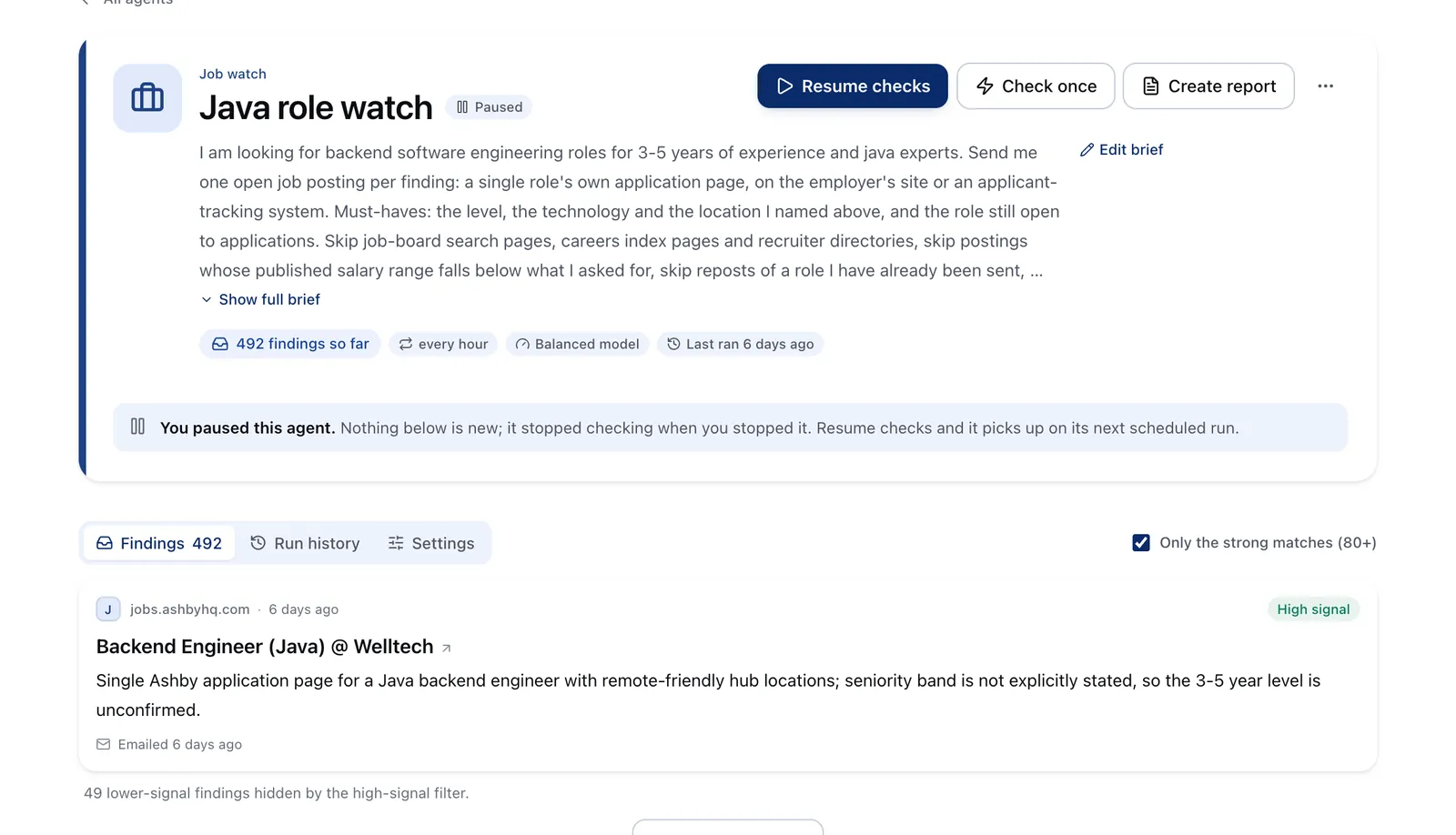
Run it on Parlel
Use structured signals to prepare a review queue, then send manually.
LINKEDIN REVIEW QUEUE
- person: { name, title, profile_url }
- context: { company_signal, recent_post, observed_at }
- intent: { sales|recruiting|partnership|networking|job_seek }
- draft_seed: one factual sentence, human_review = required
- safety: opt_out_checked, platform_limits_checked
The people directory can verify the person and role; the company directory can supply context. A digest should save research time, not become an unattended sending bot.
Keep reading
Continue the workflow with three closely related guides: - sales follow up email template - sales prospecting - how to find freelance clients