Outbound sales is proactive, seller-initiated contact with potential buyers. For an early startup, it should first create learning, then prove a repeatable message, and only then transfer execution. The goal is not to imitate a large sales team. It is to discover which problem, buyer, and proof point are worth repeating.
TL;DR
- Outbound Sales Strategy is a founder-led growth and customer conversations guide: use it to make one decision, not to collect generic advice.
- Start with the smallest useful version: a signal, a specific next action, and a respectful exit; add complexity only when the evidence requires it.
- Treat every claim as either an observation, an estimate, or a hypothesis; do not present a signal as proof.
- Before you publish or act, check the buyer's words, a dated owner, and evidence that can be checked.
- The practical outcome is a dated next step, a clear owner, and a reason to stop or revisit the decision.
The founder-led stages
| Stage | Founder job | Evidence to seek | What not to automate |
|---|---|---|---|
| Learn | Talk to a narrow market | Repeated problem language | Diagnosis and first conversations |
| Prove | Run comparable account cohorts | Positive replies and qualified meetings | Claims and judgment |
| Document | Write the list and process | A new person can follow it | Edge cases |
| Transfer | Add execution help | Capacity, not uncertainty, is the bottleneck | Discovery entirely |
Start with roughly 20-50 named accounts as an operating recommendation from current startup guidance, not a universal quota. A large enterprise deal and a low-priced self-serve product need different account counts.
Choose an ICP and triggers
Write one sentence: “We help [buyer] at [account type] solve [specific problem] when [observable trigger].” Example: “We help heads of support at 30-200-person B2B software companies reduce workflow friction when the support team is expanding.”
Use hiring, a launch, a leadership change, a documented process problem, or a relevant customer request as a reason to research. Reject a signal that is old, unrelated, or too ambiguous to explain. A funding announcement may be context; it is not evidence that your product is funded in the buyer’s budget.
A testable cadence
There is no single correct touch count. One current source recommends four to six touches over two to three weeks; a longer sequence may make sense for a warm account. Use the following as an editorial test, then compare it with a shorter version:
| Day | Channel | Purpose |
|---|---|---|
| 0 | Email or referral | Specific observation and one question |
| 3 | Answer or useful resource | |
| 6 | LinkedIn or phone | Add context, not a duplicate pitch |
| 10 | Ask about owner, timing, or fit | |
| 15-21 | Close the loop or request permission to revisit |
Stop for replies, bounces, opt-outs, and clear disinterest. Pause when a buyer gives a future date. Review the sequence against the follow-up email templates.
An executable example
Illustrative scenario: You sell an operations product to support leaders. A target company has posted two support roles in the last month. You verify that the head of support owns the workflow. Your first message says:
I saw the two support roles you posted. That may put pressure on routing and
handoffs as the team grows. We help support leaders map that workflow before
adding more process. Is this a current priority, or is another team closer to it?
If they reply, ask for a short conversation about the last incident, the current workaround, and the decision process. If they do not, send a checklist, not “bumping this.” If the signal proves irrelevant, mark the account rejected and keep the learning.
Measure the system
Track a dated cohort rather than borrowing a benchmark:
accounts_selected
messages_delivered
positive_replies
qualified_meetings
opportunities_created
disqualified
opt_outs
bounces
Define a qualified meeting as a meeting with a relevant owner where the problem and next step are documented. Review results by ICP slice, trigger, channel, and message. If replies are low, check fit and signal before rewriting prose. If positive replies do not become meetings, fix the ask or speed of response. If meetings do not become opportunities, improve qualification.
Compliance and list hygiene
Use accurate sender identity, current data, and a visible way to opt out. Email rules differ by jurisdiction and recipient type; get advice for your markets. Authenticate sending domains and suppress bounces and unsubscribes. LinkedIn has its own invitation and automation restrictions. Do not use software that logs into a personal account to imitate human activity. Automation can prepare a task; a person should approve the contact and claim.
Tools for one founder
The minimum stack is a source of accurate account data, a tracker or CRM, a calendar, a sending identity with deliverability controls, and reminders. Add sequencing only when you can stop it on reply and inspect the content. A spreadsheet is adequate if every row has an owner, stage, next action, and date. Tool count is not a strategy.
Three decisions before the first send
Who is the buyer? Name the role that feels the problem and the role that can approve a change. They may be the same person in a small company and different people in an enterprise. Do not call a message qualified merely because it reached a senior title.
What is the evidence? Attach a current source: a public workflow description, a role cluster, a launch, a stated operational issue, or a relevant referral. Describe what the evidence may mean and what it does not prove.
What is the smallest ask? Ask whether the problem is relevant, who owns it, or whether a short brief would help. A meeting can be the next step after interest; it does not need to be the first demand.
| Situation | First action | Do not do |
|---|---|---|
| Strong fit, weak evidence | Ask a research question or wait | Pretend fit equals urgency |
| Strong signal, unclear owner | Verify the function | Message every executive |
| Clear pain, no budget path | Explore approval process | Offer an automatic discount |
| Interested buyer, complex purchase | Map stakeholders and risks | Promise a fast close |
| Repeated disinterest | Suppress or park | Increase volume |
A second illustrative example
Illustrative scenario, not a benchmark: A founder sells a workflow product to support leaders. The ICP is a 30-200-person software company with a support team and a current hiring or process-change signal. The founder selects 20 named accounts, rejects accounts where the signal is stale, and verifies one head of support per account. The first email references the signal, explains that it may create handoff pressure, and asks whether the recipient owns that workflow. A positive reply leads to a discovery call; a “not me” reply leads to one optional routing question; silence leads to a useful checklist and then a close-the-loop note.
The founder reviews the cohort by reason for reply. If several people say the issue belongs to operations, the ICP and buyer definition change before the next cohort. If people reply but do not accept a meeting, the ask may be too large or the message may not explain the value of a conversation. If meetings happen but no opportunity is created, the founder should examine qualification and problem severity rather than add more touches.
What to document before hiring help
Write the account filter, accepted signals, rejection rules, research steps, message examples, qualification questions, and stop conditions. Include examples of an ambiguous account and a disqualified account. A new operator should know what to do when a job posting is copied, a company has multiple brands, a contact changes roles, or a buyer asks not to be contacted.
Keep discovery with the founder while the product, target, or proof is changing. Transfer list preparation and reminder work first. Transfer first-touch execution only when claims are stable, replies are reviewed quickly, and there is a clear escalation path for unusual questions.
Outbound safety checklist
- Use a sending identity that accurately identifies the company and sender.
- Confirm the data is current and the contact route is appropriate.
- Follow the commercial-email and privacy requirements that apply to sender and recipient.
- Authenticate the sending domain and suppress bounces and opt-outs.
- Review every claim, first line, and source before a message is sent.
- Stop a sequence on reply, meeting, bounce, opt-out, or clear disinterest.
- Keep LinkedIn activity within current platform rules; do not automate account behavior in prohibited ways.
- Review complaints and irrelevant replies before increasing volume.
Weekly founder operating rhythm
Use one block for research, one for sending and replying, and one for learning. Research should produce a small set of defensible accounts, not a list that cannot be reviewed. Sending should happen only after the source, owner, claim, and stop condition are checked. The learning block should examine objections and disqualifications, not just meetings booked.
| Block | Work | Output |
|---|---|---|
| Research | Fit, current signal, owner, source | Reviewed account queue |
| Conversations | Reply, discovery, recap | Buyer language and next actions |
| Review | Cohort and objections | One changed hypothesis |
If research takes longer because the signal is ambiguous, reduce the account count. If replies arrive faster than the founder can handle them, stop adding volume and improve response time. Capacity is a real constraint; it is not a reason to automate judgment prematurely.
Failure modes that look like progress
- A large account list hides that no one has verified the owner.
- A high acceptance rate comes from low-intent contacts.
- A meeting is counted even though no relevant problem was discussed.
- A founder keeps changing copy when the ICP is wrong.
- A discount creates a meeting but not a funded problem.
- A sequence continues after a reply because the stop rule is not connected.
- A new SDR receives a playbook without examples of rejection and uncertainty.
Use the pipeline to expose these cases. Every active opportunity should have a problem in the buyer’s words, an evidence source, a next action owner, and a date. Otherwise mark it as nurture, disqualified, or needs evidence.
Founder outbound checklist
- Choose one ICP and one current problem signal.
- Select a small named-account cohort.
- Verify the account, owner, source, and channel permission.
- Write one problem-led message and one useful follow-up.
- Define positive reply, qualified meeting, opportunity, and stop.
- Handle early replies and discovery personally.
- Record objections and disqualifications in the buyer’s language.
- Review the cohort before changing volume or hiring.
- Document repeatable work before transferring execution.
- Keep compliance, suppression, and human review in the operating process.
When to hire
Do not use an arbitrary meeting number as a hiring rule. Hire when the same ICP, message, and process have worked across repeated cohorts and founder time, rather than uncertainty, is the constraint. Document account criteria, research steps, qualification, objection handling, and follow-up. Keep the founder in discovery until customer language and product decisions no longer depend on every call.
The outbound sales strategy operating standard
This guide is written for a reader who needs to use outbound sales strategy in a real workflow, not merely understand the definition. The dependable version starts with the decision that must be made, names the evidence available today, and keeps the next step small enough to complete. That is the editorial standard used throughout this guide and across the Parlel library: practical guidance should help a founder, operator, candidate, or freelancer act without hiding uncertainty behind confident language.
Decide what success means before you start
Write the result in one sentence: “After this exercise, I will know whether , and the next action will be .” For outbound sales strategy, that sentence prevents the most common failure mode — doing more research after the useful question has already been answered. If the work concerns a person, company, role, client, or vendor, record the source and date as you go. If it concerns a template or message, define the recipient, context, and desired response before polishing the wording.
Use a small fixture rather than an abstract example. Pick three to five real records, situations, or drafts and run the method end to end. Keep one case that should succeed, one ambiguous case, and one case that should be rejected. That mix exposes whether the process can distinguish a useful signal from a convenient story. It also gives you material for a later review without pretending that a tiny sample is a benchmark.
Make the work explainable to another person
A high-quality result should survive a handoff. Another person should be able to see what was known at the time, which assumptions were made, what action was taken, and what would change the decision. For this topic, preserve the original input alongside the conclusion. Keep a short “why now” note, the owner, the due date, and the stop condition. This makes outbound sales strategy useful in an agency-style operating system: the work is repeatable without becoming mechanical, and a reviewer can improve it without rewriting the whole process.
Quality-control pass before you ship
- Intent: Does the page answer the query implied by its title in the first screen?
- Evidence: Are current facts linked to a source, date, or clearly labeled assumption?
- Specificity: Could a reader use the checklist, script, table, or example immediately?
- Boundaries: Does the guide say when the method is a poor fit or should stop?
- Next action: Is there one useful action rather than a pile of competing calls to action?
Those checks matter more than adding another paragraph of general advice. They also protect search quality: the page earns attention by resolving the reader's problem, not by repeating outbound sales strategy unnaturally. If the evidence is thin, say so and explain how to improve it. If the answer changes by country, role, plan, or company size, make that branch visible instead of burying it in a footnote.
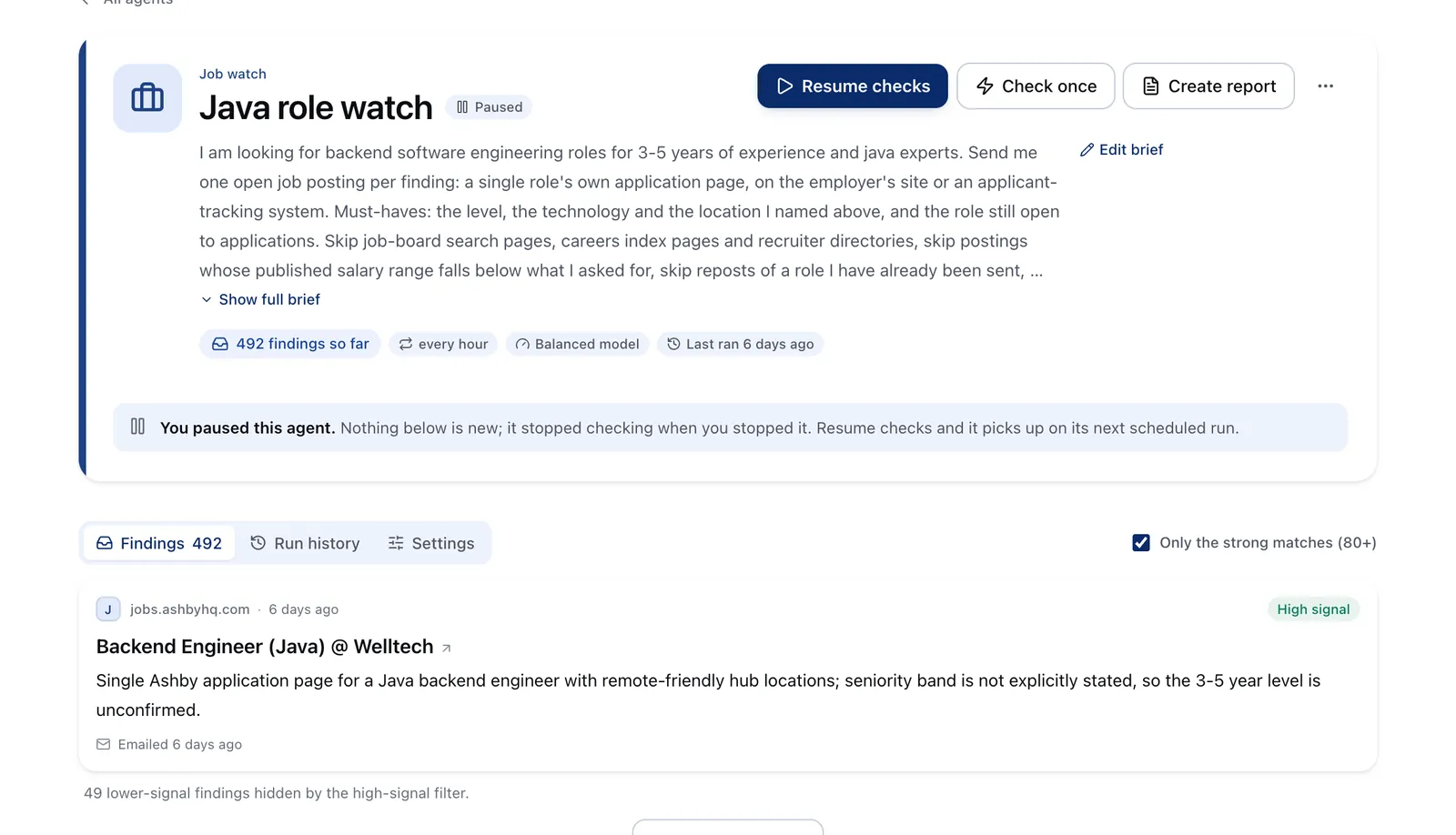
Run it on Parlel
Use Parlel as the research and watch layer, not an unattended outbound engine.
FOUNDER OUTBOUND DIGEST
- monday: { new_fit_accounts, source_links, confidence }
- active_threads: { account, last_touch, buyer, next_action }
- triggers: { new_role, leadership_change, new_publish, observed_at }
- guardrail: human_review_before_send = true
- friday: summarize { replies, meetings, objections, opt_outs }
The company directory supplies account context and the people directory helps verify a likely owner. Use the sales pipeline template for stage definitions.
Keep reading
Continue the workflow with three closely related guides: - sales follow up email template - sales prospecting - sales pipeline template