Upwork and Fiverr sell different buying experiences. Upwork centers on buyer-posted jobs, proposals, hourly contracts, fixed-price milestones, and ongoing work. Fiverr centers on productized gigs, package tiers, extras, and buyer-initiated orders. The better platform depends on whether your service is custom and consultative or bounded and repeatable.
Neither marketplace is a guaranteed income source, and the available research does not establish a universal winner or beginner success rate. Compare the work model, the fee shown for the actual transaction, the time spent winning and delivering it, and the rules that govern client contact.
Marketplace pages and fee material were checked September 26, 2026. Fees, buyer charges, Connects, withdrawal costs, and platform rules can change.
TL;DR
- Upwork fits custom, consultative work; Fiverr fits bounded services that can be packaged and compared.
- Compare effective take-home after platform fees, proposal or packaging time, revisions, delivery, taxes, and payout costs.
- Neither marketplace guarantees demand or income; test the work shape and the client quality you can actually serve.
- Keep scope, milestones, revision limits, and communication rules explicit before accepting a project.
- Use either marketplace as a channel, not as the whole business: build proof, repeat clients, and a direct relationship where the rules permit it.
| Dimension | Upwork | Fiverr |
|---|---|---|
| Discovery | You apply to posted work and receive invites | Buyers search and order gigs |
| Best deal shape | Custom projects, hourly, milestones, ongoing | Fixed packages, extras, repeat orders |
| Freelancer fee | 0% to 15% per contract, shown before commitment | Generally 20% of seller earnings |
| Main workload | Proposal writing and qualification | Package design, delivery, revisions |
| Best for | Specialists with diagnostic proposals | Bounded deliverables with repeatable production |
Upwork
Upwork is useful when the buyer's problem needs a custom scope. You can propose an approach, price hourly or by milestone, and continue into an ongoing relationship. The platform's contract, time-tracking, and funded-milestone systems can reduce payment risk when used correctly. Connects, optional membership, withdrawal, and currency-conversion costs still matter.
Upwork's current freelancer service fee for new contracts ranges from 0% to 15%, not a universal 10%. The percentage is shown before commitment and is locked once a contract begins. Read the fee shown on the actual offer. Do not use Upwork if you dislike proposal work or your service cannot be scoped clearly enough for a buyer to evaluate.
Fiverr
Fiverr works when you can package one outcome with a defined scope, price, delivery time, and revision policy. Buyers compare gigs like products. That can reduce sales calls for logo variants, editing, audits, voice work, templates, and other bounded outputs. The trade-off is comparison pressure and a workflow that punishes vague inclusions.
Fiverr's seller commission is generally 20% of the order, including extras and custom offers. Buyer fees, clearance periods, withdrawals, and currency conversion are separate. Do not use Fiverr for work that changes scope every week unless you can turn the changes into explicit extras or a custom offer.
Fiverr’s fee is not the same as the buyer’s total checkout charge. For your own pricing, start with the seller-side deduction, then add your delivery time, revisions, support, payout delay, tax, and any currency costs. Do not promise a take-home amount to a client based only on the order price.
Fee math, labeled as examples
| Gross project | Upwork at 0% | Upwork at 5% | Upwork at 10% | Upwork at 15% | Fiverr at 20% |
|---|---|---|---|---|---|
| $100 | $100 | $95 | $90 | $85 | $80 |
| $500 | $500 | $475 | $450 | $425 | $400 |
| $2,000 | $2,000 | $1,900 | $1,800 | $1,700 | $1,600 |
These are illustrative calculations before withdrawal, conversion, membership, Connects, taxes, or other charges. On Upwork, use the contract-specific fee. On Fiverr, price enough margin for revisions and delivery overhead; a 20% commission is only part of the cost.
An honest effective-rate calculation is net received / (delivery hours + proposal or listing hours + revision hours). For example, a $500 Fiverr order with a 20% seller commission leaves $400 before other costs. If the complete job takes eight hours, the pre-tax platform-adjusted rate is $400 / 8 = $50 per hour. That is example math, not an expected rate.
Decision by service type
| Service | Starting point | Why |
|---|---|---|
| Custom software build | Upwork | Scope and milestones evolve |
| Logo package | Fiverr | Buyer can compare a fixed deliverable |
| SEO or RevOps retainer | Upwork | Ongoing relationship and custom work |
| Video editing package | Fiverr | Clear input, output, and revision tiers |
| Virtual assistance | Either | Choose by whether hours or packages are clearer |
| Consulting | Upwork or direct | Diagnosis and trust matter more than a listing |
Using both without confusion
Run one narrowly defined Fiverr offer and use Upwork for custom opportunities if both match your capacity. Keep the positioning consistent and calculate effective hourly earnings after fees, revisions, proposals, and payout delays. Follow each platform's rules; do not circumvent an active contract.
Review the experiment after a defined sample of proposals or orders, not after one quiet week. Track qualified inquiries, accepted work, gross value, fees, hours, revisions, cancellations, and repeat work. Stop or change the offer if the channel creates activity but not work that fits your capacity and terms.
Who should not use either as the whole business
Do not depend on one marketplace for all demand. Ranking, rules, fees, and client access can change. Build a direct presence, referrals, and a repeat-client process. A marketplace is a channel, not a guarantee of income or a universal path for beginners.
Do not use either marketplace for regulated, confidential, or employment-like work until the platform terms, client agreement, data handling, and local obligations are clear. Do not move a client off-platform in a way that violates an active contract.
Decision table by service shape
| Service shape | Starting point | Why | Protect against |
|---|---|---|---|
| Custom software or RevOps work | Upwork | Scope and milestones can be discussed | Under-scoped fixed bids |
| Logo or presentation package | Fiverr | Buyer can compare a defined output | Unlimited revisions |
| Monthly advisory work | Upwork or direct | Relationship and changing context matter | Treating access as unlimited |
| Video editing with fixed inputs | Fiverr | Packages can state duration and revisions | Missing assets and rush requests |
| Virtual assistance | Either | Hours or packages can both be clear | Availability assumptions |
| Consulting diagnosis | Upwork or direct | The first step is discovery | Promising a result before diagnosis |
The platform is secondary to the offer. If a buyer cannot tell what they receive, how quickly they receive it, what they must provide, and how changes are billed, neither marketplace will make the transaction simple.
Price from effective capacity
Start with the net amount after the platform-side freelancer fee. Then subtract or account for proposal time, listing maintenance, discovery, delivery, revisions, platform-specific costs, payout delay, currency conversion, taxes, and unpaid administration. Divide the remainder by total working time, not only production hours.
Illustrative example: a $500 Fiverr order with a 20% seller commission leaves $400 before other charges. If delivery takes six hours, revisions take one, and listing or client communication takes one, the example uses eight hours and produces a pre-tax platform-adjusted rate of $50 per hour. It is not a promise of what a freelancer will earn. On Upwork, repeat the calculation with the actual contract fee because 0%, 5%, 10%, and 15% scenarios produce different results.
Do not raise a quote solely to make a marketplace percentage disappear. Recheck whether the buyer, scope, and delivery risk justify the price. A low fee on work that takes too long is still a poor channel.
A controlled two-channel experiment
If both platforms fit, give each a distinct job. Publish one narrow Fiverr package and apply to a small, well-matched set of Upwork opportunities. Use the same scope language, proof standards, and capacity limit. Track qualified inquiries, proposals, orders, gross value, fees, hours, revisions, cancellations, payout time, and repeat work. Review after a defined sample, not after one quiet week.
Stop or change a channel when it produces activity that cannot be delivered profitably or safely. Keep platform messages, contracts, files, and payments inside the permitted workflow. A marketplace can introduce a client without owning your long-term positioning, but its rules still govern the active transaction.
Moving from marketplace work to repeat work
When a project ends, document the result, ask whether the client has a related problem, and propose a bounded next step. Use the platform's permitted mechanism for repeat work. If the relationship can become direct, check the contract before changing communication or payment. Move your positioning, proof, and referral process to an owned profile so the business does not depend on search ranking.
Who should skip the comparison
Skip both as the primary channel if you already have more work than you can deliver, if the service needs a regulated procurement process, or if you cannot comply with platform communication and data rules. Build referrals, partnerships, and direct demand instead. The right answer can be “neither,” especially when the real need is a repeatable offer and a reliable client process.
The upwork vs fiverr operating standard
This guide is written for a reader who needs to use upwork vs fiverr in a real workflow, not merely understand the definition. The dependable version starts with the decision that must be made, names the evidence available today, and keeps the next step small enough to complete. That is the editorial standard used throughout this guide and across the Parlel library: practical guidance should help a founder, operator, candidate, or freelancer act without hiding uncertainty behind confident language.
Decide what success means before you start
Write the result in one sentence: “After this exercise, I will know whether , and the next action will be .” For upwork vs fiverr, that sentence prevents the most common failure mode — doing more research after the useful question has already been answered. If the work concerns a person, company, role, client, or vendor, record the source and date as you go. If it concerns a template or message, define the recipient, context, and desired response before polishing the wording.
Use a small fixture rather than an abstract example. Pick three to five real records, situations, or drafts and run the method end to end. Keep one case that should succeed, one ambiguous case, and one case that should be rejected. That mix exposes whether the process can distinguish a useful signal from a convenient story. It also gives you material for a later review without pretending that a tiny sample is a benchmark.
Make the work explainable to another person
A high-quality result should survive a handoff. Another person should be able to see what was known at the time, which assumptions were made, what action was taken, and what would change the decision. For this topic, preserve the original input alongside the conclusion. Keep a short “why now” note, the owner, the due date, and the stop condition. This makes upwork vs fiverr useful in an agency-style operating system: the work is repeatable without becoming mechanical, and a reviewer can improve it without rewriting the whole process.
Quality-control pass before you ship
- Intent: Does the page answer the query implied by its title in the first screen?
- Evidence: Are current facts linked to a source, date, or clearly labeled assumption?
- Specificity: Could a reader use the checklist, script, table, or example immediately?
- Boundaries: Does the guide say when the method is a poor fit or should stop?
- Next action: Is there one useful action rather than a pile of competing calls to action?
Those checks matter more than adding another paragraph of general advice. They also protect search quality: the page earns attention by resolving the reader's problem, not by repeating upwork vs fiverr unnaturally. If the evidence is thin, say so and explain how to improve it. If the answer changes by country, role, plan, or company size, make that branch visible instead of burying it in a footnote.
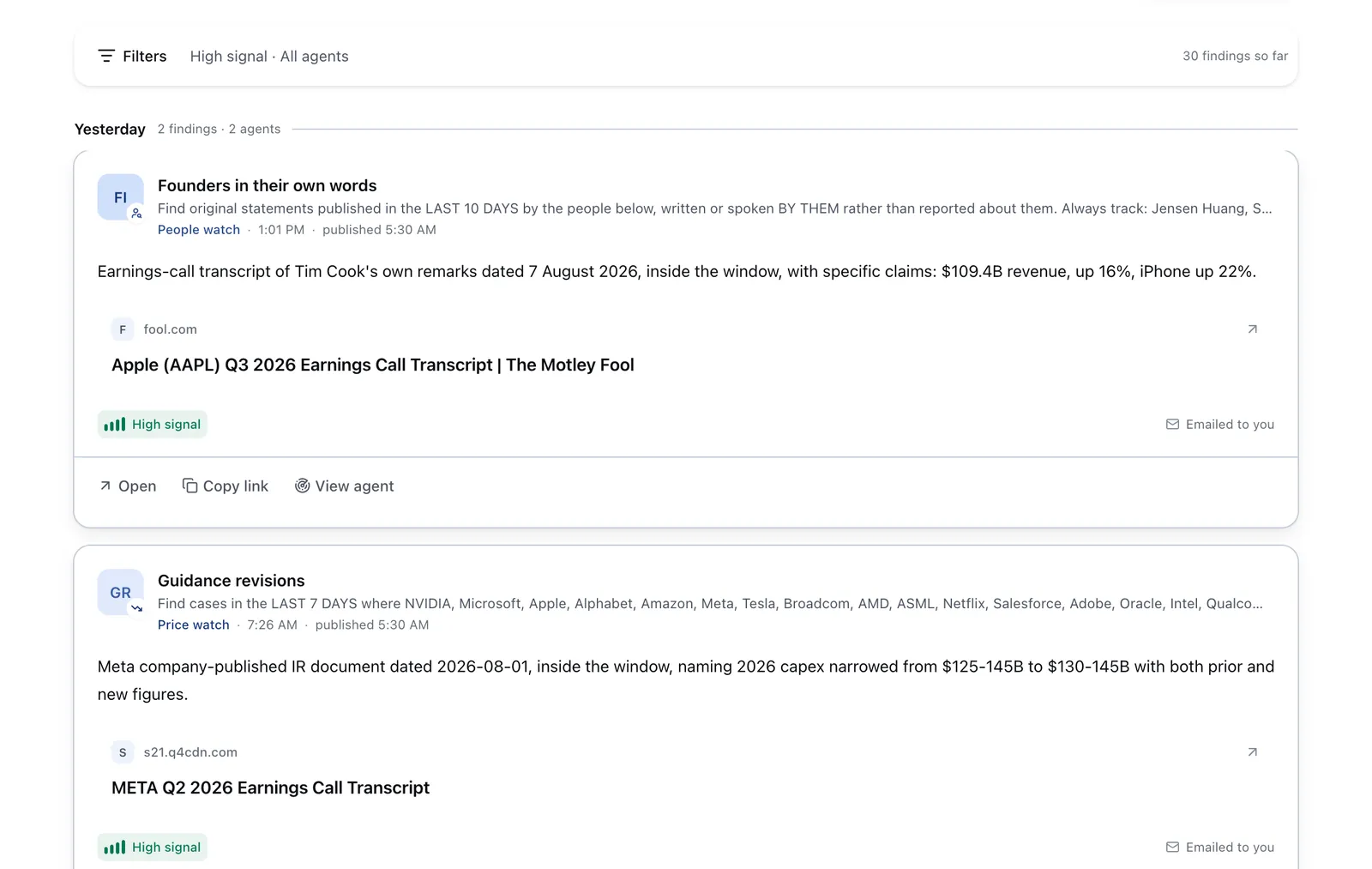
Run it on Parlel
Turn a proven marketplace service into a public-facing account angle, while respecting platform contracts and privacy.
{"agent":"marketplace-service-watch","schedule":"weekly","filters":{"hiring":true,"size":"11-200","industry":"your_niche"},"digest":{"fields":["company","open_roles","buyer_hint","service_angle"],"deliver":"direct_prospect_digest"}}
Digest: company, relevant roles, likely buyer, and a bounded service angle. Test the list in Parlel Explore.
Keep reading
Continue the workflow with three closely related guides: - freelance invoice template - how to find freelance clients - retainer agreement template
FAQs
Is Upwork or Fiverr better for beginners?
Neither is universally better. Fiverr suits a clear packaged deliverable; Upwork suits someone who can write targeted proposals and show relevant proof.
What is the Upwork fee?
The current freelancer service fee for new contracts ranges from 0% to 15% and is shown before commitment. Check the actual contract.
What is Fiverr's seller fee?
Sellers generally pay 20% of order earnings before other applicable payout costs.
Can I use both?
Yes, if each channel has a distinct job and you follow both platforms' rules.