Technographic data describes the software, infrastructure, and digital tools a company uses. It can include a CRM, marketing automation, sales engagement, cloud provider, data warehouse, analytics platform, ERP, security product, or collaboration suite. Startups use it to qualify accounts, tailor an integration or replacement message, identify competitor-installed accounts, and find gaps worth investigating.
TL;DR
- Firmographics tell you who a company is; technographics describe its technology environment.
- Public signals are clues, not always proof of deployment. A job post mentioning Snowflake may describe a hiring requirement, a planned migration, or an existing system.
- Website scripts, DNS, job posts, public technical documents, and vendor datasets each have different blind spots.
- Use labels such as confirmed, probable, and unverified. Do not turn an inferred stack into a confident claim.
- Technographics can suggest a switching opportunity, but they cannot reliably promise when a company will change vendors.
What technographic data includes
Common categories are CRM, marketing automation, sales tools, cloud infrastructure, data warehouses, analytics, security, ERP, payments, and collaboration software. The useful level of detail depends on the question. A company’s public marketing site may reveal an analytics or chat widget, but not its internal CRM. A job description may reveal a team’s required skills, but not company-wide adoption.
Demandbase describes technographics as account profiles based on technology stacks used for filtering, reporting, sorting, and segmentation. HubSpot and other vendor guides frame it as a complement to firmographic and behavioural data, not a replacement for either.
Firmographics versus technographics
| Data type | Answers | Example |
|---|---|---|
| Firmographic | Who fits? | 50-person fintech in India |
| Technographic | What environment exists? | Salesforce and Snowflake appear in public evidence |
| Behavioural or intent | What activity is visible? | A site visit, review comparison, or open role |
Firmographics should gate the market. Technographics can shape the angle. Behavioural or trigger data can help decide whether the account deserves attention now. None of the three proves that a buyer is ready to purchase.
Where it comes from
Providers combine website and JavaScript detection, DNS or infrastructure clues, public technical information, job-posting mentions, and human or automated research. Each source has a failure mode:
- A website scan can miss internal systems or detect an inherited script that is no longer used.
- A job post can describe a desired skill rather than a deployed product.
- Public code may be a demo, a fork, or a contractor artifact rather than a company standard.
- A vendor flag may be stale, inferred, or based on a confidence model you cannot inspect.
The practical answer is not “always verify twice.” It is to label the evidence and match the label to the consequence. A low-stakes segment can use a probable flag. A claim in a sales message should be confirmed by current public evidence or phrased as a question.
Keep the evidence sentence alongside the field. “Salesforce appears in a current administrator job post” is auditable; “the company uses Salesforce” is a stronger statement that may not be justified. This distinction matters when a prospect is in India, the EU, or another market where the source, purpose, and retention of business data still need review.
A concrete verification workflow
Suppose you sell a Salesforce integration and want to identify likely accounts.
- Filter by firmographics: sector, size, country, and business model.
- Find a vendor flag, but label it unverified.
- Check a current careers page or job post for Salesforce administration or implementation language.
- Check public documentation, case studies, or a technical page for a second clue.
- Label the account confirmed only when the evidence actually supports that statement; otherwise use probable.
- Write an outreach angle that asks about the observed problem rather than asserting an internal architecture.
For example: “Your current operations role mentions Salesforce workflow ownership. Are handoffs between Salesforce and billing still manual?” is safer than “I know you run Salesforce and your integration is broken.”
Five useful startup applications
- Compatibility: prioritize companies already using a platform your product complements.
- Replacement research: look for a competitor signal, but treat it as an opening for discovery rather than proof of dissatisfaction.
- Gap analysis: identify accounts whose hiring suggests a need but whose public stack evidence does not show a category. The gap may be real, or simply invisible.
- Migration discovery: a cluster of roles mentioning a new cloud, CRM, or warehouse may indicate a project. Do not call it a migration until the company confirms it.
- Message discipline: use the stack to ask a better question, not to demonstrate surveillance.
Re-check signals when your target geography, role mix, or product category changes. Do not claim that inferred data always decays within one quarter or that one targeting layer cuts waste by half; the supplied evidence does not establish either statement.
Evidence ladder for stack claims
Use a small evidence ladder so a technical clue does not become a false assertion in a sales note.
| Label | Example evidence | Safe use |
|---|---|---|
| Confirmed | Current company documentation names the tool as part of the operating stack | State the evidence and date |
| Probable | A current role owns administration or implementation of the tool | Ask a question about the related workflow |
| Unverified | A website script, old job post, or third-party flag mentions it | Use for research only |
| Contradicted | Current public evidence names another tool or no longer supports the claim | Remove or investigate the old signal |
The labels are not universal industry standards. They are a team convention that keeps the sentence attached to the evidence. Add source_url, observed_at, signal_type, and reviewer to the record. If the tool is central to the proposed message, require a higher label than if it is merely a segmentation hint.
Illustrative account investigation
Illustrative example, not a test result: A startup sells a Salesforce-to-billing integration. Its first filter finds 40 fintech companies with the right size and business model. A vendor marks 19 as Salesforce users. The team checks current careers pages and finds Salesforce administration language at eight companies, a public implementation case study at two, and only an old website script at the remainder.
The eight job-posting matches are still not proof of company-wide deployment. The team records them as probable and asks about workflow ownership: “Your current operations role mentions Salesforce workflow ownership. Are handoffs into billing still manual?” The wording is useful if the team uses Salesforce, is migrating, or is simply hiring for a role that will evaluate it. It does not expose an invented architecture or imply dissatisfaction.
Match the signal to the role
The right stack clue depends on who will read the message. An engineering manager may care about runtime, observability, and deployment constraints. A revenue operations leader may care about CRM objects, routing, and reporting. A security leader may care about identity, data handling, and vendor review. A marketer may care about pixels and campaign orchestration. The same detected vendor should therefore produce different research questions, not one generic personalization line.
For an Indian startup, check whether the public role belongs to a local entity or a global parent and whether the named tool is required for a new team rather than already deployed. For an EU or UK company, avoid collecting more personal detail than needed and review the source and purpose for enrichment. For a US account, a public technology clue still does not authorize an intrusive message. Technical observability should improve relevance, not become surveillance theatre.
Failure modes in technographic work
Inherited code: a script remains after a vendor is removed. Recruiting language: a posting lists a desired skill for a candidate, not a current production dependency. Agency work: a contractor mentions a client tool that is not the employer’s standard. Parent-company confusion: a group domain and local subsidiary use different stacks. Proof inflation: a vendor label is copied into a CRM as a fact and survives for years.
The remedy is modest: record the evidence sentence, preserve its date, and set a review action when the claim matters. If no one has time to inspect the source, do not create a high-confidence field. A blank or unverified value is more honest than a confident segment that sales cannot explain.
The technographic data operating standard
This guide is written for a reader who needs to use technographic data in a real workflow, not merely understand the definition. The dependable version starts with the decision that must be made, names the evidence available today, and keeps the next step small enough to complete. That is the editorial standard used throughout this guide and across the Parlel library: practical guidance should help a founder, operator, candidate, or freelancer act without hiding uncertainty behind confident language.
Decide what success means before you start
Write the result in one sentence: “After this exercise, I will know whether , and the next action will be .” For technographic data, that sentence prevents the most common failure mode — doing more research after the useful question has already been answered. If the work concerns a person, company, role, client, or vendor, record the source and date as you go. If it concerns a template or message, define the recipient, context, and desired response before polishing the wording.
Use a small fixture rather than an abstract example. Pick three to five real records, situations, or drafts and run the method end to end. Keep one case that should succeed, one ambiguous case, and one case that should be rejected. That mix exposes whether the process can distinguish a useful signal from a convenient story. It also gives you material for a later review without pretending that a tiny sample is a benchmark.
Make the work explainable to another person
A high-quality result should survive a handoff. Another person should be able to see what was known at the time, which assumptions were made, what action was taken, and what would change the decision. For this topic, preserve the original input alongside the conclusion. Keep a short “why now” note, the owner, the due date, and the stop condition. This makes technographic data useful in an agency-style operating system: the work is repeatable without becoming mechanical, and a reviewer can improve it without rewriting the whole process.
Quality-control pass before you ship
- Intent: Does the page answer the query implied by its title in the first screen?
- Evidence: Are current facts linked to a source, date, or clearly labeled assumption?
- Specificity: Could a reader use the checklist, script, table, or example immediately?
- Boundaries: Does the guide say when the method is a poor fit or should stop?
- Next action: Is there one useful action rather than a pile of competing calls to action?
Those checks matter more than adding another paragraph of general advice. They also protect search quality: the page earns attention by resolving the reader's problem, not by repeating technographic data unnaturally. If the evidence is thin, say so and explain how to improve it. If the answer changes by country, role, plan, or company size, make that branch visible instead of burying it in a footnote.
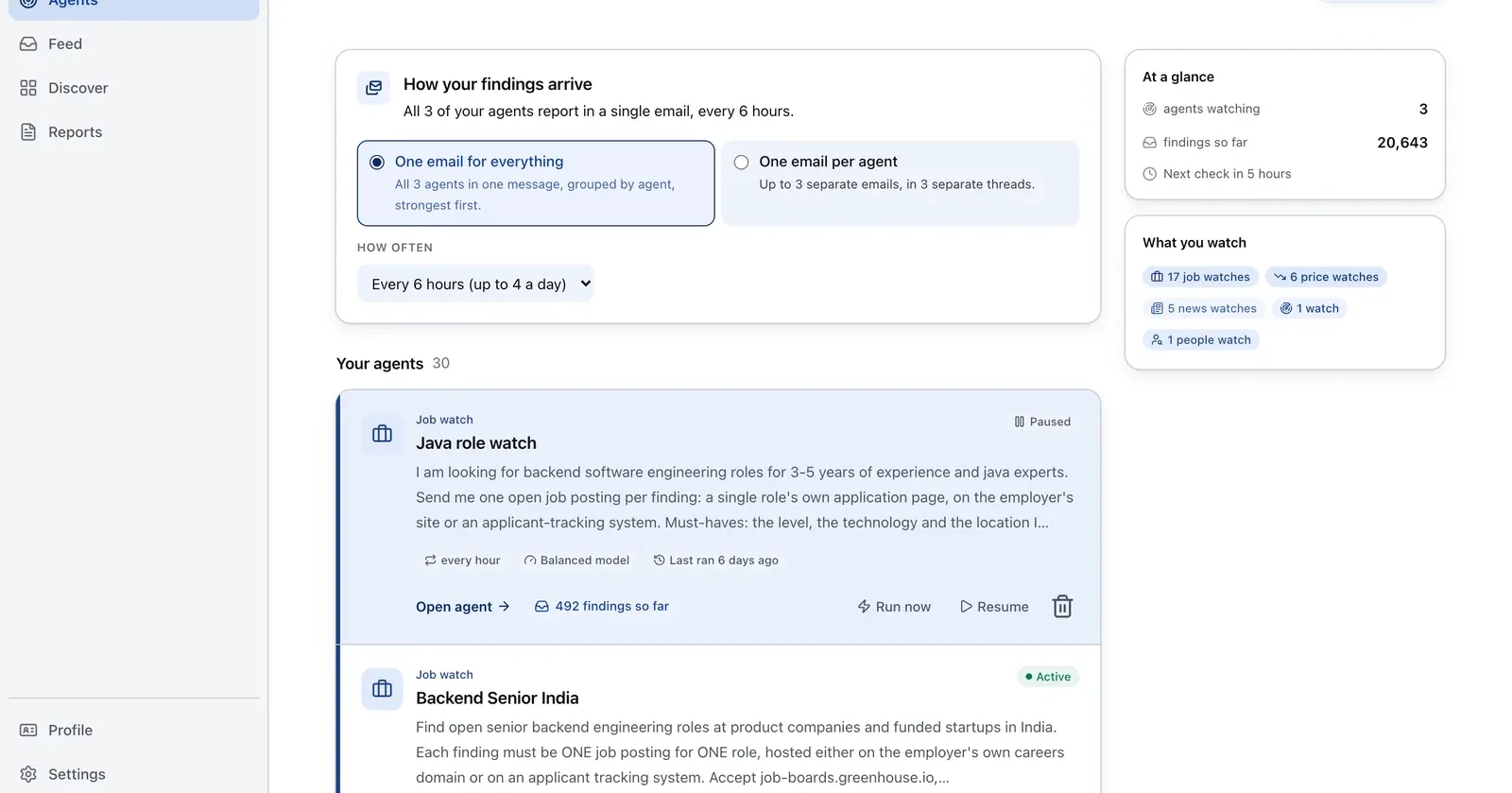
Run it on Parlel
Parlel can supply the public hiring context that makes a stack clue interpretable. It does not prove that a company has adopted every tool named in a role.
watch: stack_mention
keywords: salesforce, snowflake, dbt, kubernetes
filters: saas, 20_to_500_staff, india_or_global
digest: wednesday_09:00_utc
fields: company, role, mention, evidence_label, research_question
Digest: a dated role mentioning a stack keyword, with the evidence labelled as a hiring requirement rather than deployment proof. Start with explore hiring signals, confirm before making a vendor claim, and record what changed.
Keep reading
Continue the workflow with three closely related guides: - intent data providers - crm data enrichment - waterfall enrichment
Frequently asked questions
What does technographic data include?
It can include CRM, marketing automation, sales tools, cloud infrastructure, warehouses, analytics, security, ERP, payments, and collaboration software. The exact fields depend on the source and provider.
How is technographic data different from firmographic data?
Firmographics describe the company, such as industry, size, revenue, or location. Technographics describe its technology environment. Firmographics help determine fit; technographics help shape an integration, replacement, or gap hypothesis.
How do startups use it?
They filter an ICP by stack, tailor messaging, find competitor-installed accounts, identify possible gaps, and prioritize research. The signal should improve a question, not replace discovery.
Where does it come from?
Website and JavaScript detection, DNS and infrastructure signals, job posts, public technical information, and vendor research. Each source has blind spots and should be labelled.
Can it tell a startup when a company will switch tools?
Sometimes it can suggest a hypothesis, especially alongside a project or hiring trigger. It cannot reliably promise a renewal or switching date from the available evidence. Treat timing as an inference and confirm it.