Live boards will always outrank editorial posts for “remote data analyst jobs” because searchers want openings. The gap those boards leave is judgment: which postings deserve a tailored resume today, and which are noisy hybrids, stale reposts, or title inflation. This guide is a prioritization manual. You will still apply on Indeed, LinkedIn, and niche boards. You will waste fewer evenings on roles that were never real matches.
It also helps to know where analyst openings actually surface. Broad boards like Indeed and LinkedIn matter for volume, but remote-first boards and newsletters can be useful for faster scanning. Remotive and Remote Rocketship often list remote openings across functions, including analytics and BI-adjacent roles, and can be good supplemental feeds when you want another pass beyond the largest boards.
This page was reviewed on October 1, 2026.
TL;DR
- Prioritize roles with clear tools, responsibilities, pay or level signals, and explicit remote eligibility.
- SQL + spreadsheets + one BI tool remain the common core; warehouse context is a plus.
- Filter country and timezone before you fall in love with the company brand.
- Build a small public proof pack: dashboard, SQL sample, and a short case write-up.
- Re-check the employer career page when a listing looks syndicated or vague.
- Use a skills matrix by seniority so you match your application proof to the actual level of the job.
What a remote data analyst does
Remote data analysts collect, clean, analyze, and communicate data so teams can decide. The work usually lives in warehouses, spreadsheets, notebooks, and BI tools. Collaboration happens in tickets, Slack or Teams, and review docs rather than shoulder taps. Strong remote analysts write clearly: definition of metrics, caveats, and next actions.
Related titles you will see on boards: business data analyst, analytics engineer (more dbt and SQL modeling), BI analyst, reporting analyst, operations analyst, product analyst. Read the responsibilities, not only the title. An “analyst” role that is mostly Salesforce admin work is a different job.
Skills that show up again and again
From current listing language across large boards and remote boards alike, prioritize proof in this order:
| Skill cluster | Examples | How to prove it |
|---|---|---|
| Data wrangling | SQL, Excel/Sheets | Query samples, before/after cleanup notes |
| Visualization | Tableau, Power BI, Looker, Metabase | Public dashboard or anonymized screenshots |
| Statistical sense | Experiment readouts, forecasting lite | Short write-up with methods and limits |
| Business communication | Stakeholder updates | One-page memo style case study |
| Pipelines (plus) | dbt, basic Python, warehouse concepts | Modeled mart + documentation |
You do not need every tool. You need depth in a coherent set that matches the postings you want. Mirror accurate keywords using resume keywords.
Where to find remote data analyst openings
| Source | Why use it | How to filter |
|---|---|---|
| Indeed | Volume + occasional salary snippets | “data analyst” + remote + date sort |
| LinkedIn Jobs | Volume + recruiter network | Remote + past week + title variants |
| FlexJobs | Curated remote/flexible roles | Analytics categories + level |
| Remotive | Remote-first board with categorized listings | Data / analytics terms + posted date |
| Remote Rocketship | Remote job feed and alerts | Remote analytics titles + geography |
| Niche boards (e.g. DataAnalyst.com style hubs) | Role-dense listings | Remote + experience band |
| Company career pages | Truth on eligibility | Analytics / BI / data team pages |
| Wellfound / startup boards | Early analytics hires | Startup stage + location |
Pair this list with the broader matrix in remote job boards. Engineering-heavy remote tactics in remote software engineer jobs transfer well when you treat SQL stack the way engineers treat language stack.
Scorecard: is this remote data analyst job worth applying to?
Score each posting 0–2 per row. Apply when the total is high and eligibility is real.
| Criterion | 0 | 1 | 2 |
|---|---|---|---|
| Responsibilities clarity | Buzzwords only | Some tasks listed | Clear outputs and stakeholders |
| Tools named | None | Generic “BI tools” | Specific stack you know |
| Experience ask | Inflated vs your proof | Stretch but plausible | Aligned to your evidence |
| Remote terms | Vague “remote” | Region named | Country/timezone explicit |
| Level / pay signal | None and unclear title | Level or range present | Both level and range or band |
| Freshness | 30+ days, unclear | ~2–4 weeks | Recent or confirmed open |
Automatic no: upfront fees, unpaid “training” that requires buying equipment, or inability to verify the company.
Automatic pause: “remote” with a city HQ requirement that conflicts with your location, or contractor terms you cannot accept.
Experience levels and how to read them
| Band | Typical posting language | What to submit |
|---|---|---|
| Entry / junior | Excel, SQL basics, 0–2 years, internships OK | Projects + internships + clean resume |
| Mid | Own dashboards, stakeholder management | Business impact stories |
| Senior | Roadmaps, modeling standards, mentoring | System design of analytics + leadership proof |
Indeed and similar boards maintain entry-level remote analyst slices. Many “entry” posts still ask for 1–2 years. Translate internship, research, freelancing, and campus analytics into the same language as the posting.
SQL/BI skill matrix by seniority
Use this to sanity-check whether a posting is really junior, mid, or senior, and whether your proof matches the level.
| Skill area | Junior analyst | Mid-level analyst | Senior analyst |
|---|---|---|---|
| SQL | SELECT, JOIN, GROUP BY, basic CTEs | Window functions, nested logic, debugging slow queries | Query design standards, review habits, metric logic ownership |
| Data cleaning | Spreadsheet cleanup, simple QA checks | Repeatable cleaning logic, source reconciliation | Define quality checks, escalation rules, team conventions |
| BI tools | Build charts from prepared data | Create stakeholder-ready dashboards with filters and notes | Dashboard strategy, semantic consistency, review standards |
| Metrics | Can calculate common KPIs | Can define metrics for a team and explain tradeoffs | Can govern definitions across teams and resolve conflicts |
| Stakeholder work | Takes requests with guidance | Scopes requests, clarifies business question | Shapes roadmap, prioritizes requests, mentors others |
| Warehouses | Basic awareness of tables and joins | Comfortable querying warehouse tables and marts | Understands modeling implications and access patterns |
| Python / dbt | Nice-to-have | Useful plus for automation or transformations | Often expected in analytics-heavy orgs, especially for lead roles |
| Communication | Shares findings | Recommends actions | Influences decisions and documents standards |
This matrix also helps with title inflation. If a “senior” posting mostly asks for dashboard refreshes and basic SQL, the title may be inflated. If a “data analyst” posting expects metric governance, dbt modeling, and cross-functional roadmap ownership, you may actually be looking at a stronger analytics engineer or senior BI role.
Concrete artifact: sample briefs that match analyst postings
A common problem in analyst applications is sending the same portfolio link to every employer. Better: keep two or three short briefs ready that mirror common posting types. These can live as one-page PDFs, Notion pages, or concise portfolio entries.
Brief 1: Product analyst posting
Typical listing language: activation, retention, funnel analysis, experiment support, stakeholder partnership with product.
Sample brief structure:
Title: Activation funnel drop-off analysis for new users
Business question: Where are new users abandoning onboarding, and what should product test next?
Data used: event table, signup table, device data
Method: SQL funnel steps, segmented by platform and acquisition source
Output: dashboard + 1-page memo
Result: identified largest drop at step 3 on mobile; recommended copy and form-length test
Caveat: instrumentation gap on one event limited exact attribution
Brief 2: BI analyst posting
Typical listing language: recurring reporting, stakeholder dashboards, KPI definitions, executive visibility.
Sample brief structure:
Title: Weekly revenue and pipeline reporting redesign
Business question: How can leadership get a cleaner weekly view without manual spreadsheet stitching?
Data used: CRM export, billing data, finance adjustments
Method: SQL transformations, metric definitions, BI dashboard redesign
Output: dashboard with filters by team, region, and period
Result: reduced reporting prep time from 4 hours to 45 minutes
Caveat: one source refreshed daily, so same-day totals were labeled provisional
Brief 3: Operations analyst posting
Typical listing language: service levels, fulfillment, workforce metrics, business process improvement.
Sample brief structure:
Title: SLA breach analysis for support queue
Business question: Which queues and shifts drive the highest risk of missed SLAs?
Data used: ticket timestamps, queue assignments, staffing schedule
Method: SQL aggregation, time-to-resolution analysis, breach segmentation
Output: heatmap dashboard + recommendation memo
Result: identified Monday backlog pattern and handoff gap between regions
Caveat: holiday effects were not fully normalized in the first pass
These briefs work because they sound like the job. If a posting mentions retention, your artifact should mention retention. If it mentions KPI governance, your memo should show metric definitions and caveats. You do not need ten portfolio pieces. You need a few that map tightly to the analyst families you are targeting.
Industries that hire remote analysts
You will see healthcare, finance, retail, marketplaces, SaaS, consulting, public sector contractors, and media. Industry matters for domain vocabulary: HIPAA-aware healthcare analytics differs from growth product analytics, and retail BI differs from B2B SaaS pipeline reporting. Choose a lane for the next 20 applications so your examples repeat with depth.
This matters especially in remote hiring because reviewers often scan fast and asynchronously. Clear domain fit reduces the burden on them to imagine how your past work transfers.
Eligibility and hybrid traps
Remote analyst roles frequently include:
- US-only or state-only hiring
- Occasional onsite quarterly meetings
- Fixed hours aligned to a HQ timezone
- Contractor status through an agency
- “Remote” in the title but hybrid in the description
Save the eligibility sentence. Ask about tooling access, VPN requirements, and warehouse permissions early if the company is highly regulated.
Application pack that wins more screens
- Resume: one or two pages max for most industry roles; SQL and BI proof in the top half. Build with how to make a resume if structure is weak.
- Portfolio link: 1 dashboard, 1 SQL note, 1 short case (problem → method → result → caveat).
- Cover note: only when requested; keep it specific (cover letter format).
- LinkedIn: headline that says Data Analyst + domain + tools (LinkedIn headline examples).
Copy-ready case study outline
Title: Reducing weekly reporting time for [team]
Context: [business question]
Data: [sources, grain, known quality issues]
Method: [SQL / spreadsheet / BI steps]
Result: [decision enabled or time saved; only real figures]
Caveats: [what the analysis cannot claim]
Link: [dashboard or repo]
How to prioritize when LinkedIn shows thousands of hits
LinkedIn-style result counts look exciting and help nobody. Work a queue:
- Past 72 hours + remote + your country eligible
- Titles: data analyst, BI analyst, product analyst, analytics engineer (if you have dbt)
- Exclude obvious mistags (help desk, pure SDR, mislabeled admin work)
- Cap daily deep reads, for example 15
- Cap daily tailored applications, for example 5
Use AI for triage drafts if you want, but verify every eligibility claim yourself (how to use AI to find a job).
Interview themes for remote analysts
Expect SQL live or take-home, a dashboard critique, a metrics definition debate, and behavioral questions about stakeholder conflict. Practice explaining tradeoffs out loud. Keep STAR stories ready via behavioral interview questions.
Take-homes: clarify time box, data sensitivity, and whether AI assistants are allowed. Deliver a short README with assumptions. For BI-heavy roles, be ready to explain chart choice, filter design, and how you handled nulls or incomplete source data.
Red flags specific to analytics postings
- “Data analyst” that is 90% cold calling
- Unpaid multi-week trials with deliverables that look like free production work
- Tools list that is twenty logos with no priorities
- Salary only discussed as “uncapped commission”
- Company has no web presence beyond a job ad
- Listing appears on multiple boards with inconsistent location rules
When pay ranges appear on a listing, treat them as that employer’s number for that post, not a market-wide remote analyst salary law. Occupational outlook pages from BLS describe related analyst occupations at a national level and are useful for duty context, not as your personal offer floor.
Weekly remote analyst search loop
| Block | Action |
|---|---|
| Board sweep | Indeed + LinkedIn + one curated remote board |
| Scorecard | Rank 10 roles; apply to top 4–6 |
| Proof | Improve one portfolio artifact |
| Network | One informational chat or referral ask |
| Follow-up | Tracked pings per job application follow-up |
A good weekly rhythm is better than sporadic application bursts. Analyst hiring often rewards consistency because good matches are hidden inside noisy search results.
Portfolio examples that travel well in remote screens
Keep artifacts anonymous when needed. A good remote-friendly pack often includes: (1) a dashboard PDF or public link with filters that still make sense without proprietary data, (2) a SQL file or screenshot of a readable query with comments, and (3) a one-page memo that states the business question and the decision it informed. Host them somewhere stable. Broken portfolio links are an easy reject in asynchronous review.
If you are early career, class projects and volunteer analytics count when you explain the stakeholder and the constraint. If you are switching from software engineering, emphasize decision support rather than only pipeline plumbing unless you are targeting analytics engineer titles.
Metrics debates you should rehearse
Remote panels often ask you to define retention, activation, revenue, or ops SLAs under incomplete data. Practice saying what you would measure, what you would not infer, and what instrumentation you would request next. That habit reads stronger than a memorized list of BI tool logos. Pair technical prep with behavioral interview questions so stakeholder stories are ready when the SQL portion ends.
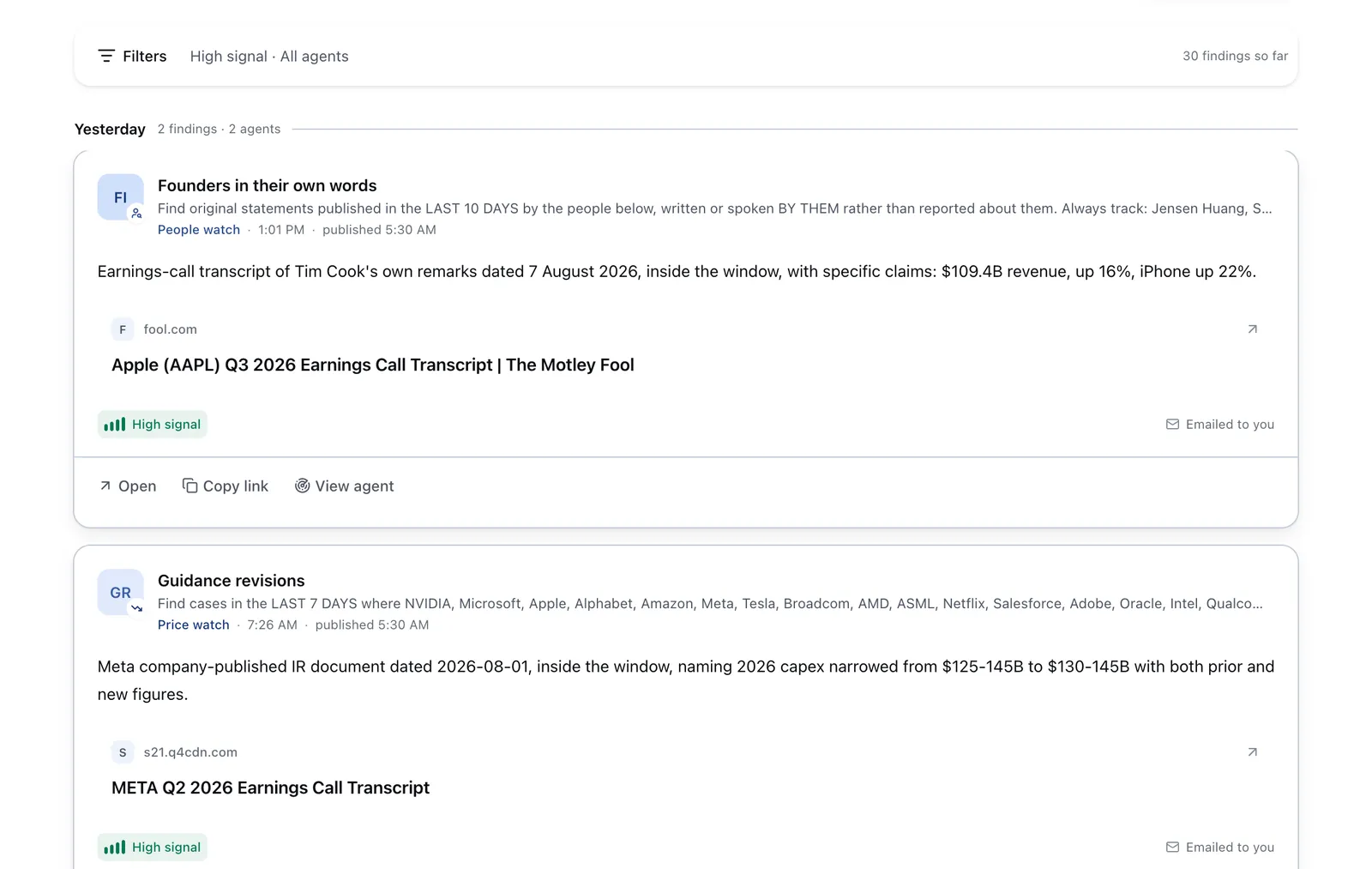
Run it on Parlel
Publish analyst skills and domain focus so matching roles appear in one digest instead of five inboxes.
profile.headline: data analyst, product analytics, SQL + Looker
profile.skills: sql, looker, dbt, excel, python
profile.open_to_work: true
digest: remote-eligible analyst roles matching skills
Digest shape: { role, company, location_eligibility, matched_skills, tools_mentioned }. Review on /jobs, then open the employer page before you spend time on a take-home.
Frequently asked questions
What does a remote data analyst do?
They clean, analyze, and communicate data for decisions, usually with SQL, spreadsheets, and BI dashboards, while collaborating online with stakeholders.
Are remote data analyst jobs entry-level friendly?
Some are. Many still ask for 1–3 years or equivalent project proof. Translate internships, freelancing, research, and class projects into posting language.
What skills are most commonly asked for?
Excel or Sheets, SQL, reporting, data validation, and a visualization tool such as Tableau, Power BI, or Looker. Python and dbt appear often for stronger analytics roles.
Where else should I look besides LinkedIn and Indeed?
Check curated remote sources like FlexJobs, Remotive, and Remote Rocketship, plus direct company career pages. The best use of smaller boards is often discovery, then verification on the employer site.
Do remote data analyst jobs list salaries?
Many large-board listings show ranges; many others do not. Use what is published on that posting only, and treat it as role-specific rather than a universal market rate.
How can you tell if a remote data analyst job is worth applying to?
Clear responsibilities, named tools, realistic experience asks, explicit remote eligibility, and a verifiable employer beat vague, stale, or fee-based listings.